


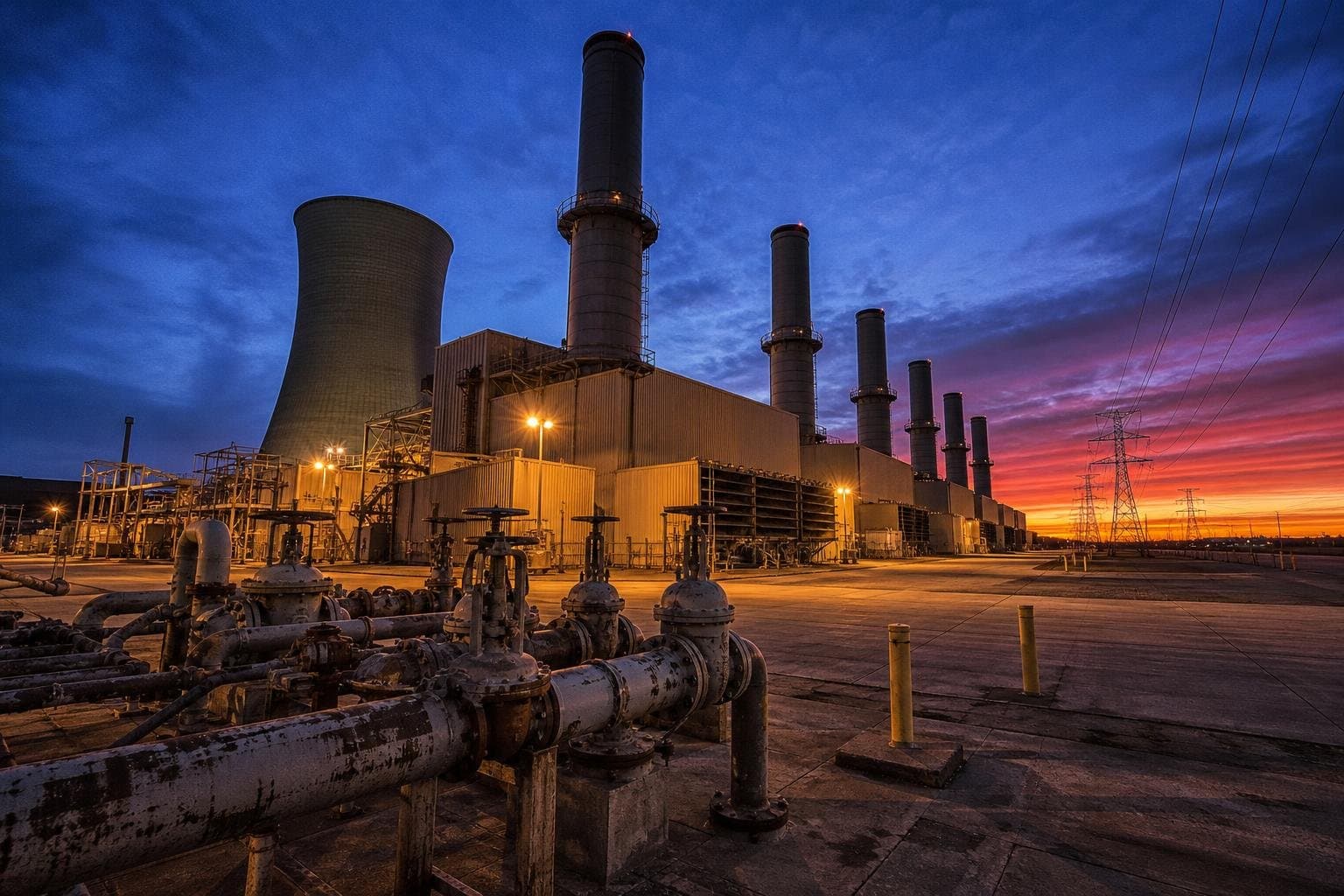

Here's the number that should worry every LNG developer banking on power-sector demand: gas-fired generation contracted in 2026 versus 2025 across the UK, Netherlands, Turkey, Japan, South Korea, and China — even as total electricity output in those six countries grew, according to Ember data cited in a Reuters analysis. Gas didn't just lose growth. It lost share while the pie got bigger.
The Netherlands tells the story bluntly: gas's share of generation in the first nine months of 2026 fell to just under 32%, the lowest on record for that stretch, down from nearly 60% in 2020. The UK — supposedly set up for a gas rebound after its last coal plant closed in 2024 — instead hit a 29% gas share this year, down from 41% in 2022. Turkey, once pitched as the next great gas-demand frontier, has collapsed to just under 11%, per the same Reuters piece.
This is the electrification thesis playing out in real time, not in a model. Power systems are still leaning on gas for reliability — nobody's retiring the peaker plants — but the marginal electron increasingly comes from somewhere else: renewables, storage, nuclear uprates. Gas becomes insurance, not growth.
Compare that to Texas, where ERCOT is sinking $33 billion into 2,400 miles of new 765kV transmission specifically because data-center and industrial load is outrunning the wires, not the generation. Two different continents, two different bottlenecks, same underlying truth: the fight has shifted from "which fuel wins" to "who can move the electrons fast enough." Gas exporters built an entire capital stack on the assumption that tomorrow's grid burns more gas than today's. The data says otherwise, and the money hasn't caught up yet.