


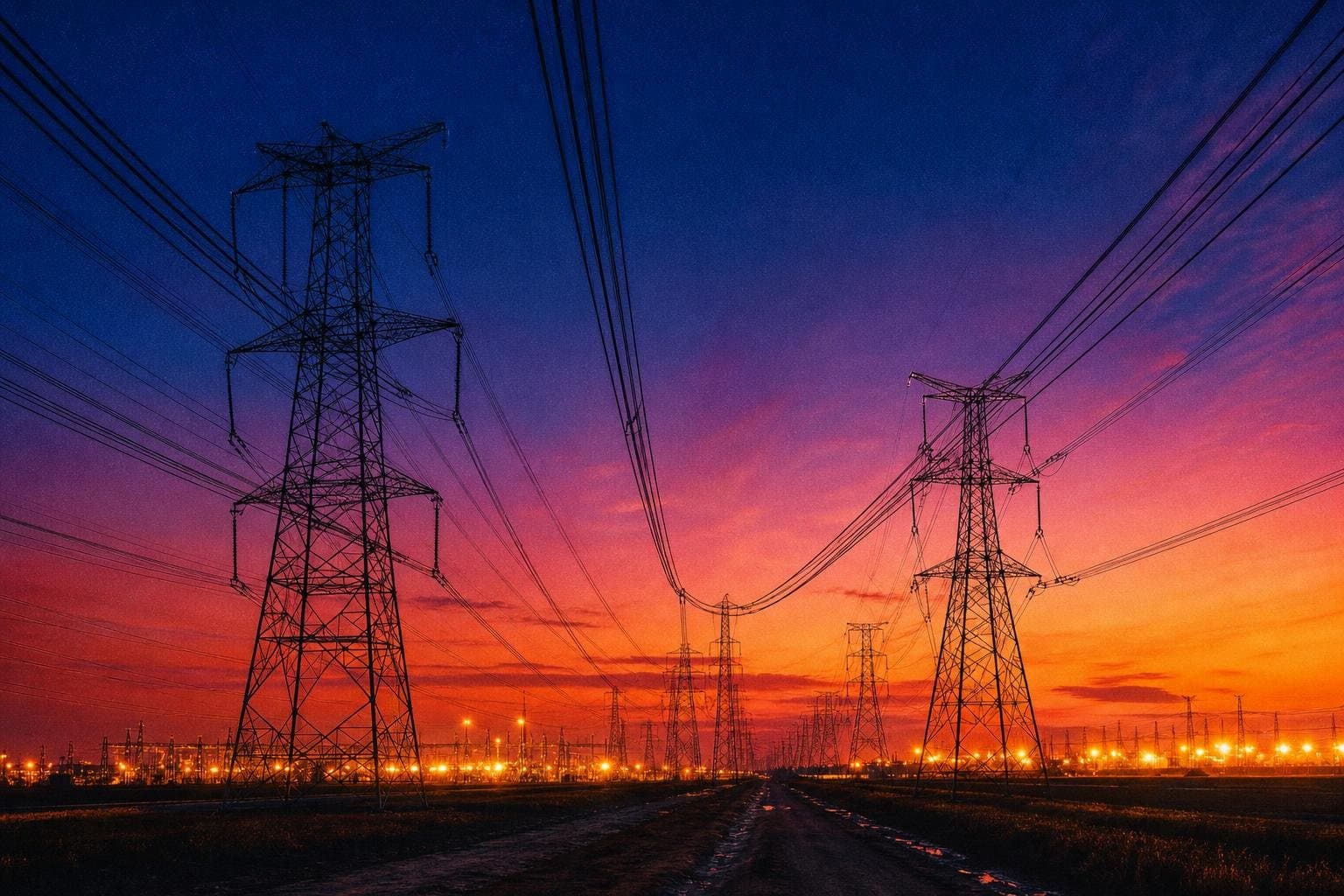

Here's the tell that the old grid governance model is cracking: the Federal Energy Regulatory Commission is now drafting new rules just to keep pace with how fast hyperscalers want to plug in, according to Quartz. That's not bureaucratic housekeeping. That's a five-member commission trying to referee a collision between Silicon Valley's appetite for gigawatts and a grid built for a slower, coal-and-gas-fed era of American homes, per the same reporting.
The politics are already sorting into camps. South Dakota Senator Mike Rounds wants data center developers to "bring their own power," with incentives attached, framing captive generation as a hedge against future emergencies (Quartz). Daniel Palken of Arnold Ventures put the commission's dilemma more bluntly: FERC is trying to let new power come online fast while making sure costs don't get unfairly shifted onto ratepayers. Residential electricity prices are up 46% since early 2020, per Bureau of Labor Statistics data cited in that same reporting — exactly the kind of number that turns abundance-building into a political fight instead of an engineering one.
Compare that friction to what fossil dependence actually looks like when supply breaks. In Bali, fuel shortages tied to the conflict in the Strait of Hormuz have pushed the island into rationed gasoline queues, with the governor limiting fill-ups by license plate parity, per Bloomberg. That's what a single-point-of-failure energy system does to 288 million people's daily mobility — scooter riders sleeping in line overnight to fill a tank, as the same Bloomberg column describes it. A fragmented, slow-moving US grid-permitting regime is a real cost. A tanker-dependent fuel economy stalling an entire island's transport is a civilizational dead end.
Zoom out and the regional contrast sharpens further. The IEA notes that Southeast Asian energy demand has climbed nearly 140% over the past quarter-century and is set to drive roughly a fifth of global energy demand growth over the next decade, with solar PV, EVs, and battery manufacturing as the connective tissue holding that growth together (IEA). That's a region betting on electrification as the escape route from exactly the kind of chokepoint vulnerability Bali is living through right now.
None of this is undercut by Microsoft's decision to offer buyouts to roughly 60,000 workers — about a quarter of its staff — as it retools for AI, per Bloomberg. Headcount and electron count are decoupling. Hyperscalers are shedding people while their power appetite only grows, which means the fight over FERC's new rulebook isn't a side story to the AI boom — it's the load-bearing infrastructure underneath it. Watch whether FERC's proposal actually resolves the cost-allocation question Palken flagged, or just kicks it to state regulators again.