


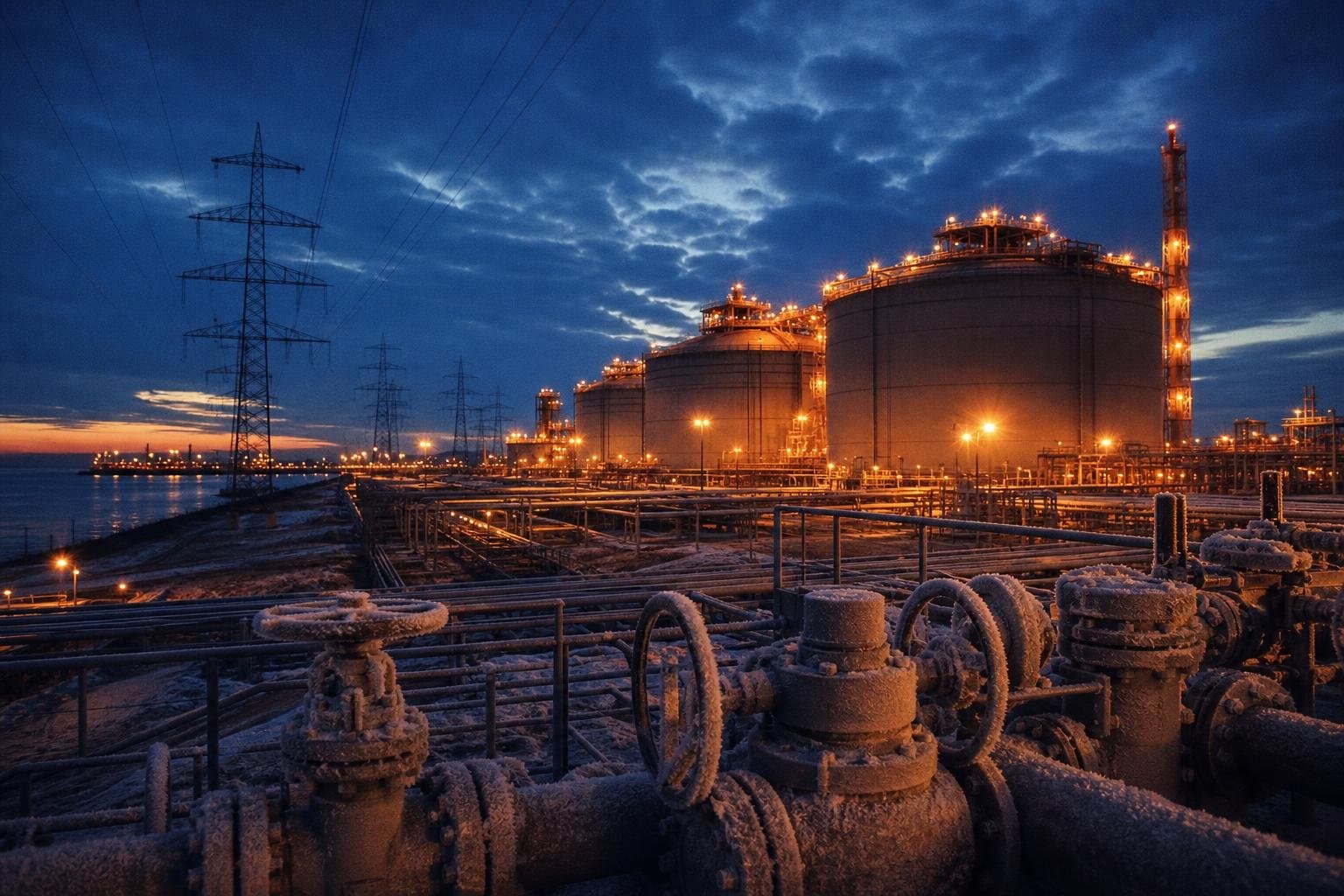

The Hormuz headlines have dominated energy coverage for months, but the more consequential price signal right now is happening in European natural gas markets. Bloomberg reports that European gas prices are near five-month highs, with winter contracts costing more than twice what they did a year ago — enough that natural gas has overtaken oil as the primary inflation concern for European bond traders. Ten-year German and UK yields have touched levels not seen in decades. This is what energy dependence looks like when the bill comes due.
Meanwhile, Brent crude — the fuel that dominated every geopolitical risk conversation since the US-Iran war — is trading roughly 30% below its wartime peak, with further declines last week as diplomatic signals eased Hormuz fears. Brent settled around $89 a barrel and WTI just above $83, with both benchmarks down on the week. The oil market is finding its footing. The gas market is not.
The Electricity Floor Holds — and That's the Point
Here's what the gas crisis reveals: electricity prices are painful but bounded. The EIA's June 2026 data shows residential retail prices at 18.34 cents per kWh — up 5% year-over-year, real money — but the grid kept running. Total U.S. net generation hit 399,671 thousand MWh, up 1.6% from June 2025. Nuclear contributed 68,786 thousand MWh, up 3.9%. Coal consumption fell 12.3%. The system is rebalancing toward cleaner, more stable sources even as demand climbs.
Europe's gas exposure is the counterfactual: what happens when your heating, your industrial base, and your power generation all run on a fuel priced at the mercy of depleted storage and geopolitical disruption. The answer is sovereign bond yields at multi-decade highs and central banks staring at an inflation problem they cannot solve with interest rates.
This is what we're fighting for. Every gigawatt of nuclear capacity, every grid-scale battery, every transmission line that moves electrons instead of molecules — it's insurance against exactly this scenario. The US residential electricity price increase is a policy problem. Europe's gas crisis is a civilizational one. The difference is the grid.
Watch the September 24 EIA electricity update for July generation data — if nuclear output continues its year-over-year climb while gas consumption holds flat or falls, that's the