


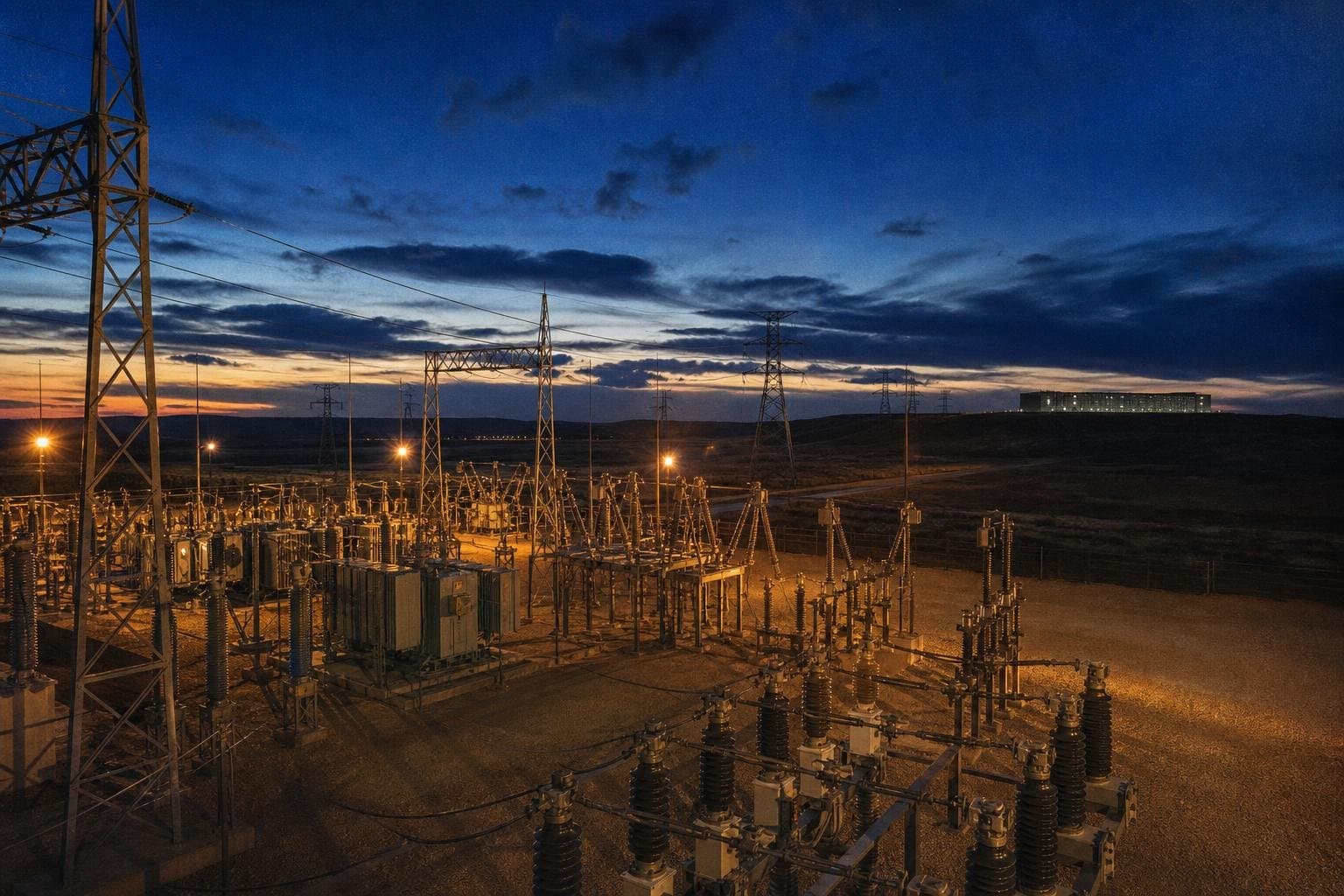

The old logic was simple: build data centers near cities, near users, near fiber. The new logic is blunter. Build near power.
Reuters reports that the average distance of European hyperscale data centers from major urban hubs will jump to 175 kilometers for projects coming online between 2026 and 2028 — up from 46 kilometers for projects delivered between 2022 and 2025. That's nearly a fourfold shift in siting logic in under four years. Greenfield projects now account for 39% of Europe's future pipeline, compared with just 8% of delivered projects. As JLL's head of data centres for EMEA put it: "The determining factor is increasingly where sufficient power can be secured, rather than simply where demand exists."
This is the AI electricity demand story in its most concrete form. Not projections. Not forecasts with methodology footnotes. Actual capital moving to wherever the electrons are.
The pressure is real on both ends. Christine Lagarde warned this week that Europe cannot afford to miss the AI revolution — euro-area firms are expected to allocate roughly 9% of total investment to AI this year. Meanwhile, Romania just shut down its sole working nuclear reactor due to record-low Danube levels, knocking out roughly a fifth of the country's power output and forcing a national energy emergency declaration. Europe wants AI. Europe's grid is struggling to keep the lights on during a drought.
The data center migration toward cheap, available power is rational. But it's also a symptom of a continent that hasn't built enough generation to meet the demand it's now desperately trying to attract. You can't chase the AI revolution by relocating your compute 175 kilometers into the countryside — eventually, you have to build the power plants.
The future belongs to whoever solves the supply side. Right now, Europe is still solving the geography problem