
This Week in Voltage
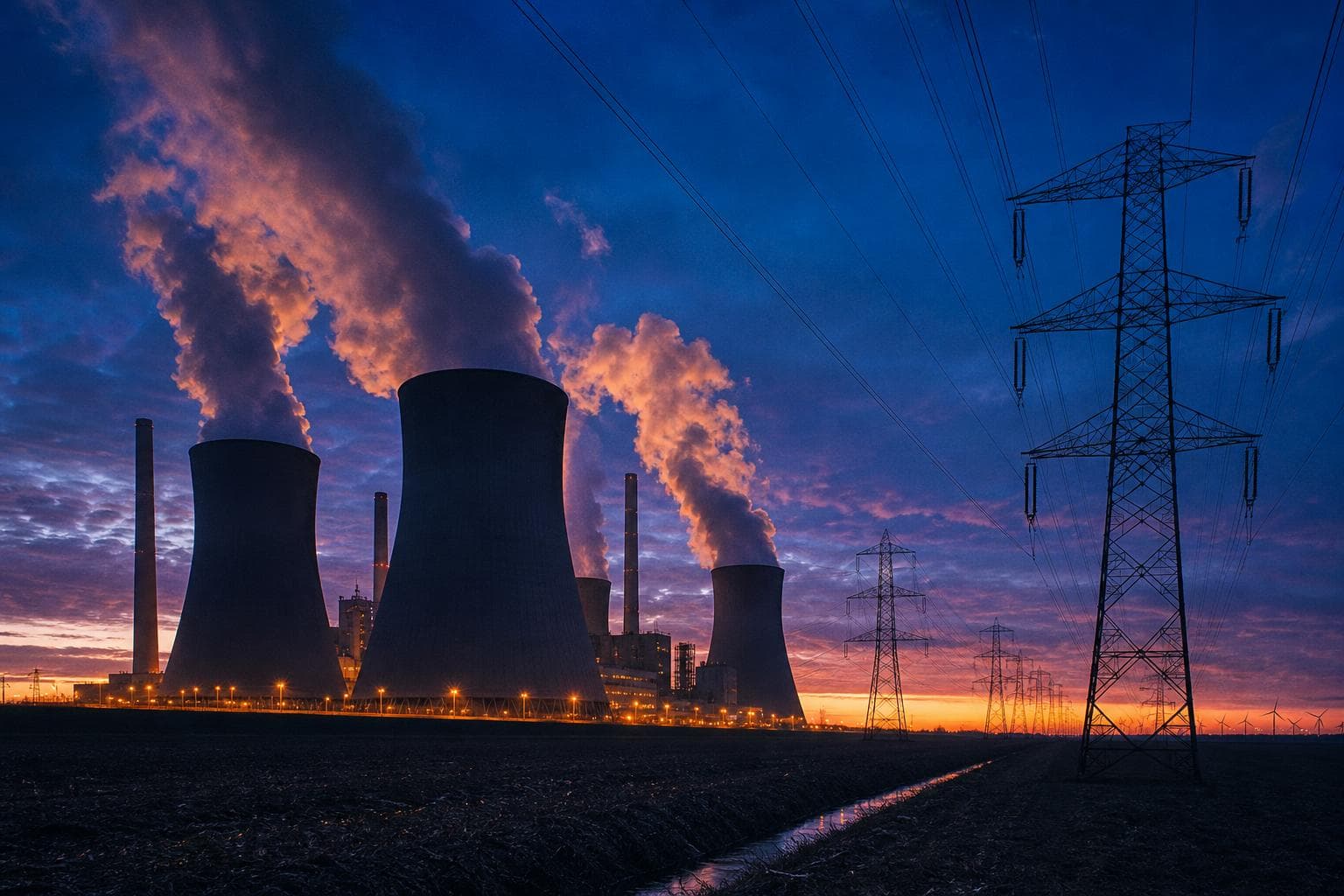
The grid is running hotter than it should be for May — and the repair crews haven't finished their work yet. Bloomberg reported that a blast of late-spring heat is straining eastern US grids while power-plant owners race to complete maintenance before summer demand peaks. This is the worst timing possible: equipment that should be offline getting patched is instead being called back into service.
Meanwhile, NERC's Summer Reliability Assessment delivered a genuinely mixed verdict. The good news: record resource additions — solar, batteries, some new gas — have cut the number of regions at elevated supply-shortfall risk from six in 2025 to three in 2026. Load growth has been significant, with NERC reporting an 11 GW demand increase since 2025, building on 10 GW of growth the year before. The bad news: periods of low wind output, early heat overlapping with spring maintenance outages, and the sheer velocity of large-load growth remain live threats.
This is the grid in transition — not failing, not thriving, but straining at the seams of a system being rebuilt while it's running.
Deep Charge: The Coal Exit Is Messier Than the Headlines Suggest
Here's the number that should be tattooed on every energy policy debate: EIA's March 2026 data shows national average electricity revenues up 7.2% year-over-year, with Maryland up 57.6% and Ohio up 21.1%. Those aren't random states. They're coal country in transition, and their ratepayers are absorbing the cost of a grid mid-surgery.
The coal story is more complicated than the clean retirement narrative suggests. The IEA's Global Energy Review 2026 found that US coal demand in the power sector actually rose 10% in 2025 — reversing years of decline — driven by strong electricity demand that renewables and gas couldn't fully absorb in real time. Let that land: in the year everyone expected coal to keep retreating, it came back. Not because coal is competitive on economics. Because the transition infrastructure wasn't ready.
This is the central tension of the coal retirement question. The plants are old, expensive to maintain, and increasingly uneconomic. Retiring them is correct. But retiring them faster than replacement capacity can be built and connected creates exactly the kind of reliability stress NERC is flagging — the kind that shows up as a 57% electricity price spike in Maryland or a grid operator sweating through a May heat wave.
The electricity maximalist position here isn't to slow coal retirements. It's to build faster. Every coal plant that stays online because a transmission line is stuck in an interconnection queue or a battery project is waiting on permits is a coal plant that should have been replaced already. The constraint isn't the retirement timeline — it's the construction timeline on the other side.
NERC's data points toward a genuine inflection: solar and battery additions are now substantial enough to move the reliability needle, cutting high-risk regions in half year-over-year. That's real progress. But "low wind output" as a reliability risk isn't a weather problem — it's a storage and transmission problem. Until the grid has enough geographic diversity and dispatchable backup to ride through multi-day wind droughts, coal retirements will keep bumping against reliability ceilings.
The nuclear side of this equation matters here too. Deep Fission's IPO targeting a $1.66 billion valuation is a signal that capital is finally treating advanced nuclear as a real asset class, not a science project. Dispatchable, carbon-free baseload is exactly what a coal-retirement grid needs — but the timelines don't overlap neatly. The plants retiring now won't be replaced by advanced nuclear this decade. That gap has to be filled by something, and right now it's being filled by a combination of gas, batteries, and — in 2025 — more coal than anyone planned for.
By the Numbers
- 7.2% — National average electricity revenue increase, March 2026 vs. March 2025, per EIA
- 10% — Rise in US coal power sector demand in 2025, reversing prior decline trend, per IEA
- 11 GW — US load growth since 2025, building on 10 GW added the prior year, per NERC via Reuters
- 3 regions — At elevated supply-shortfall risk in summer 2026, down from 6 in 2025, per NERC
What We're Fighting For
The coal retirement debate gets framed as environment vs. reliability, clean future vs. stable present. That's the wrong frame. The actual fight is about construction velocity. Every gigawatt of solar, storage, and nuclear that gets built and connected on time is a coal plant that can retire cleanly, without a price spike, without a reliability warning, without a grid operator sweating through May.
The 7.2% national electricity price increase isn't a sign that the transition is failing. It's a sign that we're building too slowly on the replacement side. The answer to that isn't to slow retirements — it's to treat grid construction with the urgency of a civilizational project, because that's exactly what it is.
The future is electric. The question is whether we build it fast enough to make the transition clean rather than chaotic.


