


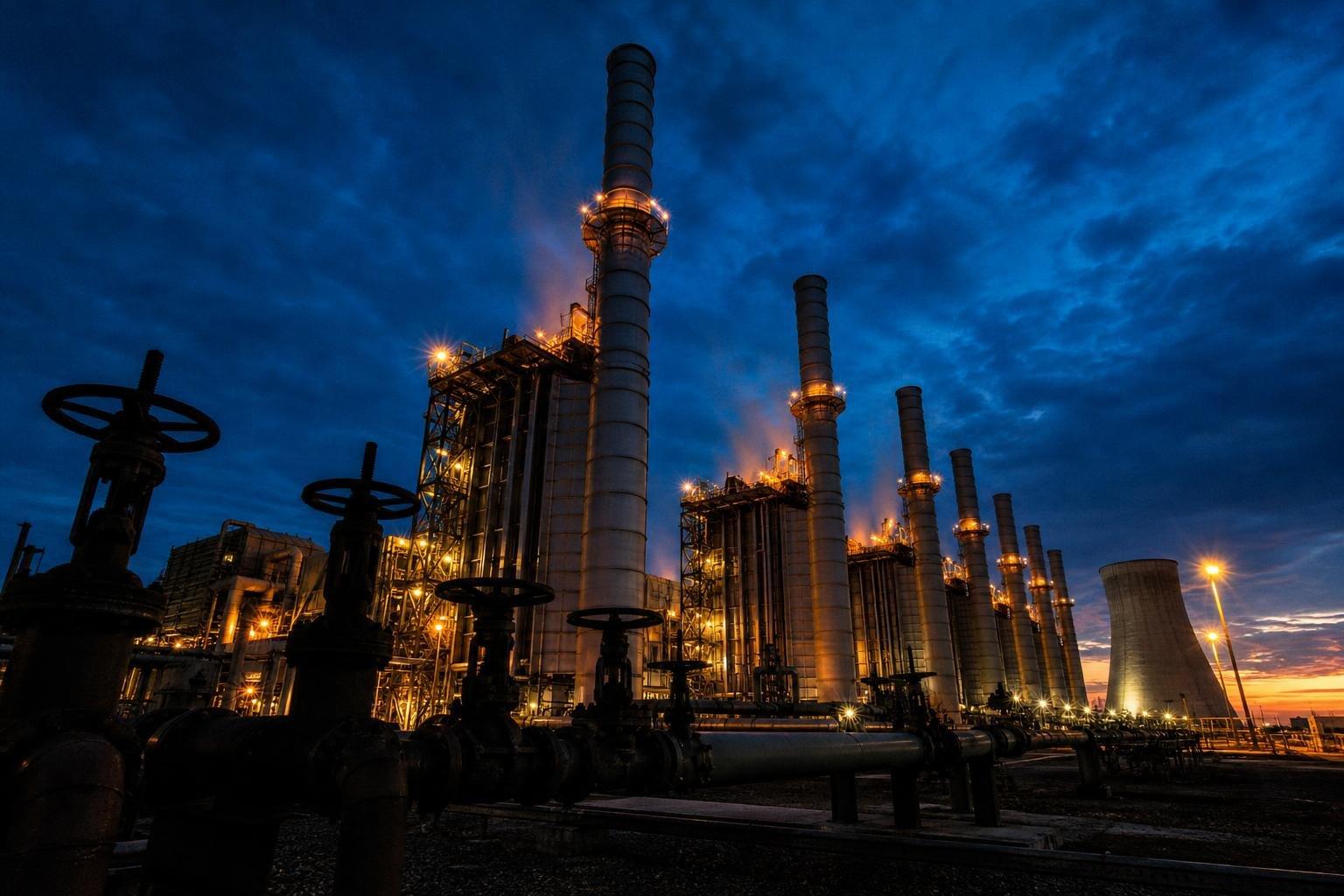

Here's the inconvenient data point for anyone writing the "coal comes roaring back for AI" story: the EIA's latest Short-Term Energy Outlook projects coal's share of US power generation sliding from 17% in 2025 to 15% in both 2026 and 2027, even as total electricity consumption climbs to record highs each of those years, per Reuters. That's not what you'd expect if utilities were quietly keeping aging coal units online to buy time against the AI load wave. The grid isn't reaching for coal. It's reaching for gas turbines, and it's doing so at a pace that should make every electrification maximalist sit up.
The Real Bridge Fuel Is Showing Its Hand
BloombergNEF's new report, commissioned by Bloomberg Philanthropies, tracked 181 gigawatts of announced gas-fired generation proposed alongside data centers, with more than 90% of that sited in the US, according to BNEF. That's an announced pipeline, not operational capacity — BNEF itself flags that the maturity and timing vary widely and the number should be read as a scale indicator, not a forecast of what actually gets built. Still, the direction is unmistakable: developers chasing "speed to power" are building their own gas plants rather than waiting in an interconnection queue, and rather than leaning on coal plants that were already scheduled to retire.
The emissions math is the part that should sting the degrowth crowd and the abundance crowd in different ways. If every announced on-site gas plant for US data centers gets built and runs at BNEF's assumptions, they'd emit roughly 345 million metric tons of CO2-equivalent annually — about 152 million tons more than if that same data center load were served by average US grid power, reported via the same BNEF analysis. That's roughly 10% of 2025 US power-sector emissions, from data center gas alone. I'm not going to pretend that's a trivial number. But I'd rather have 345 million tons of CO2 from power that builds compute, fabs, and eventually fusion research than a conservation ethic that leaves those gigawatts unbuilt. The emissions are a cost of a civilization choosing to grow instead of ration. The question is whether we pay down that cost with faster grid connections and parallel decarbonization — which BNEF explicitly says remains vital — or let gas plants become permanent fixtures once they're already wired up and running, which is the lock-in risk the report warns about.
EIA's Numbers Undercut the Coal-Delay Thesis — But Confirm the Demand Story
The EIA projects power demand rising from a record 4,216 billion kilowatt-hours in 2025 to 4,306 billion in 2026 and 4,370 billion in 2027, which would make 2026 the third consecutive record year, per Reuters. Natural gas holds steady at 40% of generation in 2026 before easing slightly to 39% in 2027, while renewables climb from around 24% in 2025 to 28% in 2027 and nuclear's share holds flat at 18%. Coal is the only major source losing ground in the official forecast, not gaining a reprieve. If utilities were systematically delaying coal retirements to meet AI load, the EIA's own generation-mix projection would show it. It doesn't.
That matters for how we read the politics around all this. Last week's midterm elections went badly for US power utilities — popular anger over data centers and rising electricity bills helped drive a blue wave that gave Democrats control of Congress, and utilities are now scrambling for a message that reassures ratepayers data centers will cover their own connection costs, according to Bloomberg. Meanwhile PJM's own market monitor has pinned $29.4 billion in capacity market cost increases directly on the inclusion of data center demand forecasts, calling the recent capacity auction results anti-competitive as a result, per Monitoring Analytics. Ratepayers are feeling the AI boom in their bills before they ever see a new gigawatt of reliable baseload reach them.
What to Watch
The gap between "announced" and "operating" is where this story actually lives. BNEF's 181 GW gas pipeline and the broader data center buildout will keep generating headlines about coal plants supposedly getting a stay of execution — watch for whether specific utility earnings calls or state regulatory filings in the next quarter actually confirm delayed coal retirement dates, versus simply citing rising reserve margins as justification for new gas. The EIA will update its Short-Term Energy Outlook again in December; if coal's projected 15% share holds or drops further even as demand keeps climbing, that confirms what the current numbers already suggest — the AI boom's fuel of choice is gas, for better or worse, and coal is riding out its decline on schedule regardless of how hungry the grid gets.