


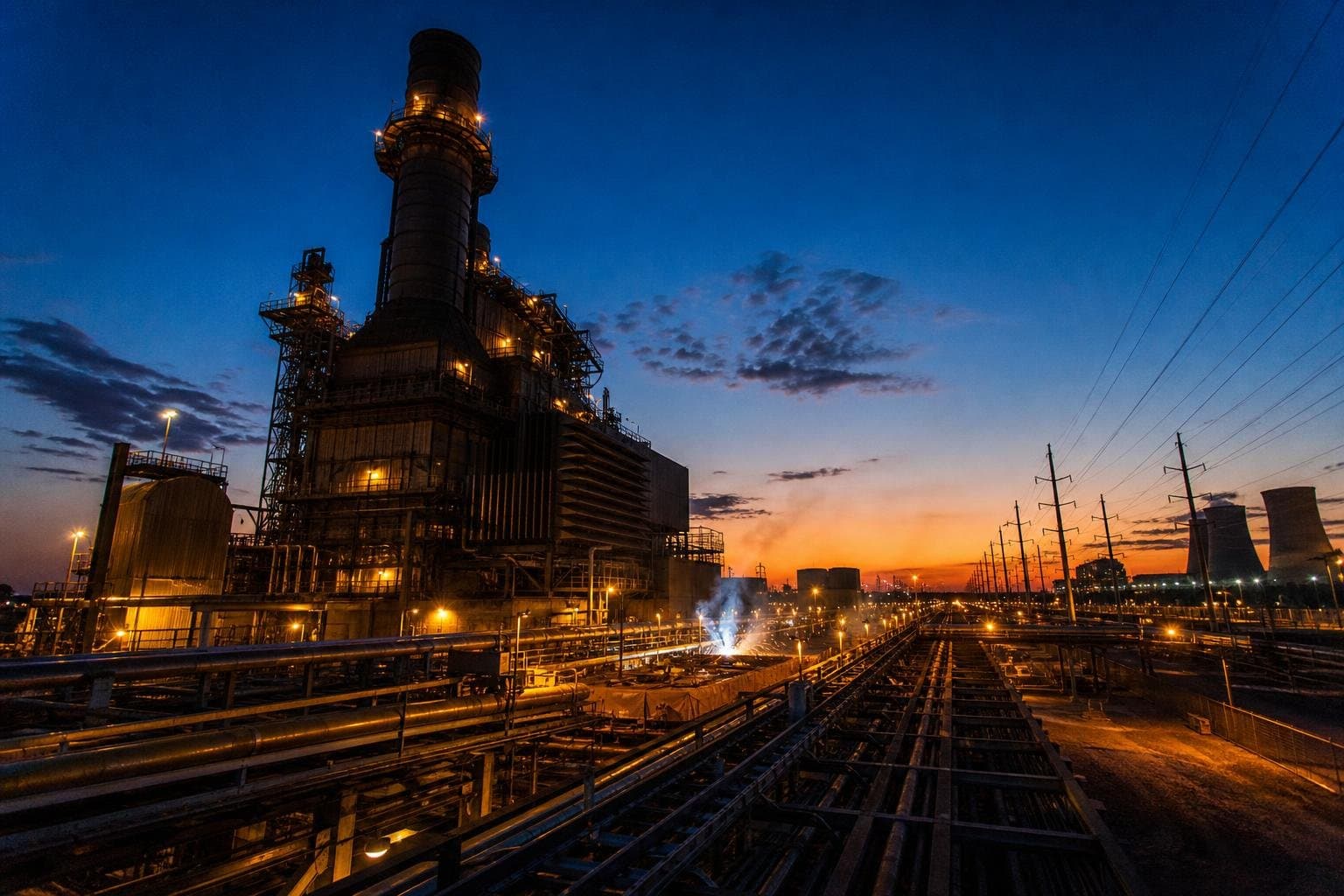

Yesterday, Blue Energy Global filed the first part of its NRC construction permit application for a small reactor at a Texas power plant being built to supply a Crusoe Inc. data center. The facility will run on natural gas first, then layer in nuclear. A second application tranche follows in the second half of 2027.
This is what we're fighting for.
The timing matters. Moody's put out an analysis this week estimating the U.S. AI buildout needs $110 billion and 45 gigawatts of new generation capacity through 2030. The uncomfortable part: Moody's projects more than 30 of those gigawatts come from natural gas, with nuclear restarts accounting for less than 5% of the total. Gas is doing the heavy lifting because it can be permitted and built faster than anything else on the menu right now.
Blue Energy's Texas project is a direct answer to that gap — not a fantasy answer, but a real one with an NRC filing number attached to it. The gas-first, nuclear-later structure is honest engineering: you need electrons on the wire while the reactor application works through the commission. The sequencing is pragmatic, not a retreat.
Meanwhile, the IEA's September Oil Market Report projects global oil demand falling 2.5 mb/d in 2026, with the U.S.-Iran impasse keeping Gulf flows constrained into next year. Every barrel of oil price volatility is an argument for electrification. Every constrained Gulf flow is an argument for domestic nuclear. The macro is writing the case for projects like Blue Energy's whether the industry moves fast enough to catch it or not.
The NRC process is long. The second application tranche isn't expected until late 2027. But a filed application is a different category of commitment than an announced project — it's a legal document, a regulatory clock, a capital signal. The data center that needs power in 2028