


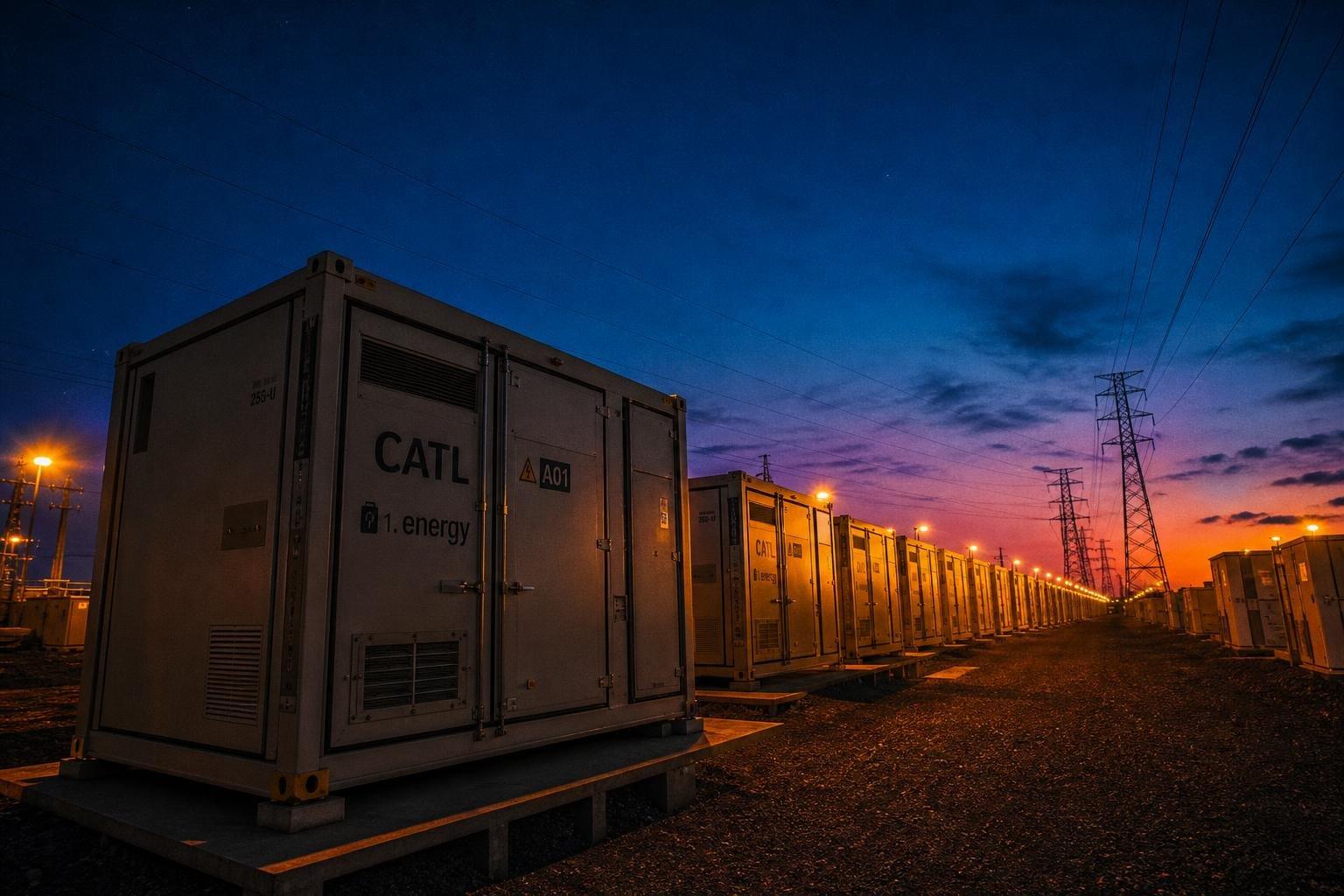

Here's the number that should make every electricity maximalist furious: the US interconnection queue — the list of generation and storage projects waiting for permission to plug into the grid — still sits at roughly 2,061 gigawatts, according to Lawrence Berkeley National Laboratory's latest tracking, as reported by GCN. That's down from about 2,600 GW at the end of 2023 and 2,290 GW at the end of 2024, but it's still larger than all operating US generating capacity combined. Battery storage — the single most flexible tool we have for making an electrified civilization run on intermittent power — is stuck in that same backlog.
This isn't a new problem. FERC's Order 2023 has been grinding through reform for three years, and it has produced real if modest results: PJM's first transition cycle delivered interconnection agreements for 84 projects totaling 14.3 GW, of which battery storage contributed 1.9 GW across 21 projects. That's progress. It is also a rounding error against a 2,000-plus GW queue where, per the same tracking, most projects that enter never get built at all.
The Permitting Bill That Could Actually Move the Needle Just Hit a Political Wall
The structural fix everyone in this space has wanted for over a decade — a federal permitting reform bill that would fast-track the projects needed to modernize grids, build AI data centers, and unlock clean energy development — was reportedly on the verge of advancing in the Senate, according to Bloomberg. Then the midterms happened. Democratic gains have reportedly complicated the negotiation, turning what looked like momentum into a fresh showdown over the bill's shape.
I'd argue this is the real test of whether Washington understands the stakes. A queue this size isn't an abstraction — it's gigawatts of batteries, the exact resource that makes solar and wind dispatchable at 3 a.m., sitting in a bureaucratic waiting room while demand curves from AI compute bend upward. Every year a battery project spends in study purgatory instead of charging and discharging on the grid is a year of abundance deferred. The IEA has separately flagged that the world needs something like 25 million kilometers of new electricity lines built over the next decade under current policy, per the IEA — a reminder that the queue problem and the wires problem are the same problem wearing different hats.
Watch the Senate's permitting bill through December. If it dies in the post-midterm scramble, the queue doesn't shrink — it just keeps teaching developers that patience, not ambition, is the price of admission.