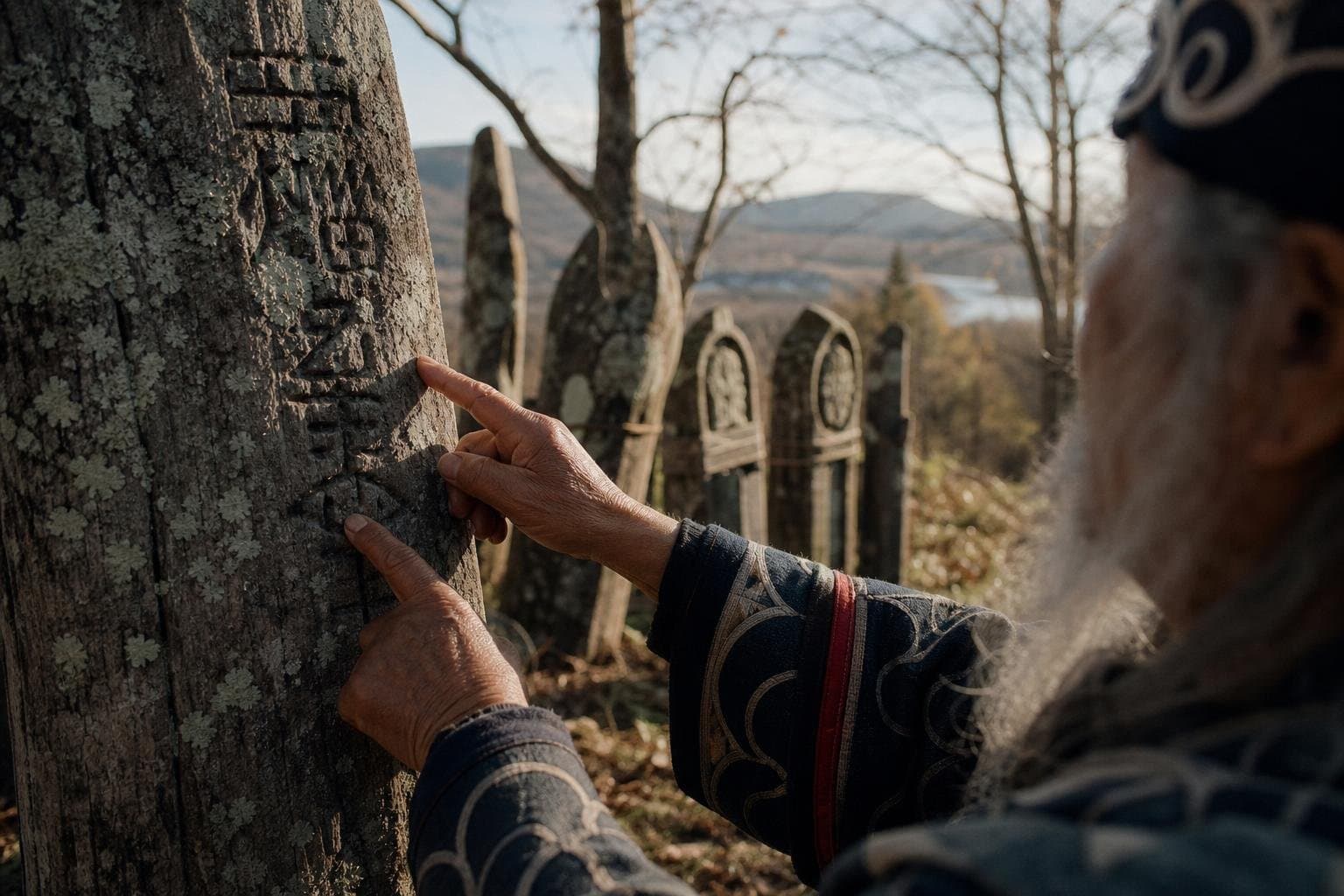

In May of this year, the Shibechari Ainu Tribe filed a lawsuit against the Japanese government in the Sapporo District Court, seeking the return of 279 ancestral remains taken from Ainu graves by researchers between the late 19th and 20th centuries. Those remains are currently held at Upopoy — the National Ainu Museum and Park — a facility that was itself built as a symbol of Japan's commitment to Ainu recognition.
The irony is almost too precise. The government's flagship gesture toward Ainu heritage is now the site of a legal dispute over whether that heritage actually belongs to the Ainu.
This is the contradiction at the heart of Japan's Ainu language revival: the infrastructure exists, the policy language is warm, and the cultural visibility has never been higher — yet the structural conditions that would allow Ainu to genuinely live as a spoken language remain largely unbuilt.
When "Critically Endangered" Becomes Official Policy
Ainu has been listed in the UNESCO Atlas of the World's Languages in Danger as "critically endangered" since 2009. That designation didn't arrive quietly — it landed in the middle of a decade when Japan was slowly, haltingly beginning to acknowledge what its Meiji-era colonization of Hokkaido had done to the people who lived there first. The use and transmission of Ainu was heavily disrupted by assimilationist policies following that colonization, and the 1899 Hokkaido Former Natives Protection Act remained the sole Ainu policy in Japan until as late as 1997.
By 2019, Ainu gained status as an official minority language — a meaningful shift, at least on paper. But analysis of government documents finds that official policy continues to frame its goal as "raising awareness" of Ainu culture among the general public, rather than creating conditions for Ainu people to actually use the language in daily life. The government's vision of Ainu culture is a narrow one in which Ainu social issues are systematically disregarded.
Language reclamation scholars increasingly distinguish between revitalization — teaching and documenting a language — and reclamation, which centers decolonization and the social conditions that make a language livable. Japan's policy sits firmly in the first category while the second remains largely unaddressed. A major theme in recent sociolinguistic research is the lack of safe spaces to simply be Ainu — a problem no museum can solve. The Ainu language is also a linguistic isolate: it bears no historical connection to Japanese or Russian, which means every domain of loss is irreplaceable in ways that even closely related endangered languages are not.
What the Place Names Are Still Saying
Meanwhile, the language persists in the landscape in ways that no policy created and no policy can erase. In the Toya-Usu UNESCO Global Geopark in southwestern Hokkaido, roughly 40% of district names, 60% of mountain names, and 80% of river names derive from Ainu. A river called Tokushunbetsu-gawa carries inside it the Ainu tukusis-un-pet — "river where white-spotted char exist" — a name that encodes ecological knowledge about cold-water fish sustained by snowmelt from a specific mountain.
This is what I mean when I say a language is a knowledge system. That river name is also a field guide, a habitat map, and a record of human attention to a particular ecosystem across generations. The Japanese name for the same river tells you nothing of the sort.
Yosiyuki Uji, chairman of the Toyoura Ainu Association, describes how stories, place names, and environmental knowledge have traveled through generations in dialogue with the landscape itself. What holds Ainu identity together now, he suggests, is not institutional support but Ainu kimochi — the feeling of being Ainu, of belonging — and the collective practice of gratitude toward everything hunted, gathered, and eaten. That relational ethic is encoded in how Ainu speakers talk about the world, not just what they say about it.
The urgency of documenting what remains is not lost on the community. One Ainu man has been documenting the lives of his fellow Ainu as they strive to preserve the heritage of their ancestors — a reminder that the most consequential preservation work often happens not in universities but within communities racing against the disappearance of their own elders.
The Gap Between Monument and Movement
The Shibechari lawsuit is, among other things, a linguistic event. When an Ainu community goes to court to reclaim its ancestors' remains from a facility built in their name, it is asserting that recognition without restitution is a performance. The same logic applies to language policy: documentation without the social conditions for transmission is preservation in amber, not revival.
Ainu activists have been making this argument since at least the late 1970s, when figures like politician Kayano Shigeru began pushing for reclamation on Ainu terms. Decades of governmental response have centered on awareness-raising rather than rights. The pattern is familiar to anyone who has watched indigenous language policy in other contexts — and the Ainu are not alone in Japan in facing it. Research on institutional visibility in Japan shows that revitalization movements leverage both top-down and bottom-up approaches, with community-led networks of speakers, volunteers, and linguists often doing the work that governments won't. Ainu activists have also looked abroad for models: a 2013 exchange program brought Ainu participants to Aotearoa New Zealand to study the Te Ataarangi method of Māori language teaching, seeking transferable lessons from one of the few indigenous language revivals that has meaningfully shifted intergenerational transmission.
What to


