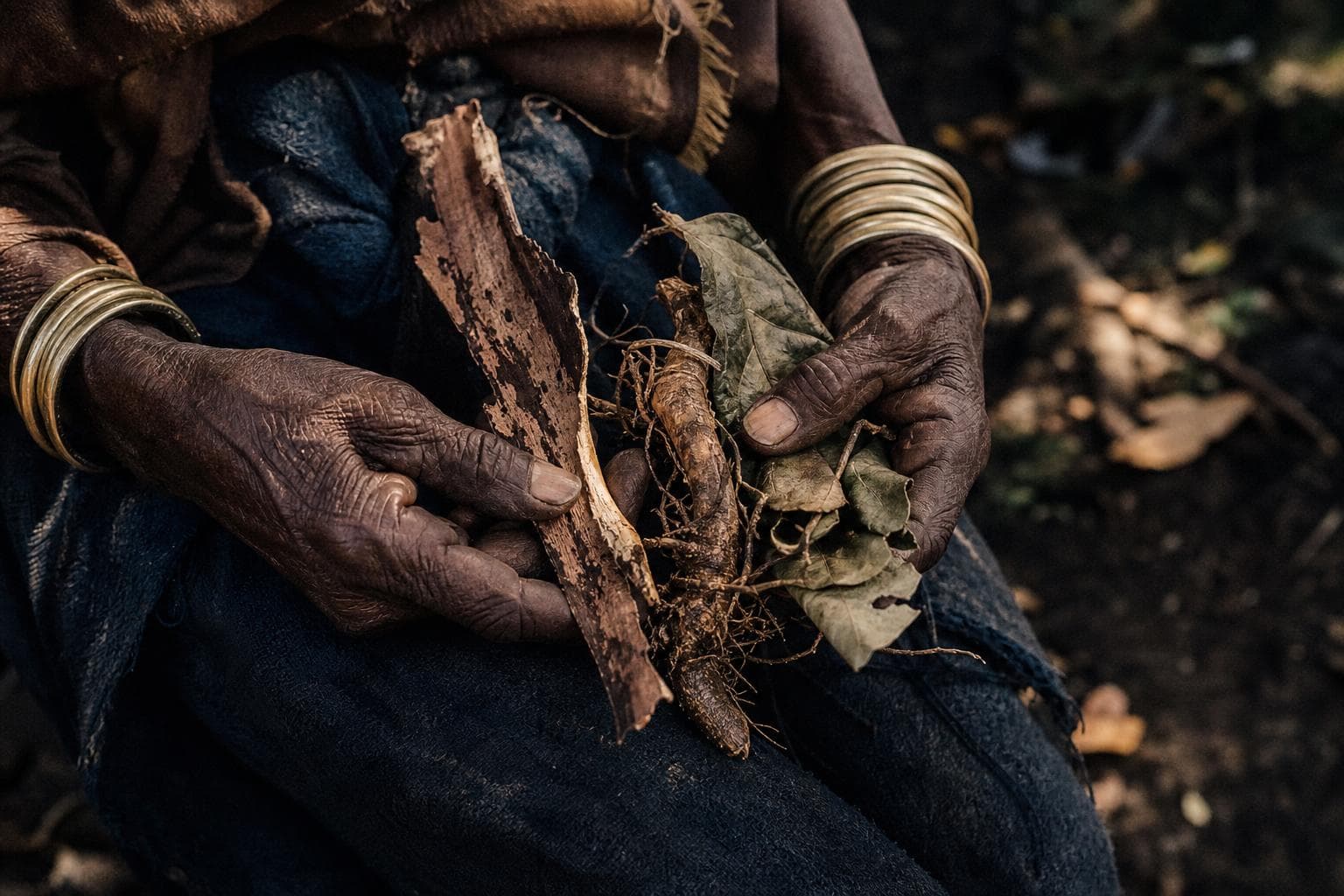

There is a word in Ongota for a specific kind of pain treated with a specific plant harvested from a specific forest in the South Omo Zone of Ethiopia. When the last six speakers of this language are gone, that word disappears — and so does the precise clinical knowledge it encodes.
This is not metaphor. It is the finding of a recent study published in the Journal of Ethnobiology and Ethnomedicine, which spent over a year documenting the indigenous medicinal knowledge of the Ongota/Birale people in Hinchete Kebele, a community in Benna Tsemay Woreda. The researchers weren't primarily linguists. They were ethnobotanists. And that is itself a signal worth examining.
The Language Is Down to Six Speakers — and the Clock Is the Research Design
The assigned topic for this issue cited "fewer than ten" Ongota speakers. The sourced reality is more precise and more dire: six speakers remain, according to the ethnomedicine study conducted from January 2023 to February 2024. The topic's framing was, if anything, optimistic.
Ongota — also called Birale — is a language isolate of southwestern Ethiopia, meaning it has no demonstrated genealogical relationship to any other known language family. Earlier grammatical work, including a 2003 sketch by Graziano Savà, identified it as an OSV (object-subject-verb) language with a phonological and grammatical profile that sets it apart from its Cushitic and Omotic neighbors. That structural distinctiveness matters: when a language isolate dies, there is no related language that preserves even a partial record of its grammar, its vocabulary, or its conceptual architecture. The loss is total.
What makes the recent ethnomedicine study unusual is its methodology. The researchers conducted in-depth interviews and focus group discussions with the remaining speakers themselves — not with younger community members who had shifted to Ts'amakko or Amharic, but with the six elders who still hold the language. The data collection happened across 14 locations. The urgency embedded in that design is unmistakable: you don't spread fieldwork across 14 sites unless you're racing to capture something before it vanishes.
A Pharmacopoeia Encoded in a Dying Grammar
What the researchers found is staggering in its specificity. The six speakers collectively hold knowledge of 98 medicinal sources: 31 plant taxa, 8 animal derivatives, 4 minerals, and 3 other materials — treating 37 distinct health conditions, which the Ongota term Roosaa. Seven of the 26 medicinal plants identified in the study area had never previously been documented for these particular uses. Pharmacological studies have not yet been conducted on 12 of those plants against the diseases they reportedly treat.
This is the part that should stop you cold. We are not talking about folk remedies that duplicate what biomedical science already knows. We are talking about specific therapeutic applications — grinding Boswellia neglecta bark, using the salt mineral megaaddoo, applying cauterization in specific sequences — that exist in the literature only because six elderly people in a remote Ethiopian district agreed to sit with researchers and speak their language while they still could.
The dominant preparation method is grinding and crushing (70% of documented preparations). The most common routes of administration are dermal (51%) and oral (35%). The most frequent physical therapies are cauterization and bloodletting, each at 33%. These are not vague categories. They are a clinical system — one that has maintained the health of a community across generations, encoded in a language that has no surviving relatives and no younger speakers.
When the Language Goes, the Taxonomy Goes With It
Here is the mechanism that makes Ongota's situation different from, say, a language with 500 speakers and active revitalization programs. The Roosaa — the Ongota classification of human health problems — is not a list that can be cleanly translated into Amharic or English and preserved. Classification systems are grammatically embedded. The way Ongota speakers categorize illness, the distinctions they draw between conditions that biomedical taxonomy might lump together, the relationships they encode between symptom and treatment — these are structured by the language itself.
I've seen this pattern before, documenting languages in Papua New Guinea where plant classification systems were so grammatically specific that switching to Tok Pisin for the same conversation produced genuinely different categorical outcomes. The speakers weren't just using different words. They were operating different ontologies. The same dynamic almost certainly applies to Ongota's Roosaa system, though the researchers — working primarily as ethnobotanists rather than linguists — don't make that argument explicitly. The pattern suggests it anyway.
What the Ethnobotanists Found That Linguists Missed
The signal in this research is institutional as much as linguistic. The most detailed recent documentation of Ongota didn't come from a linguistics journal. It came from ethnomedicine. That's not a criticism — the work is rigorous and the researchers clearly understood the stakes. But it reflects a broader pattern in endangered language documentation: the communities with the fewest speakers often attract the most fragmented scholarly attention, with different disciplines capturing different slices of a knowledge system that the speakers themselves hold as a whole.
The OpenSpeaks Archives field diary, published in March 2026, identified a related problem in its own work with low-resourced languages: the infrastructure to make oral history reliably citable — and therefore preservable in ways that future researchers can build on — largely doesn't exist yet. For Ongota, with six speakers and no child speakers, the window for building that infrastructure has almost certainly closed.
What remains is what was captured: 98 medicinal sources, 37 health conditions, 14 field sites, and the voices of six people who carry a complete way of knowing inside a grammar that has no parallel anywhere on earth. The researchers did what they could. The question now is whether anyone will do the pharmacological follow-up before the knowledge becomes permanently unverifiable.


