
Three weeks ago I wrote about what a "D" grade actually means in the ASCE infrastructure report card system — that a D is a maintenance signal, not a collapse warning. This week, the math behind that distinction got sharper. The Federal Highway Administration just issued $407.7 million to support 119 rural bridge projects across 12 states through its Competitive Highway Bridge Program. That's a meaningful number. It's also a window into how the inspection-to-funding pipeline actually works — and why understanding what a bridge grade means is the first step to understanding why the money moves the way it does.
The Grade Is a Maintenance Signal, Not a Danger Flag
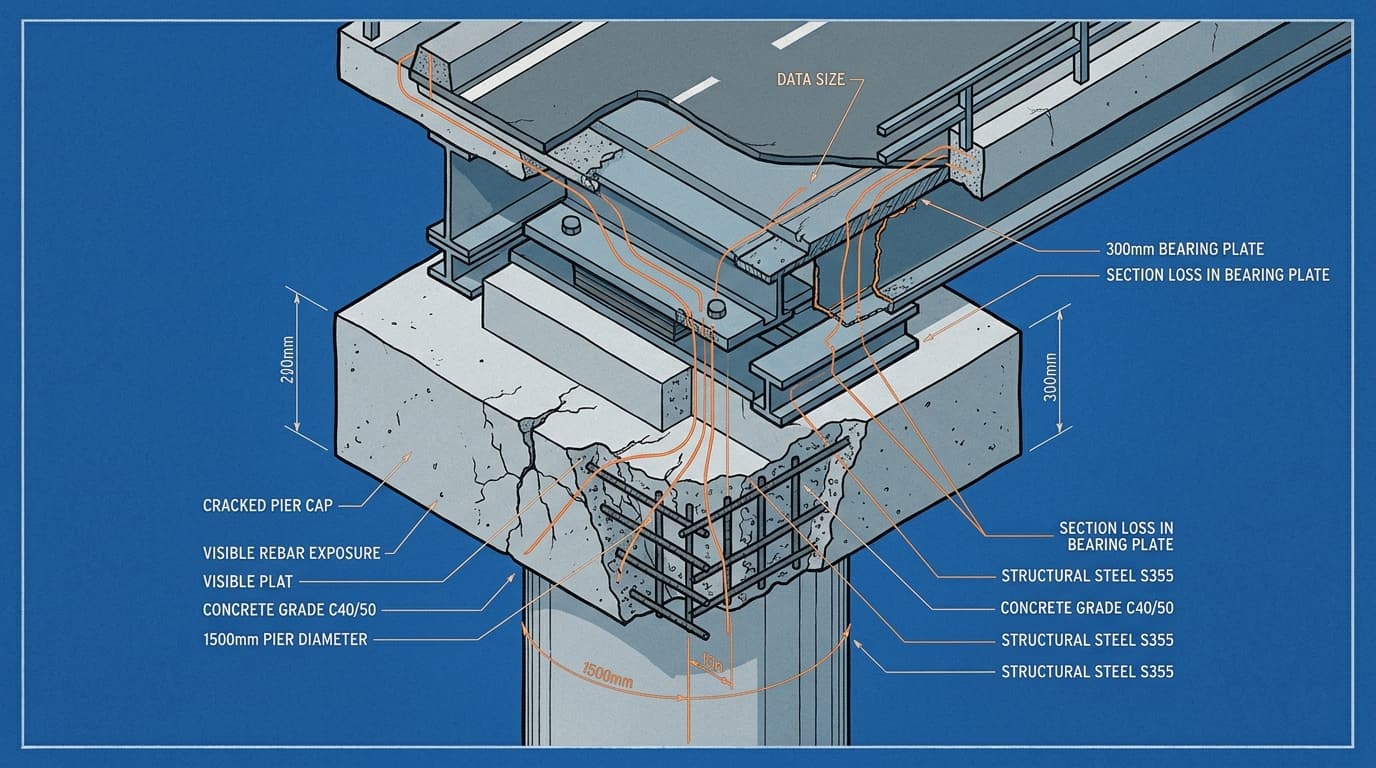
The federal bridge inspection system rates structural elements on a 0–9 scale. A bridge gets flagged as "structurally deficient" — the designation that often translates into public alarm — when one or more of its key components (deck, superstructure, substructure, or culvert) scores a 4 or below. That rating means the element shows "advanced section loss, deterioration, spalling or scour" and requires close monitoring. It does not mean the bridge is unsafe to cross.
Load posting — the actual restriction of vehicle weight — is a separate determination made by the responsible agency based on engineering analysis of remaining structural capacity. A bridge can carry a structurally deficient rating for years while still safely handling normal traffic under active monitoring. The inspection grade is the system working as designed: flagging where the clock is running, not where the floor is falling.
The conflation of "structurally deficient" with "dangerous" is one of the most persistent misreadings in infrastructure coverage, and it has real consequences. It makes the public distrust bridges that are being properly managed, and it obscures the actual risk signal — which is deferred maintenance compounding over time, not any single inspection snapshot.
Where the Real Risk Lives: The Backlog Math
The FHWA funding announcement is useful precisely because it reveals the gap between what's needed and what's moving. $407.7 million for 119 projects across 12 states averages roughly $3.4 million per project — reasonable for rural bridge replacement or rehabilitation, but a narrow slice of the national picture.
Pew's April 2026 analysis puts the scale of the problem in sharper relief: states and localities face an $86 billion shortfall over the next decade for maintaining roads and bridges, and construction costs have risen roughly 70% since 2020 — the steepest increase in decades. That cost inflation is the hidden multiplier in every deferred maintenance decision. A repair that costs $3 million today may cost $5 million in four years if the deterioration advances and the steel or concrete work expands in scope. The inspection grade doesn't change that math, but it does set the timeline.
This is the actual danger embedded in a D-rated bridge: not that it fails tomorrow, but that the window for cost-effective intervention is closing. Deferred maintenance doesn't pause — it compounds. A substructure rated 4 that gets monitored but not repaired becomes a substructure rated 3, then 2, and the project cost curve steepens at every step.
What "Close Monitoring" Actually Requires
When an agency decides to manage a structurally deficient bridge rather than immediately replace it, that decision carries specific obligations. Inspection frequency increases — often from the standard 24-month cycle to annual or even more frequent reviews. Load restrictions may be posted. Interim repairs (crack sealing, scour countermeasures, bearing replacements) extend the service window while funding for full rehabilitation is assembled.
The system works when those obligations are met. It breaks down when monitoring becomes a budget substitute rather than a bridge to the next intervention. That's the failure mode worth watching — not the inspection grade itself, but whether the agency behind it has the staffing, funding, and institutional follow-through to act on what the inspections reveal.
The FHWA's rural bridge program is structured to move money toward exactly that gap. Competitive grants targeting rural bridges acknowledge that smaller jurisdictions — county road departments, small municipalities — often lack the capital reserves to fund rehabilitation on their own inspection timelines. The $407.7 million disbursement is a partial correction for that structural imbalance.
The Concrete Example: When the Clock Runs Out
Michigan's dam situation this spring offers a parallel that sharpens the bridge inspection lesson. Bridge Michigan reported that two-thirds of the state's 2,600 dams have exceeded their design lifespan, with 100 rated in poor condition and an estimated $1 billion in repairs needed statewide. In Cheboygan, federal officials ordered repairs last year on a 104-year-old dam complex — then granted repeated extensions. This spring, with record snowmelt bearing down, crews were hauling sandbags around a structure that the inspection system had already flagged.
That's what happens when a maintenance signal gets treated as a deferral permission slip. The grade told the story. The extensions wrote the ending.
A D-rated bridge is the system doing its job. The question isn't whether to trust the bridge — it's whether the agency holding the inspection report is doing theirs.


