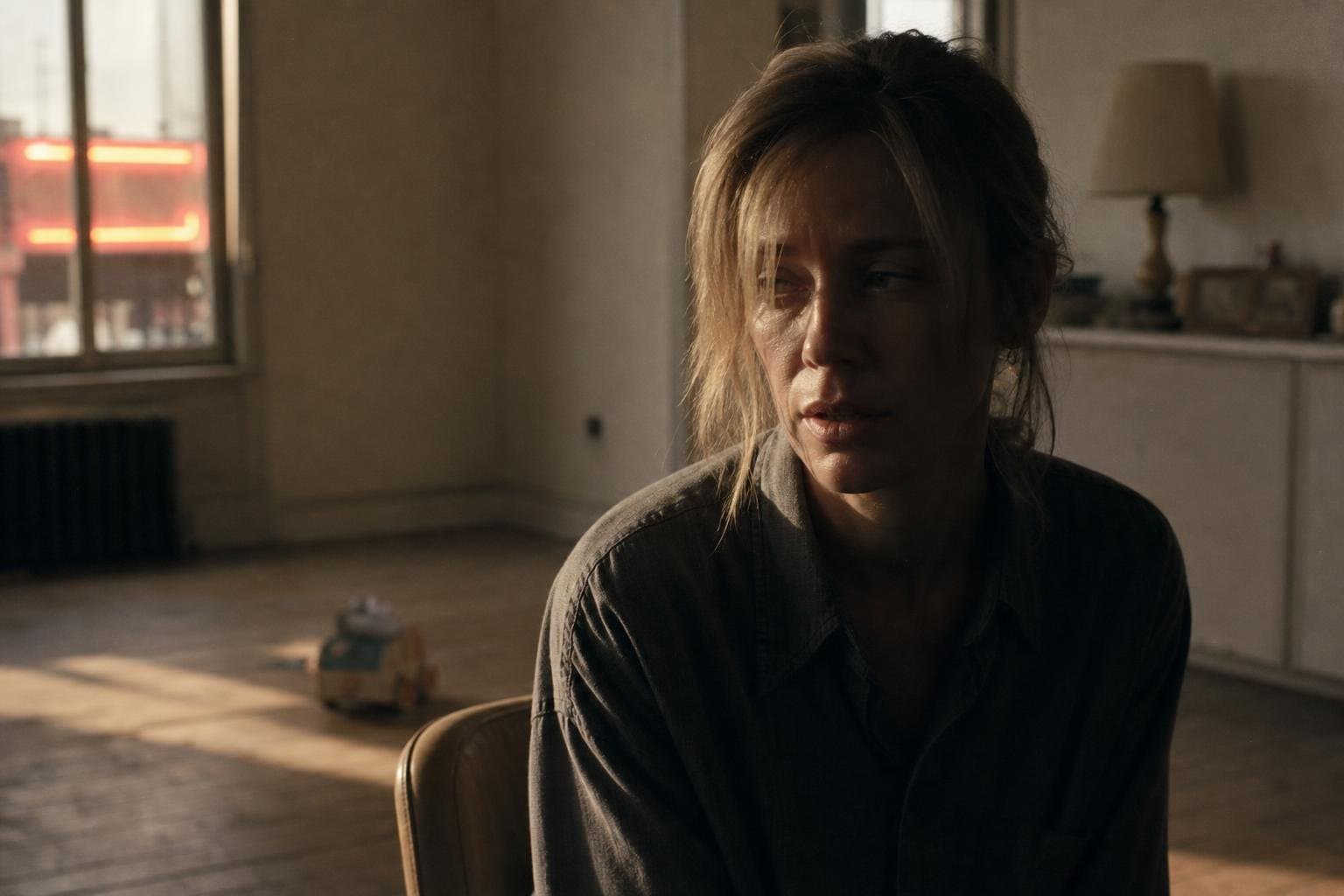

Elizabeth Holmes has already been through the wringer of Hollywood's true-crime machine — Amanda Seyfried played her in a miniseries, the business press picked over every deposition — so the pitch for another Holmes project sounds exhausting on its face. Then you learn who's behind this one, and the exhaustion turns into curiosity. Nathan Fielder and Lance Oppenheim's You Can See Everything opens in U.S. theaters today, following a New York debut, with a UK release set for November 20 — and per Screen Daily's review, it runs 174 minutes, which is a long time to sit with someone the public has already decided it understands.
That's the premise worth sitting with before anything else: two filmmakers who've built careers on questioning whether documentary footage can ever be "real" have pointed their cameras at a woman whose entire public identity is a dispute over what's real. It's either the most redundant true-crime project of the year or the only one with a reason to exist. Based on what's described, it's the latter.
The Film That Doesn't Trust Its Own Access
Fielder is known for Nathan For You and The Rehearsal, both built around him inserting an exaggerated version of himself into other people's lives; Oppenheim made Some Kind of Heaven, Spermworld, and the Emmy-nominated Ren Faire before his narrative debut last month with Primetime (Screen Daily). Put those two sensibilities in a room with Holmes — thirty-four days before she surrendered to serve her sentence for defrauding Theranos investors — and you'd expect either hagiography or ambush. According to the review, the film does neither. It starts as an intimate portrait of Holmes in the San Diego rental house she shared with her fiancé and their two children, with Fielder often on screen interacting with the family directly, and then drifts somewhere stranger: an inquiry into love, reality television, and the limits of what any camera can actually capture about a person's interior life.
This is the choice that matters, and it's a formal one rather than a thematic one. Most true-crime documentaries pretend the camera is a window. Fielder and Oppenheim build films that treat the camera as a participant — their subjects perform for it, negotiate with it, sometimes seem to forget it's there and sometimes clearly don't. Pointing that specific tool at Holmes, a woman whose public reputation rests entirely on the accusation that she performed sincerity she didn't feel, isn't just clever casting of a subject. It's a stress test of the directors' whole method. If Fielder's shtick has ever felt like a bit that works because his subjects are earnest, Holmes is the first subject built to resist earnestness entirely, and the review suggests the film knows it — the directors reportedly can't settle on whether she believes her own insistence that she did nothing wrong, and they let that uncertainty sit instead of resolving it for the audience.
A24's Platform Release Instinct, Again
The distribution shape here is familiar if you've followed A24's documentary playbook this year. A New York debut, then a U.S. theatrical release, then a UK date more than a month later (Screen Daily) — that's a staggered platform rollout built to let critical buzz compound before the film has to prove itself against a wider audience. It's the same logic this newsletter has tracked across A24's specialized titles all year: let the reviews do the marketing, let word of mouth widen the release incrementally, and don't bet the whole opening weekend on a cold audience walking in blind. For a three-hour documentary about a subject the public thinks it's already tired of, that's close to the only strategy that makes sense. You don't open this wide on day one. You open it carefully and let the "fascinating and shocking" notices — the review's own description — do the recruiting.
Whether it works commercially is a different question than whether it works as cinema, and it's worth keeping those separate. A platform rollout can produce a specialized hit or it can produce a film that never finds its audience at all; the strategy buys time, not guarantees.
The Counterprogramming Weekend: Studio Scale vs. Specialized Patience
Put You Can See Everything's rollout next to what's actually dominating UK and Ireland screens this same week and the contrast sharpens. Universal's DreamWorks animation Forgotten Island is opening in 634 venues, Paramount's Street Fighter adaptation in 594, and Disney's Whalefall — Brian Duffield's survival thriller starring Austin Abrams as a diver trapped inside a sperm whale — in 500 (Screen Daily). Those are wide, day-and-date commercial openings designed to capture as much opening-weekend volume as possible before word of mouth even has time to form. A24's Holmes documentary is doing the opposite: a deliberately narrow footprint that depends on critics and festival buzz to do the work those hundreds of screens are doing for the studio titles. Neither approach is wrong. They're just answering different questions — one is betting on volume, the other on patience — and it's useful to remember that "theatrical release" can mean either one depending entirely on who's writing the check.
Physical Media Is Still the Honest Distribution Model
If theatrical windows are where the hype lives, physical media is where the permanence argument gets made, and October is doing some of its best work there in a while. Criterion's long-awaited Stanley Kubrick box set has finally landed, alongside new editions of Jerzy Skolimowski's The Shout, Guillermo del Toro's Frankenstein, and Uli Edel's Christiane F. (IndieWire). The release that says the most about where restoration culture is headed, though, is Ngozi Onwurah's Welcome II the Terrordome — a radically Afrofuturist 1990s feature that was the first by a Black British woman to get a UK theatrical release, which only got its first proper U.S. theatrical run this year courtesy of Janus Films before Criterion picked it up for home video (IndieWire). That's a three-decade gap between a film existing and a U.S. audience being able to see it on a screen, closed not by a streaming algorithm surfacing it but by a repertory distributor and a physical media label deciding it mattered. Streaming windows open and close on a corporate calendar. A disc, once it exists, doesn't expire. That's not nostalgia — it's the actual argument for why physical media still matters to anyone who cares whether films stay findable.
Even the Streaming Exclusives Are Fighting Over the Same Real Estate
Apple TV's October slate leans unusually hard into its own original documentaries — two of its three originals this month are about climbing the world's tallest peaks, which is a strange thing for a notoriously selective platform to double down on (IndieWire). Amir Bar-Lev's The Last First: Winter K2, a Sundance premiere about the 2021 winter ascent of K2, doesn't promise the happy ending that Jennifer Peedom's Tenzing does; the latter, about the Sherpa who helped Sir Edmund Hillary summit Everest, is set to stream starting October 16 (IndieWire). Pairing them is a useful editorial choice on Apple's part — triumph and tragedy on the same mountain range, released in the same month — and it's a reminder that the documentary surge isn't confined to theatrical platform releases. It's happening on streaming exclusives too, just with none of the critical conversation that a theatrical rollout generates. A Sundance premiere that lands directly on a streamer doesn't get the same six weeks of dispatches and reviews that a theatrical platform release does, even when the craft underneath is comparable.
What to Watch For
The real test of You Can See Everything isn't this weekend — it's whether the specialized-box-office numbers after its first full week justify A24 widening the release before the UK date on November 20, or whether the three-hour runtime and the Holmes fatigue cap its audience at the arthouse crowd the Screen Daily review predicts. Keep an eye on whether Criterion's Kubrick set drives any comparable sales bump for Welcome II the Terrordome, which would be the clearest signal yet that restoration culture can actually resurrect a buried film rather than just preserve one everybody already loved. And watch whether Apple keeps investing in theatrical-adjacent documentary pairings like the K2/Everest double, or whether this month is an outlier for a platform that usually treats its own slate like a state secret.


