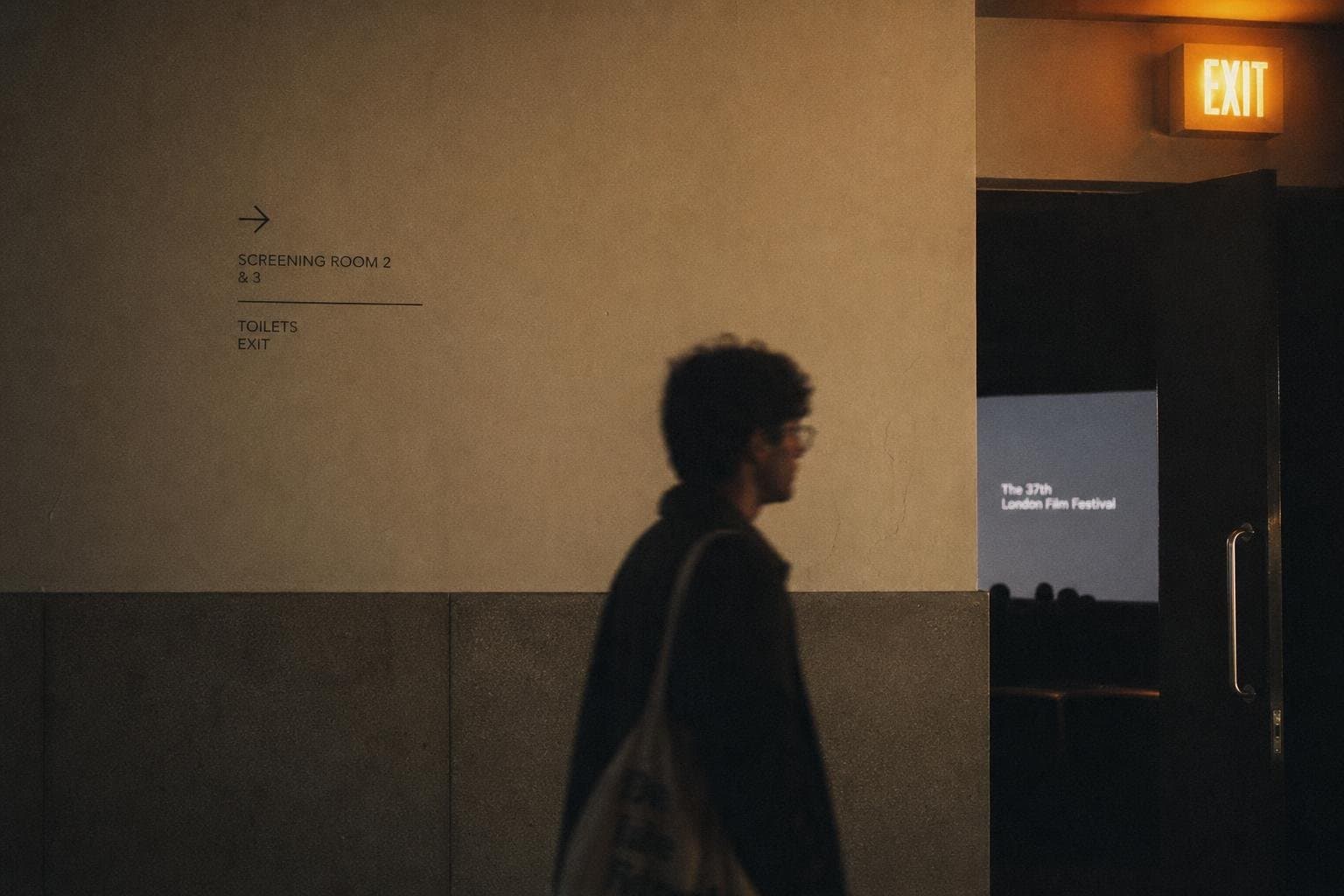

The fall festival season has a reliable rhythm: Venice sets the awards conversation, TIFF confirms it, and everyone spends October arguing about what got left out. This year that rhythm is holding — but the more interesting story isn't which films are winning the critical consensus. It's which ones are arriving with enough formal ambition and distribution uncertainty to actually matter to the readers of this newsletter. The prestige machine will sort out its Oscar contenders. What's worth tracking right now is the work that's genuinely alive, and the question of whether audiences will be able to find it.
A few things are already clear from the TIFF dispatches filtering through. The festival is producing strong work across a range of registers — and the reviews are doing something critics don't always do, which is disagree with each other in productive ways.
The Film Everyone Should Be Watching More Carefully
The Life and Deaths of Wilson Shedd, directed by Tim Blake Nelson, is drawing the kind of response that should make anyone who cares about American independent cinema pay attention. The Playlist's review calls Amanda Seyfried and Scoot McNairy "extraordinary" in what it describes as an unflinching prison drama — and the word "unflinching" gets thrown around so often in festival coverage that it's nearly meaningless, except that Tim Blake Nelson is one of the few American directors who has actually earned it. His work has always been interested in systems that grind people down, and a prison drama is the logical extension of that preoccupation.
What's notable here is the casting. Seyfried has spent the better part of a decade navigating the gap between her commercial profile and her obvious capacity for serious dramatic work. McNairy is one of the most reliably interesting character actors working — the kind of performer who elevates every project he's in without ever quite becoming a household name. A Nelson film built around both of them, in a subject as structurally demanding as the American prison system, is exactly the kind of bet that should be getting more oxygen than it currently is.
The film screened at TIFF. No distribution details are confirmed from the available sources. That's the situation to watch.
The Films That Are Already Generating Friction
Future Tense, directed by Jenna Cato Bass, is described by The Playlist as reimagining time travel as "a provocative colonial reckoning" — which is either the most interesting premise at the festival or the kind of high-concept framing that collapses under its own weight, depending on how the execution lands. The review suggests it's doing something genuinely unusual with the genre's formal conventions, and Bass is a South African filmmaker whose work has consistently refused easy categorization. A time travel film that treats the mechanics of temporal displacement as a vehicle for thinking about colonial history is a structural gamble. The question is whether it pays off in the room or just on paper.
Then there's Onwards and Sideways, John Madden's Parkinson's dramedy with Laura Linney and Rhys Ifans, which The Playlist describes as giving its leads "five good years." That's a warmer reception than the premise might suggest — Parkinson's as subject matter carries obvious prestige-bait risk, the kind of film that gets praised for its sincerity and forgotten by March. But Linney is incapable of giving a dishonest performance, and Ifans has always been better than his material when the material is merely adequate. If Madden has found a way to let the actors work without the film announcing its own importance every ten minutes, this could be something worth seeking out.
Ancestors, David Turpin's queer drama, is a more complicated case. The Playlist review leads with Éanna Hardwicke "mesmerizing" — and then the headline does the rest of the work: "fades fast." That's the most honest kind of festival review, the one that tells you exactly what you're getting. A film that opens with a strong central performance and then loses its structural grip is a specific kind of failure, and it's worth naming. Hardwicke is clearly someone to track; the film around him may not be the vehicle that makes the case.
The Restoration That Changes the Conversation
Separate from the new work, the most significant film event of the fall festival season may already have happened — and it happened at Cannes, not TIFF. The director's cut restoration of Ken Russell's The Devils was, by multiple accounts, the hardest ticket at this year's Cannes Film Festival. IndieWire describes it as "decades-in-the-making" — the film has been effectively suppressed since its 1971 release, when its depiction of religious hysteria and institutional corruption was deemed too extreme for audiences.
The restoration matters for reasons beyond cinephile completism. The Devils is a film about the weaponization of religion and the corruption of institutional power — and as film critic Mark Kermode noted when introducing it at Cannes, those themes are, if anything, more urgent now than when Russell made the film. The director's cut restores material that was cut specifically because it was too confrontational. Seeing what was removed — and understanding why it was removed — is a different kind of film education than watching a pristine 4K transfer of something that was always available.
The distribution question for The Devils restoration is genuinely open. A film this historically significant, with this much critical attention, should find its way to theatrical screens and eventually to a platform like the Criterion Channel, which has been expanding its catalogue aggressively this fall. But "should" and "will" are different sentences, and the film's history of censorship and rights complications makes nothing certain. Watch for announcements.
What the Streaming Moment Is Actually Telling You
While the festival circuit generates its heat, the streaming picture for September is doing something worth noting. The Criterion Channel's September additions include a comprehensive Abel Ferrara retrospective — everything from The Driller Killer through 2024's Turn in the Wound — alongside a Girl Bands celebration that puts Josie and the Pussycats and Linda Linda Linda in the same curatorial frame. These aren't random acquisitions. They're arguments about what cinema is and where it comes from.
The Ferrara retrospective is particularly well-timed. He's a director whose reputation has always outrun his mainstream visibility — the kind of filmmaker who gets cited constantly by people who've seen three of his films and mythologized by people who've seen all of them. A comprehensive retrospective on a platform with the Criterion Channel's audience is the right way to correct that, and it's the kind of programming decision that actually changes how people understand American independent cinema's history.
This is the distribution argument that doesn't get made often enough: the streaming platforms that are doing the most interesting work aren't the ones chasing new releases. They're the ones building context. A viewer who watches the Ferrara retrospective in September and then encounters The Life and Deaths of Wilson Shedd in a theater in November has a richer frame for understanding what Nelson is doing. The ecosystem works when the pieces connect. It mostly doesn't connect, which is why the moments when it does are worth marking.
The Broader Fall Picture — And What's Missing
The UK-Ireland box office is currently being dominated by holdovers and franchise product, with Screen Daily reporting that new releases have been struggling to crack the top ten. That's a familiar pattern for this time of year — the summer's commercial momentum is still dissipating, and the fall's prestige releases haven't arrived in force yet. The gap between what's playing and what's worth watching is at its widest right now.
Spider-Man: Brand New Day has become the highest-grossing domestic release of all time, per The Playlist — a record that tells you everything about the current commercial moment and nothing about what's interesting in it. The specialized box office exists in a different conversation entirely, and that conversation is just starting to get loud.
What's missing from the current TIFF coverage — and this is a structural problem with how festival dispatches work — is any serious engagement with distribution. Films get reviewed, reactions get filed, and the question of whether anyone outside a festival audience will ever see them gets deferred until someone announces a deal. The films that deserve the most attention are often the ones with the most uncertain futures: the Tim Blake Nelson prison drama, the Jenna Cato Bass time travel film, the David Turpin queer drama that opens strong and loses its footing. These are exactly the films that need distribution advocacy, not just critical enthusiasm.
The fall season's most important decisions aren't happening on screens right now. They're happening in acquisition meetings. Watch for announcements from Neon, MUBI, IFC, and Kino Lorber over the next four to six weeks — that's when the TIFF slate becomes a distribution story, which is when it becomes a story this newsletter can actually track to its conclusion.
The films are there. The question is always the same one: can you find them?


