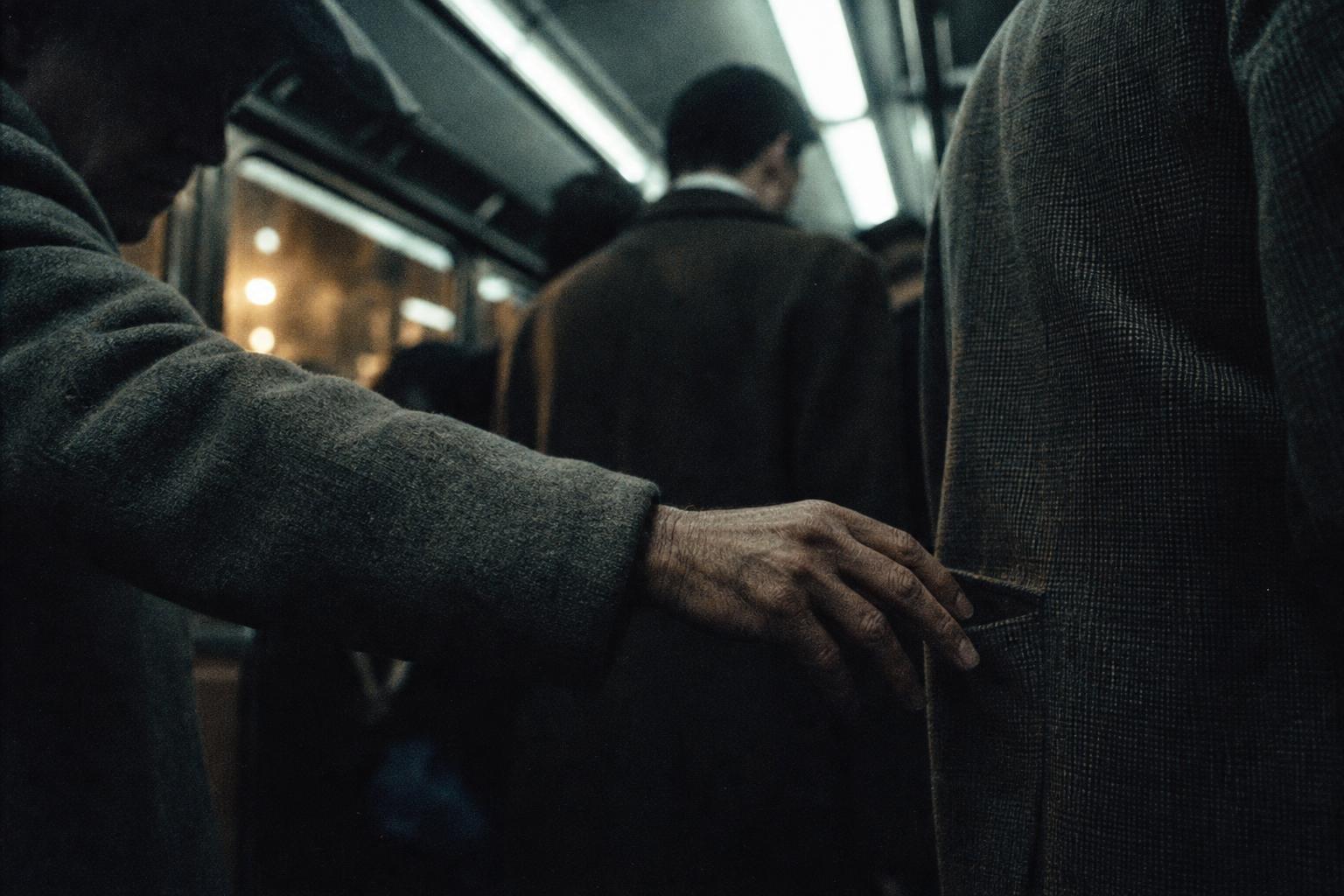

Sony Pictures Classics took a six-screen specialty release and turned it into a 1,112-screen expansion in its second week, and the film crossed $1.9 million domestic with an estimated cume of $2.1 million, per Deadline. That's not a blockbuster number by any measure. It's also not supposed to be. It's a specialty distributor doing the thing specialty distributors are supposed to do: find a film critics and early audiences respond to, prove it on a handful of screens, then widen the release once the demand is real instead of hoped-for. The fact that it still works, in November 2026, is worth sitting with for a minute, because most of this newsletter's coverage this fall has been about the ways that playbook is breaking down.
The film that earned the bet. The Only Living Pickpocket in New York, directed by Noah Segan and starring John Turturro as an aging pickpocket racing to return a stolen USB drive to a vengeful crime family, didn't arrive as a guaranteed commodity. It built its case the old way — Turturro picked up a Gotham Award nomination and the Golden Eye Award at the Zurich Film Festival before SPC widened the release, according to the same Deadline report, and Turturro and co-star Tatiana Maslany have been doing the awards-season press circuit, talking to The Playlist about the film and its reception. That's the sequence that used to be unremarkable and is now almost quaint: platform, festival pedigree, critical heat, expansion. Watching it actually play out this week is the most encouraging data point I've had in a while, because it confirms the problem with most specialty bombs isn't the strategy — it's that too few films are good enough to justify the strategy's patience.
The Everest Stunt and the Diminishing Returns of Spectacle-as-Marketing
Contrast that with Everest: The Other Side, the National Geographic documentary from Elizabeth Chai Vasarhelyi and Jimmy Chin, which opened to $1 million across 515 locations, with IMAX screens accounting for the bulk of that total, per Deadline. That's a real number for a documentary and nothing to sneer at. But the marketing push around it — Chin and skier Jim Morrison rappelling down the side of a 12-story building on the Sunset Strip to promote the film, also covered by Deadline — tells you something about how documentary distributors are competing for attention now. It's a stunt literally lifted from the film's own subject matter, which is clever in theory and a little symptomatic in practice: when a climbing documentary needs its own climbing stunt to generate a news cycle, that's the platform-era tax on specialty releases. You don't just make the film anymore. You stage a second, smaller spectacle to get anyone to notice the first one.
I don't think that disqualifies the documentary — I haven't seen it, and IMAX-driven openings for docs aren't new. But it's a useful marker of where specialty marketing budgets are actually going this fall: not toward sustained platform patience like SPC extended to Pickpocket, but toward single-day attention spikes designed to convert into opening-weekend numbers before the next news cycle buries the story.
The Films With Nowhere to Go, Revisited
Back in October I wrote about fifteen well-reviewed festival films sitting without distribution while Laika spent five years hand-molding trees for a studio release — a gap between critical consensus and actual access that hasn't closed. This week offers a partial, modest answer to that gap, and it's worth naming because it's a genuinely different model than theatrical platforming.
Letterboxd's Video Store is running its November "Unreleased Gems" shelf, renting out festival titles that have "slipped through the cracks" of traditional distribution — Tribeca and Slamdance standouts and at least one SXSW premiere the site's editors singled out as a festival favorite — for a 30-day digital rental window running November 12 to December 12, per Letterboxd. This isn't a theatrical release and I'm not going to call it one. It's a time-boxed rental program for films that, as far as the public record shows, still don't have traditional distributors. But it's an actual mechanism for a film to reach paying audiences without waiting for a theatrical deal that may never arrive, and it's more honest about what it is than most of the alternatives — it doesn't pretend a Sundance premiere is "coming soon" to a theater near you. It just says: here it is, for a month, go watch it.
Whether that model scales past a curated monthly shelf is an open question. A 30-day rental window is not a release strategy a filmmaker can build a career on, and it won't replace the festival-to-distributor pipeline that's clearly strained this year. But as a stopgap for films that would otherwise simply vanish after their festival lap, it's more useful than another Sundance acquisitions report with no buyer attached.
Scale Is Not a Distribution Strategy, and It's Not a Review Either
This week also delivered a reminder that "big" and "good" remain unrelated variables, which is a point this newsletter returns to because the industry keeps forgetting it. Ramayana: Rise of a Legend, Nitesh Tiwari's adaptation of the Sanskrit epic, opens in UK cinemas via Sony on November 6, per Screen Daily's release calendar, arriving as a three-hour, effects-dense spectacle that IndieWire's review describes as relentlessly, almost compulsively big — gods, armies, flying machines, musical numbers, barely a breath for quiet character work. The review is admiring of the ambition and explicit about the cost: scale substituting for the interiority a three-hour epic should have room for. That's a mainstream theatrical release, not a specialty title, and I'm not grading it on indie-film curve. But it's a useful counterweight to a trend I keep flagging in actual specialty cinema too — distributors and directors reaching for "epic" as a synonym for "important," when the two have never been the same thing.
You see the smaller-scale version of the same instinct in I Play Rocky, Peter Farrelly's dramatization of the making of Rocky, which Film Comment describes as mirroring its subject's own structure so literally — training montage for the writing process, stations-of-the-cross biopic beats — that it becomes "a pandering, frictionless fable." That's a studio production mimicking the shape of an underdog indie story without the friction that made the original worth telling. Farrelly's film isn't under this newsletter's specialty-distribution microscope the way Pickpocket or the Letterboxd rental titles are, but it's the same disease in a different wing of the hospital: prestige packaging standing in for the risk-taking it's supposed to represent.
What to Watch
The real test for the platform-release model isn't this week's numbers, it's whether SPC keeps expanding Pickpocket into December and whether the specialty box office holds up against a thinning fall slate, a pattern Deadline flagged as a "few new releases" problem for the frame generally. Watch too whether Letterboxd's Video Store rental shelf becomes a recurring monthly fixture rather than a one-off experiment — if it survives into 2027 with a reliably stocked slate of orphaned festival titles, that's a genuine new distribution lane, not a stopgap. For now, the lesson of this particular week is almost embarrassingly simple: the oldest trick in specialty distribution, patient platforming behind a film audiences actually respond to, still outperforms the stunts built to manufacture that response artificially. Someone should tell the marketing departments before they book another building to rappel down.


