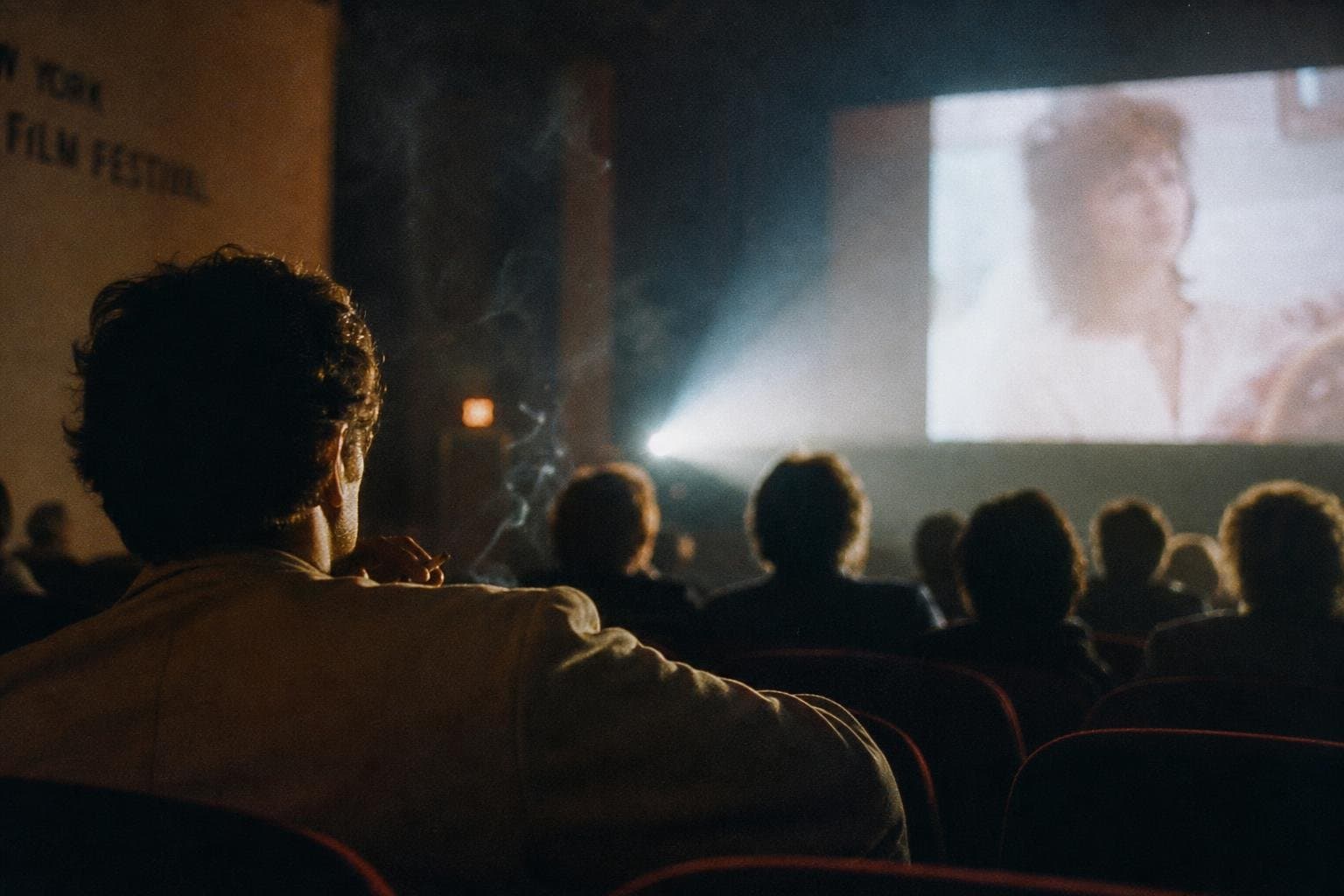

The New York Film Festival selections dropped last week, and the titles getting the most attention aren't the ones in the main competition. They're in the Spotlights section — and that gap is worth sitting with for a minute.
The Playlist reported that the NYFF main slate includes All of a Sudden, Fatherland, and Misty Green, while the Spotlights section features Tom McCarthy's A Statement, Jesse Eisenberg's The Debut, and Cristian Mungiu's Fjord. That's a Palme d'Or winner and one of American indie film's most reliable craftsmen sitting outside the main competition. Make of that what you will about NYFF's curatorial priorities this year — but the more interesting story is what it signals about the fall ecosystem as a whole.
Venice Is the Real Opening Bell
Before NYFF even screens its first film, the fall festival season kicks off at Venice, running September 2–12 per Screen Daily's festival calendar, followed immediately by Telluride (September 3–7) and Toronto (September 10–20). That three-week stretch is where awards narratives get written, distribution deals close, and the indie ecosystem either gets its oxygen or doesn't.
The Venice lineup, as Screen Daily reported when it was announced in July, skews heavily male in its directorial selections — a choice Alberto Barbera's team made that's already drawn notice — and leans toward established auteurs: Martin McDonagh's CIA thriller Wild Horse Nine (backed by Film4, releasing through Searchlight), Florian Zeller's Bunker, and Lee Chang-dong's Possible Love, his first film in eight years since Burning. That last one is the title I'd watch most closely. Eight years is a long time, and Chang-dong doesn't make films that fit neatly into any acquisition playbook. Whoever picks up Possible Love for North American distribution is making a statement about their audience's patience and sophistication.
The question the Venice lineup raises — and doesn't answer — is where the genuinely risky work is. A lineup of established names making expensive-looking films is a safe bet for red-carpet coverage. It's less obviously a bet on the kind of formal risk-taking that makes festival seasons worth arguing about.
What's Actually Available Right Now
While the festival circuit gears up, the streaming situation in August is more interesting than it usually is at this point in the summer.
The Criterion Channel's August slate is doing something quietly pointed: a series called "Rock Biopics that Don't Suck," which IndieWire's monthly streaming guide describes as ranging from Ken Russell's Lisztomania to I'm Not There and Love & Mercy. The framing is a direct rebuke to the estate-approved biopic industrial complex — the same one I wrote about in April when Michael landed with a thud. The Channel is essentially programming a corrective argument, which is exactly what a subscription streaming service should be doing.
The pick IndieWire flags as their title of the month is Sophy Romvari's Blue Heron, described as "utterly wrenching" — a feature-length memory piece about time, grief, and memory from a Canadian filmmaker moving into the feature space. I wrote about Blue Heron back in July when it landed on the Criterion Channel; if you haven't watched it yet, the excuse window has officially closed.
Disney Plus, meanwhile, is carrying Sara Dosa's documentary Time and Water, which IndieWire's guide calls one of the best documentaries of the year — a film that premiered at Sundance and has now found a platform home. That's a distribution path worth tracking: Sundance documentary to Disney Plus is still an unusual route, and whether it actually reaches an audience there is an open question the platform's opacity makes impossible to answer.
The Fall Acquisition Race Is Already Starting
The more structural story underneath all of this is that the acquisition market is about to get very loud, very fast. Venice and Toronto together will produce the bulk of the year's major indie distribution deals, and the players who've been building infrastructure — MUBI's financing arm, Kino Lorber's physical media pipeline, Neon's theatrical-to-streaming playbook — will be tested against a slate that's heavier on prestige auteurs than on the kind of mid-budget risk-taking that generates genuine surprise acquisitions.
The title I'd watch for acquisition news is Josephine, which The Playlist reported won both the Grand Jury Prize and Audience Award at Sundance and has a confirmed theatrical release date of November 20. That's a film with a distributor, a date, and a trailer — the full package. Director Beth de Araujo is the name to know here; the Sundance double-win is the kind of signal that tends to translate into a real theatrical run if the marketing holds.
The fall is about to happen very quickly. Venice in two weeks, Toronto a week after that. The films worth your Friday nights in October and November are being decided right now, in rooms most of us don't have access to. That's the part of indie film nobody talks about enough — and it's the part that determines whether the good work actually finds you.


