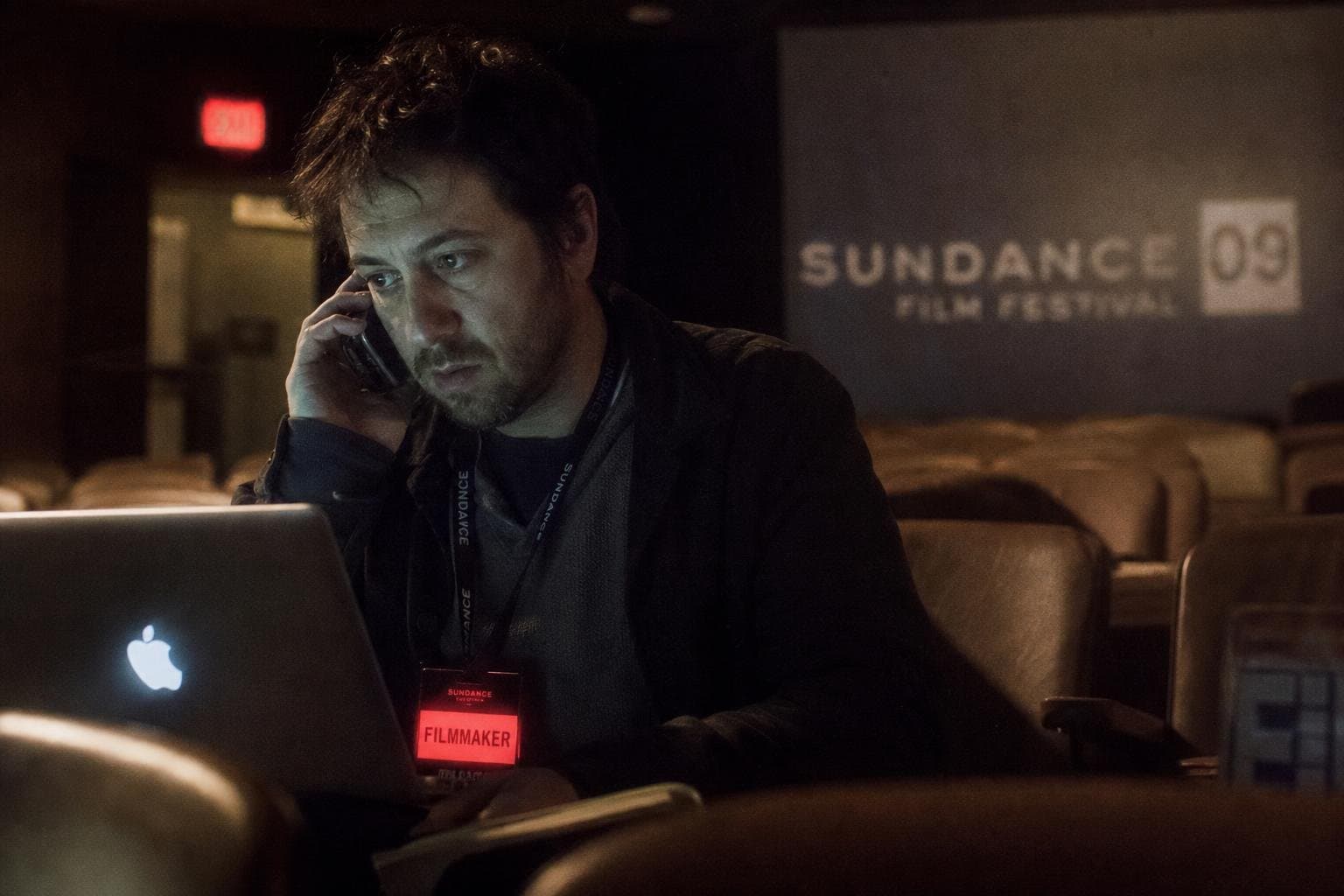

Every January, trade coverage treats the Sundance sales board like a scoreboard — who got the big deal, who got shut out, who's going to Netflix for an embarrassing sum nobody will confirm on the record. But IndieWire's running tally of Sundance 2026 sales buries the actual headline in its first paragraph: of the 90-plus films and episodic series that premiered this year, only about a dozen arrived with distribution already in hand. Everything else was gambling on the festival itself to do the selling.
That's not a scandal. It's the business model now, and it's worth sitting with what that actually means for the films that don't get the Greenwich Entertainment call.
The Festival Isn't a Launchpad Anymore — For Many Films, It's the Whole Flight
Screen Daily's recent feature on festival economics is the piece I wish more people read before they wrote another "distribution is dead, long live streaming" essay. Lidia Damatto, co-founder of the sales agency MoreThan Films, frames the festival circuit as "one of its windows of distribution" for arthouse titles — the first window, ideally, with the hope that a theatrical or streaming deal follows. But she's blunt that for some films, the festival run will be the only window. Cecilia Pezzini, an acquisitions manager quoted in the same piece, calls festivals "an alternative form of distribution" outright, not a stepping stone toward one.
Read that against the production numbers also cited in the piece — a record 9,600 films made globally in 2024 — and the math gets grim fast. Supply is up, distributor appetite is down, and festivals have quietly absorbed the function that used to belong to theatrical bookers and streaming acquisition executives. Damatto notes that screening fees will never recoup a production budget, but for certain high-risk arthouse titles, a long festival circuit run can actually out-earn a minimum guarantee from a sales deal that never materializes. That's a genuinely strange inversion: festivals as revenue stream, not just as billboard.
It also means a film's "festival run" is no longer a brief, glamorous pit stop. It's the release.
Two Sundance Films, Two Very Different Timelines — And That's the Point
The IndieWire sales tracker gives us a clean before-and-after of what actually happens to the lucky dozen. Michal Marczak's documentary "Closure" — his fourth feature, following a father's search for a missing son using drones and GPS trackers rather than conventional archival footage — sold to the distributor 1-2 Special and has a confirmed theatrical opening of October 28. That's a real date attached to a real acquisition. Compare that to NB Mager's Sundance debut about a student staging a musical around a school shooting, starring Alyssa Marvin, Patrick Wilson, Margaret Cho, Elizabeth Marvel, and Molly Ringwald, which Greenwich Entertainment acquired with a theatrical release pegged for "early 2027." Both are acquisitions. Neither is "coming to theaters now." One has a hard date nine months out from its sale; the other doesn't even have a season locked, just a year.
This is the distinction trade coverage collapses constantly, and it's the one that actually matters to a reader deciding what to anticipate. An acquisition announcement is a company putting money behind a film. A release date is a company committing to a specific week you can plan around. Sundance generates plenty of the former and comparatively little of the latter, and the gap between them can run the better part of a year — plenty of time for a distributor's strategy, or their solvency, to change.
"More Widely Available" Is Doing a Lot of Quiet Work in That Sentence
Here's where it gets more interesting, and more honest about what happens to the films that don't get a Greenwich or a 1-2 Special deal with a press-friendly date attached. Letterboxd's September "Watchlist This!" column flags a handful of "critically acclaimed coming-of-age dramas that first premiered at this year's Sundance Film Festival and are now more widely available" — without naming a platform, a screen count, or a release tier. That phrasing is doing exactly what Damatto's comments predicted: these are films whose distribution story isn't a triumphant theatrical rollout, it's a slow diffusion into availability that the trade press barely tracks because there's no acquisition press release attached to generate a headline.
I don't think that's a failure of Letterboxd's reporting — if anything, it's an accurate reflection of how murky this tier of release has become. But it should bother you a little that the most honest distribution update some Sundance films get is a bubbling-under column written for completists, months after the festival wrapped, with no specifics about where or how you'd actually watch them. The acquisition announcement gets the headline. The actual access — streaming exclusivity, screen count, whether it's day-and-date or windowed — gets a vague clause in a recommendation roundup.
The Fall Calendar Is About to Make This Worse Before It Makes It Better
Screen Daily's festival and markets calendar shows just how compressed the back half of this year is: the New York Film Festival running September 25 through October 12, Zurich and Reykjavik wrapping in early October, Busan opening October 6, BFI London opening October 7, Vancouver's festival running through October 11. That's five-plus major events overlapping or immediately sequential, each generating its own wave of premieres, reviews, and — per the Screen Daily feature above — its own mini-economy of screening fees for films still hunting a home.
Every one of those festivals will produce a "sales so far" story like Sundance's. Most of those stories will report acquisitions, not release dates. A handful will report neither — just a strong reception and a sales agent still fielding calls. The volume of festival activity this fall doesn't fix the distribution bottleneck Damatto describes; it just produces more films stacked up behind the same narrow set of distributors willing to commit to actual dates. Kino Lorber, Neon, MUBI, and a handful of smaller outfits like 1-2 Special or Greenwich can only absorb so much in a given cycle, and the ones that miss the window don't disappear — they go into the "more widely available" column eight months later, if they're lucky.
What to Actually Watch For
If you want to track whether this year's festival glut turns into real access rather than festival-only purgatory, there are two concrete dates worth putting on the calendar. "Closure" opens theatrically October 28 — watch whether 1-2 Special expands it beyond a platform release or lets it sit in a handful of cities, which will tell you whether the distributor believes in word-of-mouth or just wanted a qualifying run. And keep an eye on Greenwich Entertainment's "early 2027" language for the Mager film — vague release windows like that often slip, and a slip from "early 2027" to "spring 2027" or later is itself a data point about how confident a distributor is in a title's commercial prospects.
The dozen films that sold at Sundance this year got the headline. The other eighty-plus are the ones that will actually tell you, over the next twelve months, whether the festival-as-distribution model Damatto and Pezzini describe is a sustainable alternative or just a slower, quieter way of letting most independent films fail to find an audience at all.


