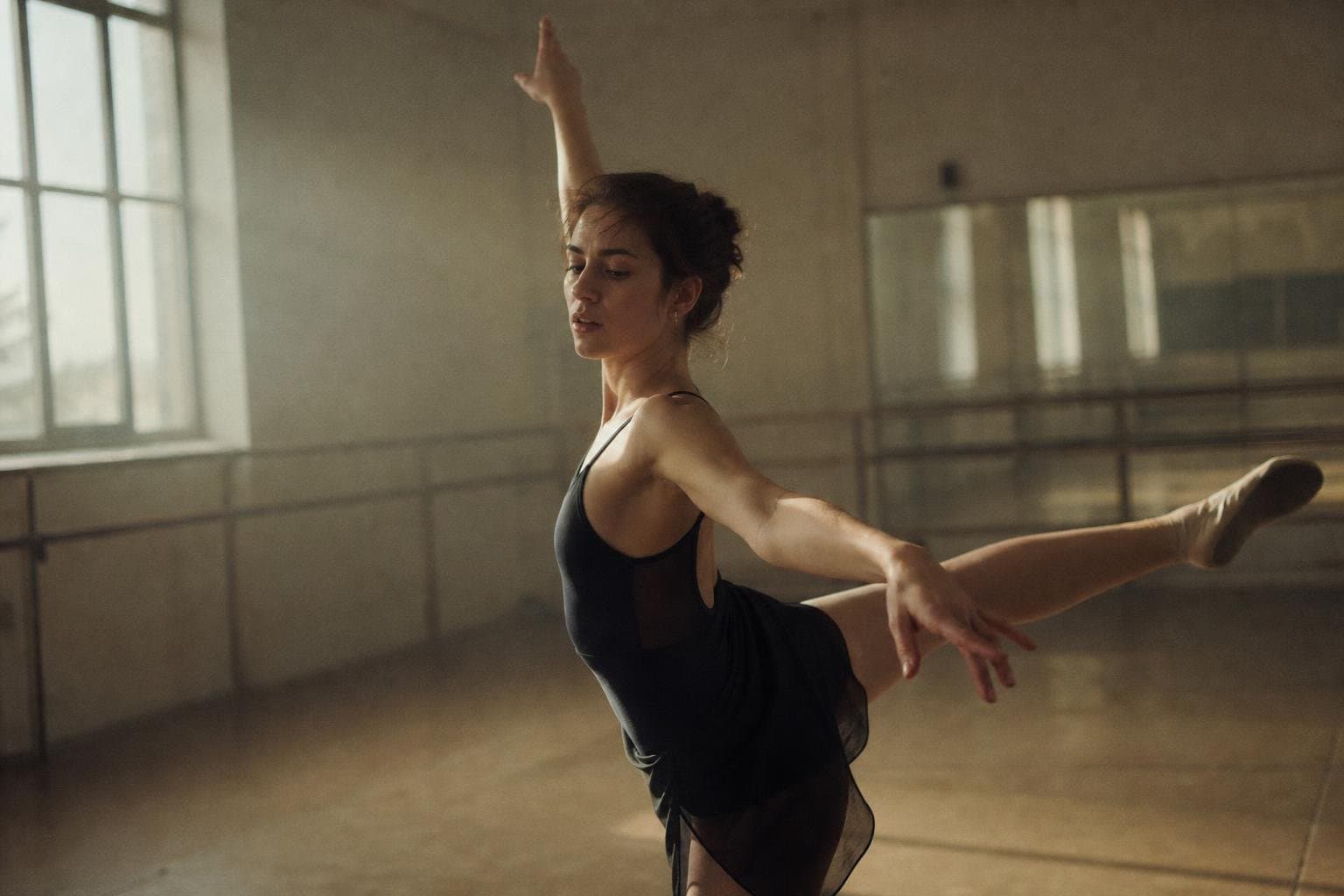

There's a particular kind of film announcement that lands differently from the rest. Not the trailer drop, not the acquisition news, not the festival premiere — but the production announcement, the one that arrives while the cameras are still rolling and the edit doesn't exist yet. Sonoya Mizuno's Stages is that kind of announcement. A24 handling North American distribution, Focus Features taking international rights through Universal Pictures International, a cast that includes Julie Delpy, Takehiro Hira, Kathryn Hunter, Kate Dickie, and Emma D'Arcy, and a director making her debut who trained at The Royal Ballet School before dancing professionally with three major European companies. Production is currently underway in the UK.
That's a lot of infrastructure for a first film. And the gap between "infrastructure" and "finished film" is exactly where the interesting questions live.
The Directorial Debut Problem, Reframed
The standard narrative around high-profile directorial debuts goes one of two ways: either the film arrives garlanded with festival buzz and the debut becomes a coronation, or it arrives with a thud and everyone quietly pretends the announcement never happened. What rarely gets examined is the structural bet being made before a frame has been screened publicly — the decision to commit distribution resources, cast, and co-production infrastructure to someone who has never directed a feature.
Mizuno's case is worth examining carefully because the bet is unusually legible. She made her acting debut in Alex Garland's Ex Machina and has worked with Garland since — he's a producer on Stages. That's not incidental. The Garland connection explains a great deal about how this film got made: it's not a cold pitch from an unknown quantity, it's a project with a built-in advocate who has a long relationship with A24 and a track record of backing unusual formal choices. The institutional trust is being transferred, not created from scratch.
This matters because it's a different model than the one that produces most debut features. The typical indie debut is either self-financed and scrappy, or it's a Sundance discovery that gets acquired after the fact. Stages is neither. It has distribution locked before the film exists in any form audiences can evaluate. That's a vote of confidence that carries real financial weight — and real risk, because the film now has to justify the infrastructure rather than finding infrastructure that fits the film.
The question worth sitting with: does pre-committed distribution liberate a debut director or constrain her? The answer probably depends on whether the film's formal ambitions survive the institutional machinery around them.
What the Subject Matter Signals — and What It Doesn't
The premise of Stages — a young dancer at an elite ballet school who earns the lead in a prestigious recital, only for her focus to be shattered by a family tragedy — is going to invite immediate comparisons to Black Swan, and those comparisons will be mostly useless. The ballet-world psychological drama is a genre with enough entries now that the subject matter alone tells you almost nothing about what kind of film this will be. What it does tell you is that Mizuno is working in territory she knows from the inside: she trained at The Royal Ballet School and danced professionally with the English National Ballet, the Dresden Semperoper Ballett, and Scottish Ballet. That's not background color — that's a director who has lived the institutional pressures, the physical demands, and the specific social dynamics that the film is presumably dramatizing.
The distinction between a filmmaker who researched a world and one who inhabited it tends to show up in the texture of scenes rather than in their architecture. It's the difference between choreography that looks correct and choreography that feels inhabited. Whether Mizuno can translate that embodied knowledge into formal filmmaking choices — camera placement, editing rhythm, what to show versus what to withhold — is the actual question the film will answer. The premise doesn't answer it. The cast doesn't answer it. Only the film does.
What the cast does signal is tonal range. Julie Delpy brings a particular kind of European naturalism; Kathryn Hunter is one of the more genuinely strange presences in British film and theater; Emma D'Arcy has demonstrated real range in prestige television. That's not a cast assembled for comfort or commercial safety. It suggests Mizuno is interested in something more unsettling than a straightforward coming-of-age drama. Whether the film earns that cast is, again, a question only the finished work can answer.
The Distribution Architecture and What It Reveals About A24's Current Strategy
The split between A24 (North America) and Focus Features (international, through Universal Pictures International) is worth pausing on. This isn't a standard A24 worldwide deal — it's a co-distribution arrangement that parcels out territory. That structure typically emerges when a film's financing requires multiple partners, or when the international commercial profile of a film is seen as distinct from its North American one.
Focus Features has historically been the home of prestige arthouse fare with genuine international appeal — films that play well in European markets where the A24 brand has less penetration. The involvement of Film4 was originally announced and has since been dropped, per Screen Daily's reporting. That's a notable change in the financing structure, though the piece doesn't detail what replaced Film4's involvement or how the budget was restructured as a result.
What the distribution architecture suggests is that Stages is being positioned as a film with genuine international ambitions — not a niche American indie that might get a token European release, but something designed to travel. The ballet world is inherently international; the cast is deliberately multinational; the UK shoot places it outside the American indie ecosystem entirely. A24 is betting that this film will find audiences in the same territory where films like The Favourite and Saint Maud found theirs.
That's a coherent bet. It's also a bet that requires the film to be genuinely good rather than merely interesting, because the international arthouse audience is less forgiving of prestige packaging without substance than the American festival circuit tends to be.
The Letterboxd Context: What the Audience Is Actually Watching Right Now
Here's the useful counterpoint to all this pre-release positioning: the Letterboxd community's August 2026 top 25 films of the year — films with at least 15,000 ratings and a first national release through July 31 — tells you something about what's actually resonating with the film-literate audience that Stages will eventually need to reach.
The list is genuinely eclectic. The Invite appears, which this newsletter has covered at length. Leviticus and Maddie's Secret both make it — two films that were interesting precisely because of their distribution strategies. Blue Heron is there, which found its home on the Criterion Channel. What's notable is how many of these titles are films that found audiences through unconventional paths rather than through standard theatrical rollouts. The community rewarding them isn't doing so out of indie charity — it's doing so because the films delivered something the mainstream couldn't.
The Criterion Channel's August 2026 additions offer a parallel data point: a month heavy on rock biopics, Southern Gothic, and a newly restored James Baldwin portrait. The Channel continues to function as a discovery mechanism for films that the theatrical ecosystem couldn't sustain — and the audience engagement with that programming suggests there's real appetite for the kind of film Stages is positioning itself as.
The gap between "there's appetite for this kind of film" and "this specific film will satisfy that appetite" is, of course, the entire ballgame. But the ecosystem context matters: Stages is arriving into a moment when the film-literate audience is actively engaged, actively rating, and actively rewarding films that take genuine formal risks. The Letterboxd top 25 isn't dominated by safe choices — Jim Queen, Pavane, and Tuner all appear alongside the blockbusters, which is not nothing. That's encouraging for a debut feature with unusual ambitions, provided the film delivers on them.
What to Actually Watch For
Stages is currently in production, which means there's no release date, no festival premiere announced, no trailer, and no critical response to evaluate. What exists is a production announcement, a cast, a distribution structure, and a director with a specific set of credentials. That's enough to think carefully about — but it's not enough to evaluate the film.
The markers worth tracking as this develops: whether the film lands at Venice 2027 or Sundance 2027 (the two most likely festival homes given its profile and the UK production timeline), how A24 positions it relative to their other releases in that window, and whether Mizuno's formal choices in the finished film reflect the embodied knowledge she brings from her dance career or get smoothed out by the institutional machinery around her.
It's also worth watching what happens in the physical media space as A24's recent output cycles through to home video. IndieWire's August 2026 Blu-ray roundup is a reminder that the films worth arguing about eventually find a second life in formats that reward rewatching — and that the distributors who invest in that afterlife tend to be the ones who believed in the work from the start. A24's physical media track record is part of what makes their pre-production commitment to Stages legible as a genuine artistic bet rather than a marketing exercise.
The more immediate question is what the Film4 departure means for the film's final form. Co-productions are delicate ecosystems — losing a financing partner mid-production can shift creative priorities in ways that aren't always visible in the finished film but sometimes are. The Screen Daily report notes the change without elaborating on its implications, which is either because the implications are minimal or because they're not yet clear.
The honest position right now is that Stages is one of the most interesting films in development in the indie space — and that "in development" is doing a lot of work in that sentence. The infrastructure is impressive. The talent is real. The subject matter, in the hands of someone who actually lived it, has genuine potential. Whether any of that survives contact with the edit is a question for 2027.
Until then, the announcement itself is the story — and the story it tells is about how A24 is thinking about prestige, about international distribution, and about the kind of debut director worth betting on before a single frame has been screened.


