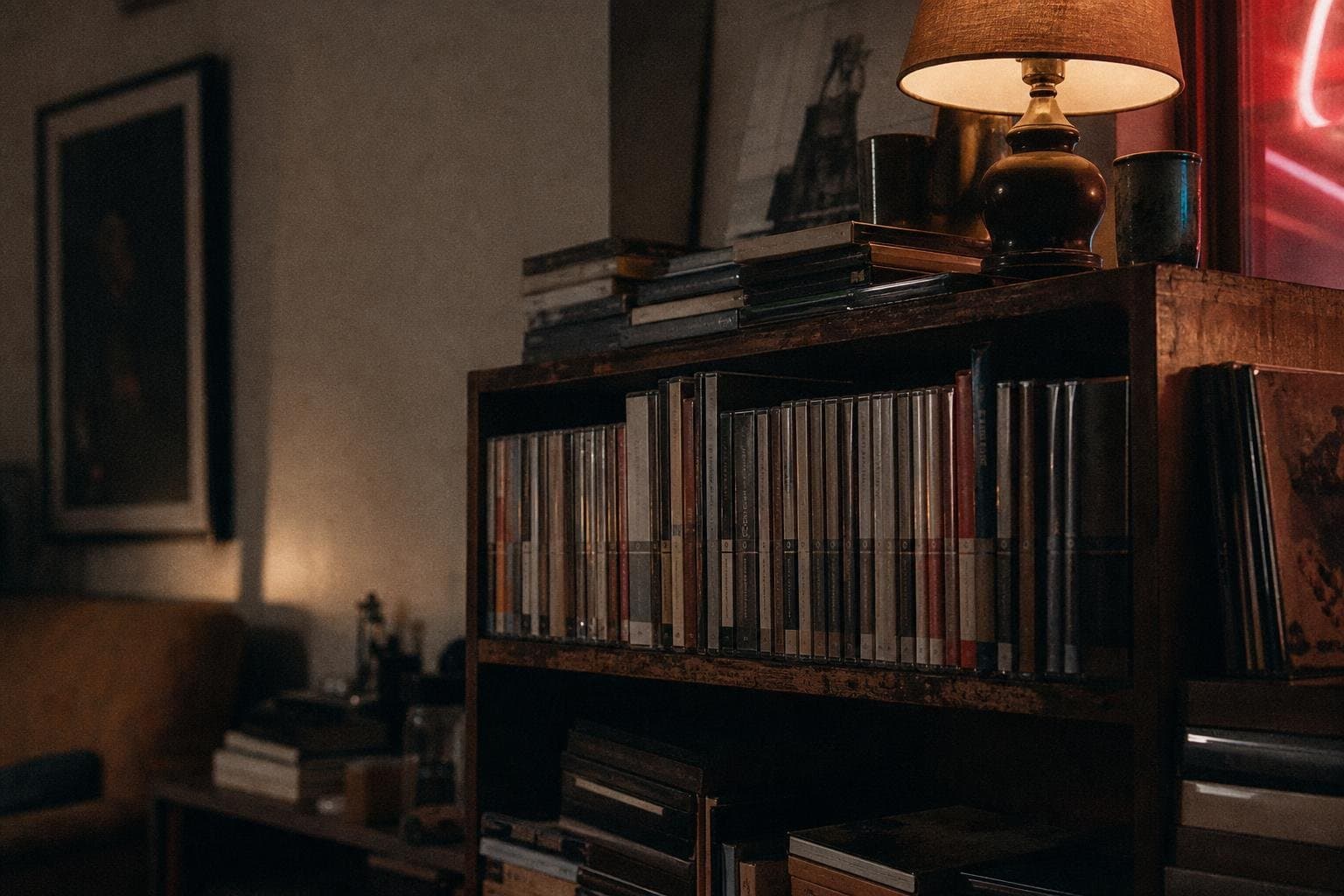

There's a scene in the IndieWire June Blu-ray roundup that tells you everything about where cinephile culture is right now: John Waters' Desperate Living, a 1969 cautionary youth tale called Last Summer, and Bob Rafelson's Five Easy Pieces are all getting new physical releases this month, while the Criterion Channel is simultaneously running a Caribbean Activist Cinema series guest-curated by the Third Horizon Film Festival, pairing films that cycle through the library on a regular basis with titles that are genuinely difficult to find anywhere else.
That contrast — between the reliably canonical and the genuinely rare — is the actual story of film culture in June 2026. Not the theatrical releases, not the post-Cannes acquisition buzz (we covered that last week), but the quieter, more structural question of how films survive between their moments of cultural visibility. Physical media and boutique streaming are doing something the theatrical ecosystem can't: they're providing a floor. And the way they're doing it reveals both the health and the fragility of the whole system.
The Streaming Window Problem Is Real, and Physical Media Is the Workaround
IndieWire's framing for its June Blu-ray guide is unusually candid: the roundup exists to "bring ballast and permanence to your moviegoing at a time when streaming windows on classic movies close just as soon as they open." That's not marketing copy — that's a diagnosis. Streaming platforms license films for fixed windows, and when those windows close, the films disappear. Not into obscurity, exactly, but into a kind of limbo where they're technically accessible (for a rental fee, maybe, on a platform you'd have to remember to check) but functionally invisible.
The films getting physical releases this month are instructive. Five Easy Pieces is a New Hollywood landmark — the kind of film that should be permanently available everywhere, and yet here it is, getting a new release because "permanently available" is not actually how the ecosystem works. Last Summer (1969) is described as "underseen," which is doing a lot of work: it's a film that has presumably been underseen for decades, and a Blu-ray release is one of the few mechanisms that can interrupt that pattern. Physical ownership creates a different relationship with a film than streaming access does. You can't algorithm your way to a film you own; you have to decide to put it on.
The Criterion Collection and Kino Lorber understand this, which is why their release slates function less like product catalogs and more like editorial arguments. The June slate — Waters, Rafelson, the Monty Python German television experiments — isn't random. It's a position on what deserves to exist in permanent, high-quality form. That's a curatorial act, and it's one that streaming platforms, with their licensing-dependent libraries, structurally cannot replicate.
The Criterion Channel's Curatorial Gamble Is More Interesting Than Its Catalog
The Criterion Channel's May-into-June programming is worth examining as a case study in what boutique streaming can do that physical media can't. The Caribbean Activist Cinema series, "You Don't Get Freedom, You Take Freedom," guest-curated by the Third Horizon Film Festival's Jonathan Ali, is headlined by Med Hondo's West Indies: The Fugitive Slaves of Liberty (1979) alongside Jacques Arcelin's Bitter Cane and Arnold Antonin's Haiti: The Way to Freedom. These are not films that are going to get Criterion Blu-ray releases anytime soon. They're too specialized, the audience too uncertain. But streaming makes the economics of a limited-run series like this viable in a way that physical media doesn't.
This is the Criterion Channel's actual competitive advantage, and it's underappreciated. The platform's reputation rests on its canonical holdings — the Bergmans, the Godards, the Kurosawas — but its programming value comes from the edges. The office romance series running concurrently (from pre-code Lloyd Bacon through to the Reagan era) is fine, the kind of thing that cycles through regularly. The Caribbean cinema series is the reason to pay attention.
The June additions to the Criterion Channel — tracked via Letterboxd's community list — include O Brother, Where Art Thou?, Marie Antoinette, Pacific Heights, The Game, and Wild at Heart, a perfectly solid collection of titles that will drive subscriber retention without breaking any curatorial ground. That's fine. The canonical holdings pay for the adventurous programming. The question is whether the ratio stays healthy.
What the Letterboxd "Top 25 of the Year" Tells Us About What's Actually Landing
The Letterboxd June 2026 top 25 films of the year so far is a limited data source — the full list isn't extractable — but the visible titles are suggestive. Project Hail Mary (2026) and 28 Years Later: The Bone Temple (2026) are the obvious tentpoles. Nirvanna the Band the Show the Movie (2025) appearing on a 2026 list suggests it's still finding its audience, which tracks with how cult-adjacent work tends to travel: slowly, through word of mouth, long after its initial release window.
Blue Heron (2025) is the one that catches my eye. It's also appearing on UK-Ireland release calendars for June 26 via Conic, which means it's getting a theatrical release in the UK roughly a year after its apparent initial availability — the kind of slow-burn distribution pattern that used to be unusual and is now increasingly common for films that build their audiences through festival circuits and streaming before finding theatrical footing in secondary markets.
This matters because it complicates the standard narrative about theatrical vs. streaming. The assumption is that streaming kills theatrical, that a film available on a platform has no reason to play in cinemas. Blue Heron's trajectory suggests otherwise: streaming can build the audience that makes a later theatrical run viable. The film arrives in UK cinemas not despite having been available elsewhere, but partly because of it.
The UK-Ireland Release Calendar as a Diagnostic Tool
The Screen Daily UK-Ireland release calendar for June 2026 is, among other things, a useful index of what the arthouse theatrical ecosystem actually looks like right now. June 12 brings Familiar Touch (via Bulldog) and The Fall of Sir Douglas Weatherford (via MUBI) — the latter being a MUBI theatrical release, which is the distribution model the platform has been building toward for several years now. June 26 brings A Private Life (Altitude) and My Father's Island (Curzon), both of which are the kind of mid-sized arthouse releases that depend entirely on the health of the specialty cinema circuit.
What's notable is the density of the slate. The calendar is crowded in a way that suggests either genuine abundance or a logjam — films stacking up because there aren't enough screens or enough audience attention to spread them out. The arthouse theatrical circuit has always operated on thin margins, and a crowded release calendar is as likely to reflect desperation (everyone releasing before summer blockbuster season swallows the oxygen) as it is to reflect health.
A24's Backrooms setting a box-office record for original horror in the UK-Ireland with a £4.3m opening is the counterpoint to all of this. That's not an arthouse film — it's a genre film with arthouse DNA, which is A24's entire business model. Its success doesn't directly benefit the films on the June 12 or June 26 release dates. But it does demonstrate that specialty distributors can still break through at scale, which keeps the ecosystem's ambitions alive even when the economics are grinding. The Playlist's review noted that Backrooms director Kane Parsons turns the creepypasta source material into something closer to a mental-health tragedy — which is precisely the kind of formal ambition that earns A24 the benefit of the doubt when they're also the ones setting opening-weekend records.
The Deeper Pattern: Permanence as a Form of Criticism
Pull back from the individual releases and a pattern emerges. Physical media labels are making arguments about what deserves to last. Boutique streaming platforms are making arguments about what deserves to be seen. Festival circuits are making arguments about what deserves to exist. And theatrical distribution — even the crowded, margin-thin arthouse version — is making arguments about what deserves a room full of people watching it together.
These are all different arguments, and they don't always agree. The films that get Criterion Blu-rays are not always the films that get Criterion Channel programming slots. The films that win at Cannes are not always the films that find theatrical distribution. The films that Letterboxd users are watching are not always the films that critics are writing about.
What the June 2026 release picture suggests is that the ecosystem is doing something right precisely because it's doing several things at once. The Monty Python German television episodes getting a meticulous restoration is not the same cultural act as the Caribbean Activist Cinema series on the Criterion Channel, which is not the same act as Blue Heron finally getting a UK theatrical run. But they're all part of the same project: keeping films alive long enough for the right audience to find them.
The failure mode isn't any one of these mechanisms breaking down. It's the assumption that any single one of them is sufficient. Streaming without physical media means films disappear when licenses expire. Physical media without streaming means films stay rare and expensive. Theatrical without both means films get one shot and vanish. The health of the ecosystem is the health of all three working in parallel, each doing what the others can't.
Watch for whether MUBI's theatrical expansion in the UK — visible in the June 12 release of The Fall of Sir Douglas Weatherford — translates into similar moves in North American markets over the second half of 2026. That's the distribution story worth tracking once the post-Cannes acquisition dust settles.


