


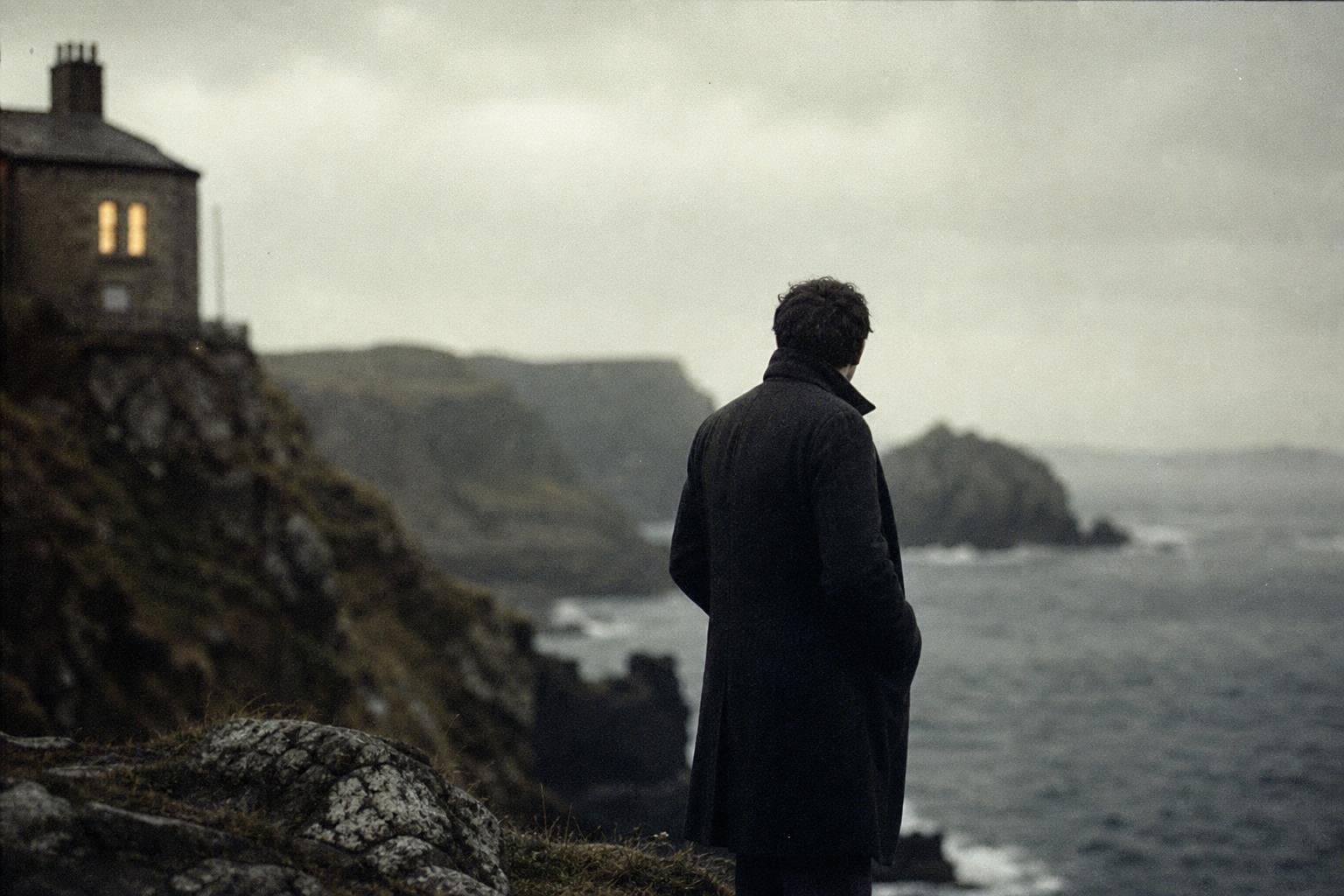

There's a George MacKay interview sitting in The Playlist's recent coverage that deserves more attention than it's getting. MacKay talks about the "magic of Cornwall" and the nerves of one-take filmmaking on Mark Jenkin's new film Rose of Nevada — and buried in that framing is the most genuinely interesting formal story in indie film right now. While the post-Cannes acquisition chatter has dominated the last few weeks (A24 and Club Kid, Neon and everything else), Jenkin has been quietly doing something that almost nobody in English-language indie cinema attempts anymore: building a film around the discipline of the single take, in a specific place, with a director whose relationship to that place is the whole point.
Jenkin is the filmmaker behind Bait and Enys Men — two films that used formal constraint not as aesthetic posturing but as genuine storytelling architecture. His work earns its grain and its silence. So when MacKay describes the "nerves" of one-take filmmaking, that's not a marketing hook. That's a description of a method that puts everything on the line in a way that most prestige indie films, with their careful coverage and their safety-net editing, simply don't.
What Jenkin's Method Actually Costs
One-take filmmaking isn't just a technical challenge. It changes the actor's relationship to the material, the director's relationship to the location, and — crucially — the audience's relationship to time. You can't cut away from an uncomfortable moment. You can't rescue a performance in the edit. The film becomes a record of something that actually happened, rather than a construction of something that looks like it happened. That's a fundamentally different contract with the viewer.
Jenkin has spoken to The Playlist about Cornwall's pull and the danger of nostalgia — which suggests Rose of Nevada is doing something more complicated than a love letter to place. The tension between a filmmaker's attachment to a location and the risk of sentimentalizing it is exactly the kind of productive friction that generates interesting work. The films that romanticize their settings tend to be pretty and inert. The ones that interrogate their settings tend to be alive.
MacKay's presence is worth noting here too. He's an actor who has consistently chosen projects that ask something difficult of him physically and temporally — 1917, All Quiet on the Western Front, work that puts the body under real pressure. One-take filmmaking is a natural fit for that instinct. The "vulnerable bond" language that The Playlist used in its Leviticus coverage — describing how director Adrian Chiarella fostered something between his two leads — points to a broader pattern in the more interesting indie work right now: directors who are engineering conditions for genuine exposure rather than performed emotion.
The Distribution Question Nobody's Asking
Here's where it gets frustrating. Rose of Nevada has confirmed UK and Ireland theatrical dates — Screen Daily lists it opening in UK cinemas on July 10 via MUBI. What's less clear is the US picture. MUBI's involvement suggests a streaming component, but whether that's day-and-date, a theatrical window first, or a streaming-only US release hasn't been confirmed in the sources available to me. That ambiguity matters. Jenkin's previous films found their American audiences largely through the Criterion Channel and festival circuits — a slow burn that worked for Bait and Enys Men but required patience from distributors willing to let word of mouth build.
The Cannes market analysis from Screen Daily's post-festival roundup noted that the Neon/MUBI axis has started to replicate some of the acquisition-frenzy dynamics that used to be reserved for Hollywood titles — meaning even the indie sector is developing its own version of the bidding-war problem, where a few well-capitalized players crowd out the mid-tier distributors who used to be the natural home for formally adventurous work. Jenkin's films sit in that mid-tier by temperament even when they end up with prestigious distribution. They're not built for the algorithm.
Why This Week Is the Right Moment to Pay Attention
The post-Cannes hangover is real, and the coverage tends to compress around the same five or six acquisitions. Club Kid and its $17M A24 deal will get written about for months. Meanwhile, a film by one of the most formally rigorous directors working in British cinema is about to open in UK theaters with almost no oxygen in the room.
If you're in the UK, Rose of Nevada opens in limited theatrical release on July 10. If you're in the US, watch the MUBI announcements — that's where this one will land, and probably sooner than you'd expect. The Jenkin interview at The Playlist is worth reading before you see it. Not because it explains the film, but because it explains the stakes of the method — and knowing what's on the line makes the one-take sequences hit differently.