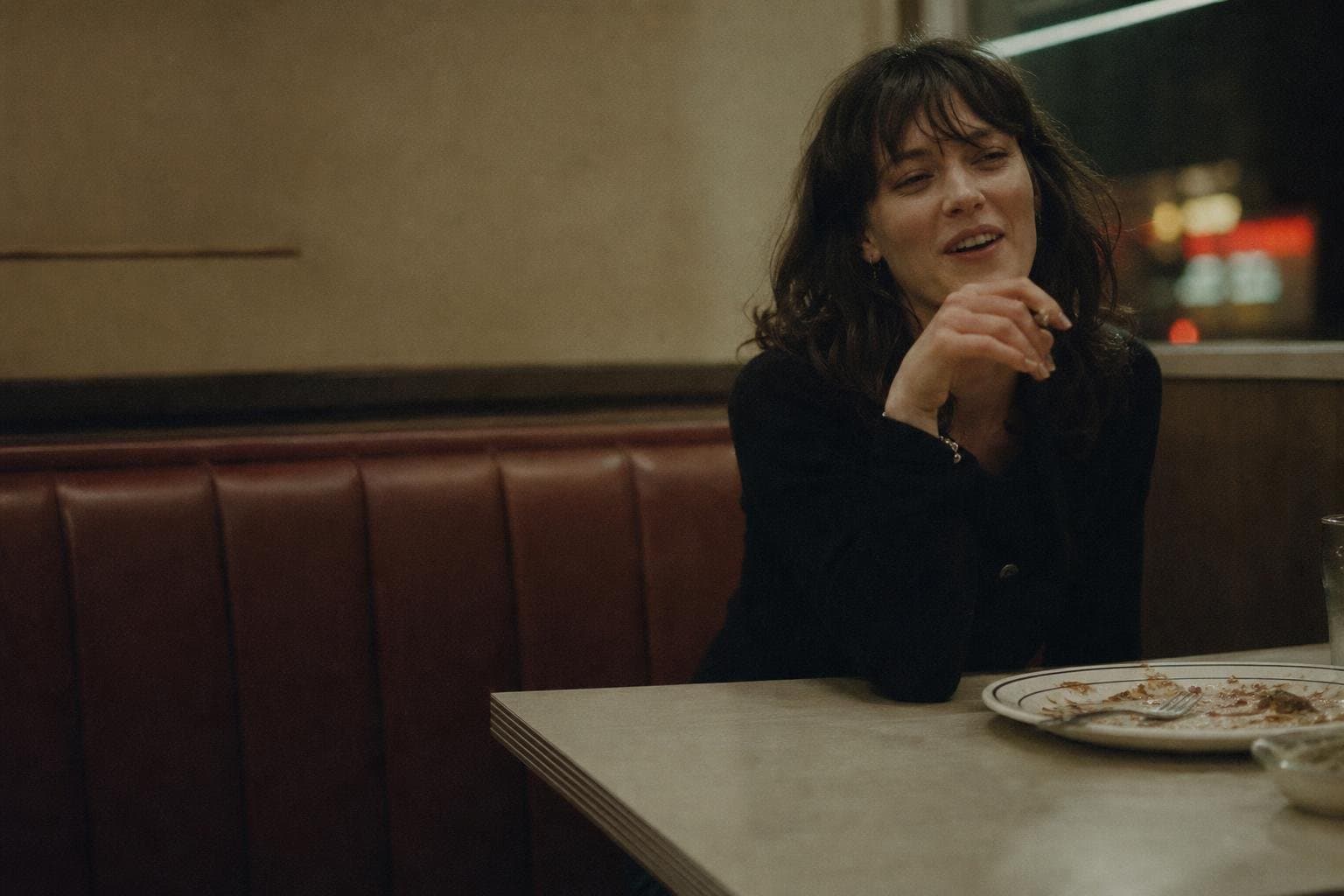

There's a scene in the specialized box office data that tells you everything about where indie film is right now. Maddie's Secret, John Early's debut feature, grossed $58,206 in a single-theater opening weekend at IFC Center in New York — a number that, in context, is genuinely remarkable. That's the biggest opening for a film at IFC Center in more than two years, falling just short of The Taste of Things with Juliette Binoche. For Magnolia Pictures, it's one of the highest single-screen openings in the company's history. And it sold out every showing on Friday and Saturday — not just the Q&As, but the ones Early didn't attend.
That number is worth sitting with. Not because it signals a mainstream breakout — it doesn't, and it won't — but because of what it reveals about the only distribution strategy that's actually working for genuinely hard-to-classify indie films right now.
The Film Nobody Knows How to Describe Is the One Everybody's Talking About
Start with what Maddie's Secret is actually doing, because the marketing challenge is inseparable from the release strategy. Early plays a woman — an aspiring food influencer and content creator struggling with an eating disorder. The film is a comedy, but one tinged with genuine melodrama and pathos, sometimes simultaneously. Magnolia's own materials acknowledge the film is "hard to classify" and "challenging to market and position."
That's not a bug, but it does create a real problem: how do you find an audience for something that resists the logline? The algorithm can't help you. A24's social media playbook — which works beautifully for films with a clean genre hook, as Backrooms demonstrated — doesn't apply here. You can't cut a trailer that captures what Maddie's Secret is without either overselling the comedy or underselling the pathos.
Magnolia's answer is to make the filmmaker the marketing vehicle. Early has been doing as much promotion as he can, appearing at Q&As with a rotating cast of cultural figures — John Wilson, Sarah Sherman, Julio Torres, Ivy Wolk, Theda Hammel, Brace Belden, and Amy Sedaris in New York, with Tim Heidecker and Perfume Genius moderating West Coast talkbacks as the film opens in LA. Magnolia has also programmed screenings of films that inspired Maddie's Secret, including campy '80s movies of the week, and developed a perfume line named after the film — a piece of absurdist marketing that functions as a vibe transmission, telling potential audiences something about the film's sensibility that a conventional campaign couldn't.
This is a miniature roadshow. And it's working.
The Roadshow Isn't Nostalgia — It's Necessity
The roadshow model has a long history in American cinema, but its current revival has nothing to do with prestige or ceremony. It's a response to a specific structural problem: the collapse of the middle tier of specialized distribution.
The old model assumed a funnel. A film opens in New York and LA, gets reviewed, generates word of mouth, expands platform-by-platform to 50 screens, then 200, then maybe 500 if it catches. That funnel requires a press ecosystem that can generate the initial buzz, an audience that reads reviews and acts on them, and a theatrical infrastructure willing to hold screens for slow-burn performers. All three of those conditions have weakened significantly over the past decade.
What's replaced the funnel, for certain kinds of films, is something more like a touring model. You bring the film to the audience rather than waiting for the audience to find the film. You create events rather than screenings. You make the Q&A the product, not the afterthought. The film becomes a reason to gather, and the gathering generates the word of mouth that a press campaign used to provide.
The talent roster Magnolia assembled for Maddie's Secret's opening weekend is doing real work here. Wilson, Torres, Sherman — these are figures with devoted, film-literate followings who exist in the same cultural orbit as Early's sensibility. Their presence at Q&As isn't just promotional; it's curatorial. It tells the audience: this is the kind of film that people like us make and watch. That's a form of positioning that no aggregator score can replicate.
The planned expansion to 25 different markets, with Alamo Drafthouse as a key partner, extends the logic. Alamo's audience is exactly the kind of film-literate, event-hungry crowd that responds to this approach. The chain's programming culture — built around themed screenings, filmmaker appearances, and communal viewing — is structurally compatible with what Magnolia is doing.
What Backrooms Proves by Contrast
It's worth holding Maddie's Secret's strategy against the other major indie story of the past few weeks, because the contrast is clarifying.
Backrooms, Kane Parsons' feature debut for A24, set a box office record for original horror in UK-Ireland with a £4.3m opening weekend — the biggest ever opening for a non-franchise, non-major-studio-IP horror film in that territory, and A24's all-time best opener there. It similarly set personal bests for the distributor in North America, Australia, New Zealand, South Korea, and several other markets. That's a wide theatrical release performing at a level that puts it in a different conversation entirely.
The Backrooms strategy is legible: a film with a built-in internet mythology, a YouTuber-turned-director in Kane Parsons whose online following translates directly to opening-weekend ticket buyers, and A24's increasingly sophisticated genre marketing machine. The film's concept — a therapist and her patient discover a dimension of endless liminal spaces accessed through a store basement — is high-concept enough to cut through algorithmically. You can make a trailer for that.
Parsons, for his part, has said he's not interested in a sequel and wants to stick to original projects — which is either admirable or naive depending on how much you trust A24's ability to hold that line when the numbers are this good. But the point is that Backrooms succeeded through a strategy that's essentially unavailable to Maddie's Secret: IP adjacency, genre clarity, and a pre-existing digital audience that maps onto theatrical attendance.
These are two films at opposite ends of the specialized distribution spectrum, and they're both succeeding. The difference is that Backrooms' success is replicable — A24 will find more films with that profile. Maddie's Secret's success is almost entirely dependent on the specific cultural capital of John Early and the specific effort Magnolia is putting into the rollout. It's not a template; it's a one-off.
That's not a criticism. It's a description of the terrain.
The Acquisition Side: When a Film Gets Dropped and Nobody Knows What It Means
The other story worth tracking this week is the situation around Artificial, Luca Guadagnino's OpenAI biopic, which Amazon dropped and which MUBI and Neon are now reportedly circling. The Playlist reported this on June 22.
A few things to be careful about here: "circling" is not acquiring, and acquiring is not releasing. A Sundance premiere with no distributor is not "coming soon," and a film that two streamers are reportedly interested in is not a film with a release date. But the shape of the story is interesting regardless of how it resolves.
Amazon dropping a Guadagnino film is the kind of event that would have been unthinkable five years ago. The director is coming off a period of significant commercial and critical momentum, and a biopic about OpenAI — whatever its merits — is exactly the kind of prestige-adjacent content that streamers have been competing for. The fact that Amazon walked away suggests either that the film doesn't work in the way they expected, or that their calculus about prestige content has shifted, or both.
MUBI and Neon circling it makes sense from both sides. MUBI has been building financing and acquisition infrastructure specifically designed to catch films that fall through the cracks of the major streamer ecosystem — this newsletter covered that strategy in May. Neon has shown consistent appetite for films with auteur credibility and awards potential. A Guadagnino film that Amazon didn't want is exactly the kind of asset that looks different to a smaller, more specialized distributor than it does to a platform trying to justify subscriber numbers.
Whether either acquires it, and on what terms, will tell you something about where the specialized streaming market thinks it is right now. Watch for an announcement in the next few weeks — or silence, which would be its own kind of signal.
The Letterboxd Video Store Angle Nobody's Discussing
One more thread worth pulling: Letterboxd's Video Store is dropping a July shelf of festival favorites that haven't secured wider distribution — including Robbie Banfitch's Tinsman Road, the follow-up to The Outwaters, shot on Mini-DV and described as a found-footage horror about grief and disappearance. Available for rent in the US, Canada, UK, Ireland, Australia, and several European markets from July 1.
This is a small story with a potentially large implication. Letterboxd building a transactional video store around undistributed festival films is a direct response to the gap between "film-literate audience that wants to see this" and "distribution infrastructure that can get it to them." The platform already has the audience — people who track festival coverage, maintain watchlists, and think about cinema as a practice rather than a content category. The Video Store is a bet that those people will pay to rent films they've been waiting to see, even without a traditional theatrical or streaming release.
If it works at scale, it changes the calculus for festival acquisitions. A film that can't get a traditional distribution deal isn't necessarily stranded — it has a direct-to-audience option that didn't exist two years ago. That's worth watching as the July shelf goes live.
The through-line across all of this is the same one that's been running through indie film for the past several years: the middle is gone, and everyone is finding different ways to work around its absence. Maddie's Secret does it through event-based platform release. Backrooms does it through IP-adjacent genre filmmaking. Artificial is apparently doing it through a messy acquisition process that's still unresolved. Letterboxd is doing it by building infrastructure from scratch.
None of these are the same solution. That's actually the most encouraging thing about the current moment — the ecosystem is generating multiple responses to the same structural problem, and some of them are genuinely inventive. The question isn't whether the middle comes back. It won't. The question is which of these workarounds produces the most interesting films, and whether audiences can actually find them when they do.


