



Two upcoming releases are worth your attention this week, and the contrast between them is almost too neat to be accidental.
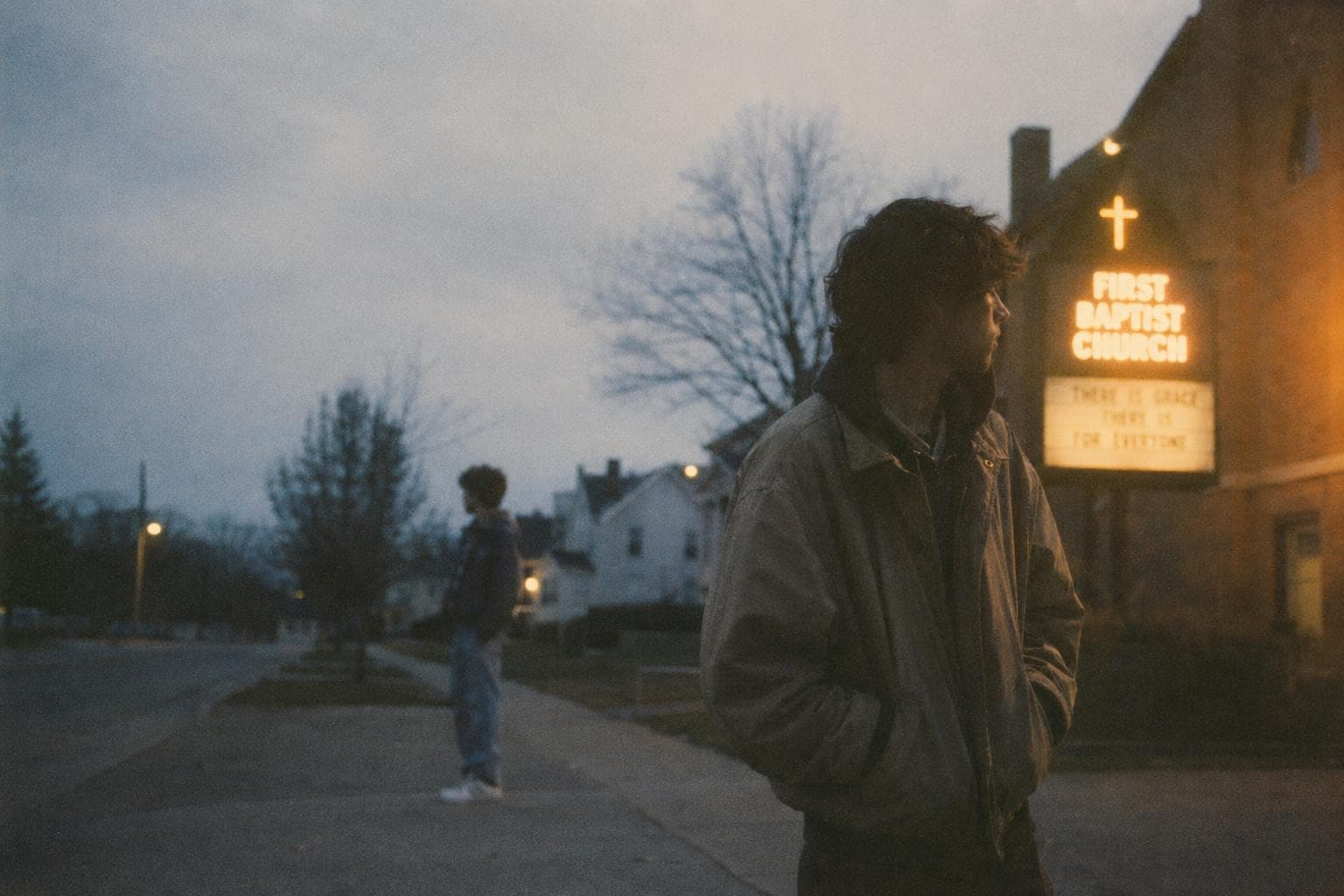
Leviticus, Adrian Chiarella's queer horror debut, is the kind of Sundance acquisition that actually justifies the hype machine. Neon picked it up after its 2026 Sundance premiere, and the pitch — two teenage boys stalked by a shape-shifting entity that resembles whoever they desire most, set against a conversion-therapy church in a repressed suburb — is doing real genre work, not just signaling queerness as a prestige marker. The IndieWire Sundance review called it "hugely entertaining and breathtakingly scary," and Chiarella's own framing is sharp: he's not making a film about queer horror, he's reclaiming a genre he argues was shaped by queer writers for queer audiences all along. That's a structural argument, not a marketing line. Mia Wasikowska is in it, which is its own small event — she's been largely absent from screens for years. Neon opens it theatrically this summer.
Then there's Jinsei, which is doing something almost nobody does anymore: one person wrote, directed, edited, and hand-drew an entire feature film over 18 months. Ryuya Suzuki's debut premiered at Annecy 2025 in the Contrechamp section, ran at Tokyo International, and is now getting a U.S. premiere at IFC Center on June 5 before expanding nationwide June 12 via Greenwich Entertainment. The film is a century-spanning surreal odyssey about a J-pop idol searching for identity — the kind of premise that sounds unwieldy until you remember that the formal constraint (one person, hand-drawn, 18 months) is itself the argument. The animation style reportedly reads closer to Adult Swim than traditional anime, which either sounds like a limitation or a deliberate aesthetic choice depending on your priors.
Here's what makes the pairing instructive: Leviticus is a film that works within genre conventions to expand them, while Jinsei ignores industrial conventions entirely. Both are legitimate risk-taking. But only one of them has a distributor with real theatrical muscle behind it. Neon knows how to open a horror film. Greenwich Entertainment is smaller, and a June 5 IFC Center premiere followed by a June 12 national expansion is a tight window that will require the film to generate its own momentum fast.
The craft question and the distribution question are inseparable. Watch whether Jinsei can build word-of-mouth in that one-week gap — that's the real test of whether the indie ecosystem has room for genuinely singular work, or just singular work that already fits a marketable genre.