


Two films that have nothing in common on paper — a hushed, nearly plotless Hong Kong two-hander and a documentary built from Israeli soldiers' testimony — are both arguing that scale should follow the material, not the other way around. One shrank. One is deliberately trying to be everywhere at once. Both choices tell you more about what these filmmakers think their work is for than any press release would.
Zi Goes Small Because It Had No Other Option, and the Smallness Is the Point
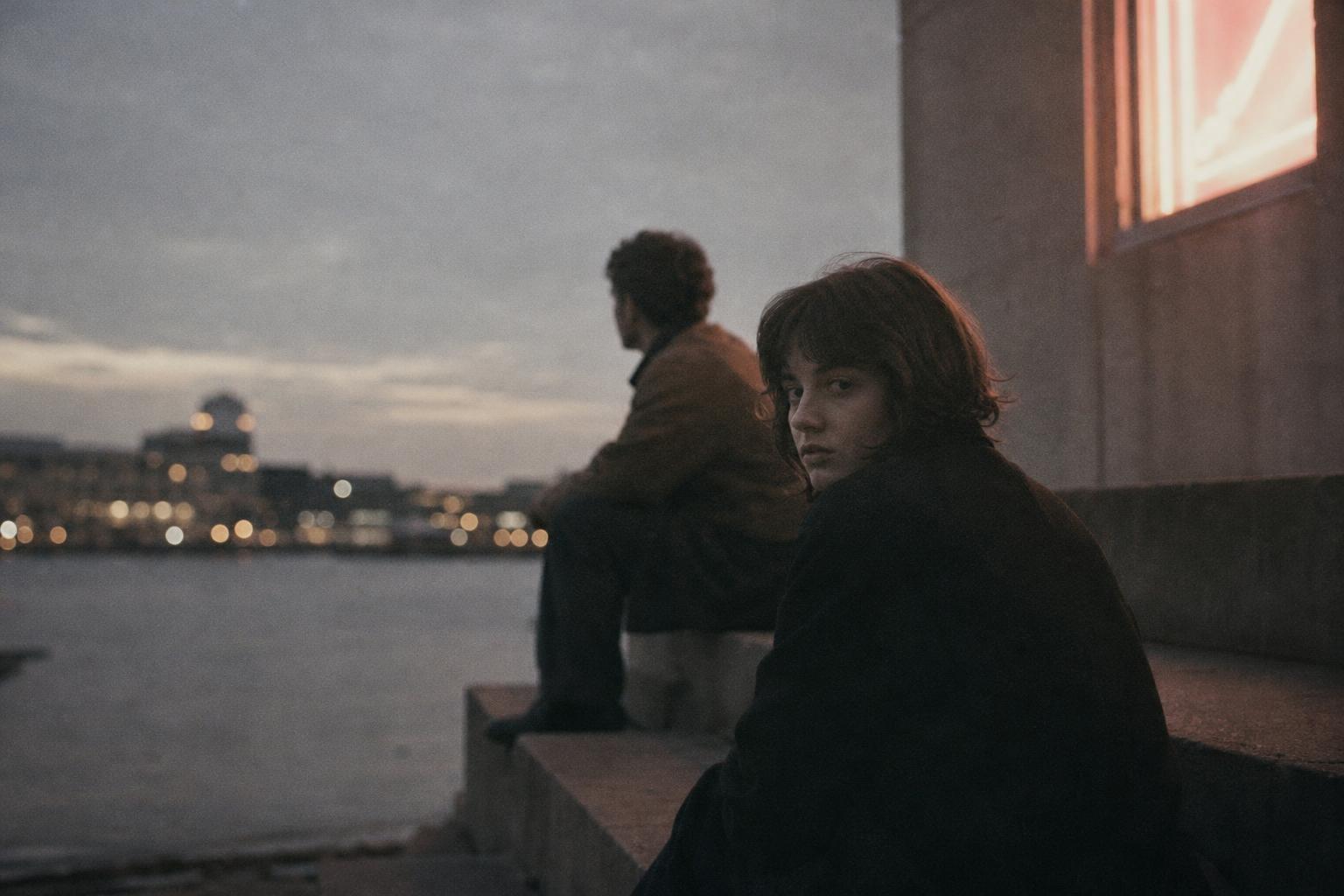
Kogonada made Zi "without a script or a budget," per IndieWire's review, in the immediate aftermath of his poorly received studio outing A Big Bold Beautiful Journey. That context matters here not as gossip but as craft explanation: a filmmaker who just came off an expensive, overdetermined production went and made something that could be shot on the fly in Hong Kong with two actors and a handful of locations. The film follows Zi (Michelle Mao), a violinist haunted by visions of her future self while she waits out neurological test results, and L (Haley Lu Richardson), a disillusioned American expat she meets on the concrete steps of Lantau Island. IndieWire's critic reads the film as openly assembled from "the half-formed memories" of La Jetée and *Cléo from 5 to 7," which is a generous way of saying Kogonada is quoting his influences rather than hiding them.
I'll take that bet over another handsomely furnished A24-adjacent prestige object any day. A director returning to instinct after a bruising studio experience is a more interesting formal premise than most films arrive with intentionally. Zi premiered at Sundance in 2026 and Grasshopper Film released it in select theaters starting November 6 — a limited run, not a wide one, which is the correct distribution bet for a film this unguarded. You don't put a movie this deliberately rough-edged into 2,000 screens and expect it to hold.
NAZA Is Trying to Be Everywhere, and That's the Argument Its Subject Demands
NAZA, Yuval Abraham and Rachel Szor's documentary built from interviews with Israeli military and intelligence personnel about the killing of Palestinian civilians in Gaza, is making the opposite bet. The film screened at the New York Film Festival and is co-produced by The Guardian, which planned to make it available free on its website, according to Film Comment's dispatch on the film — a release strategy aimed at removing every possible barrier between the footage and an audience. At the same time, The Playlist reported the film expanding past 100 theaters, a theatrical footprint that's unusually wide for a documentary this uncompromising in form — hours of anonymous soldiers describing airstrikes in flat, chilling language, shot in near-darkness on Tel Aviv rooftops.
That combination — theatrical expansion plus a planned free online release — is a hedge most distributors wouldn't attempt, because it cannibalizes the theatrical upside in service of reach. Here it reads as the correct call. Film Comment's review is clear-eyed about the film's limits, too: it notes the "near-absence of Palestinians behind and in front of the camera" as both the source of the film's access to hard-to-reach sources and one of its most troubling contradictions. That's a sharper piece of criticism than most festival coverage manages, and it's worth sitting with — a film can be an effective piece of investigative journalism and still carry a structural blind spot about whose voices get centered.
The Lesson Is About Matching Form to Intent, Not About Which Model Wins
Put Zi and NAZA next to each other and you get a small clarifying lesson about distribution thinking that I keep coming back to in this newsletter: there's no universal right-sized release, only a release that matches what the film is trying to do. Kogonada needed a container small enough that nobody — least of all him — could demand it be bigger than its ambitions. Abraham and Szor needed the opposite: a container with no ceiling at all, because the whole point of the film is that as many people as possible need to see what it contains.
What I'd watch next: whether Grasshopper Film expands Zi beyond its initial limited run if specialty audiences respond, and whether The Guardian's planned free online release of NAZA actually materializes on the timeline Film Comment described — a free, day-and-date release alongside an expanding theatrical run would be a genuinely unusual hybrid model worth tracking on its own terms.