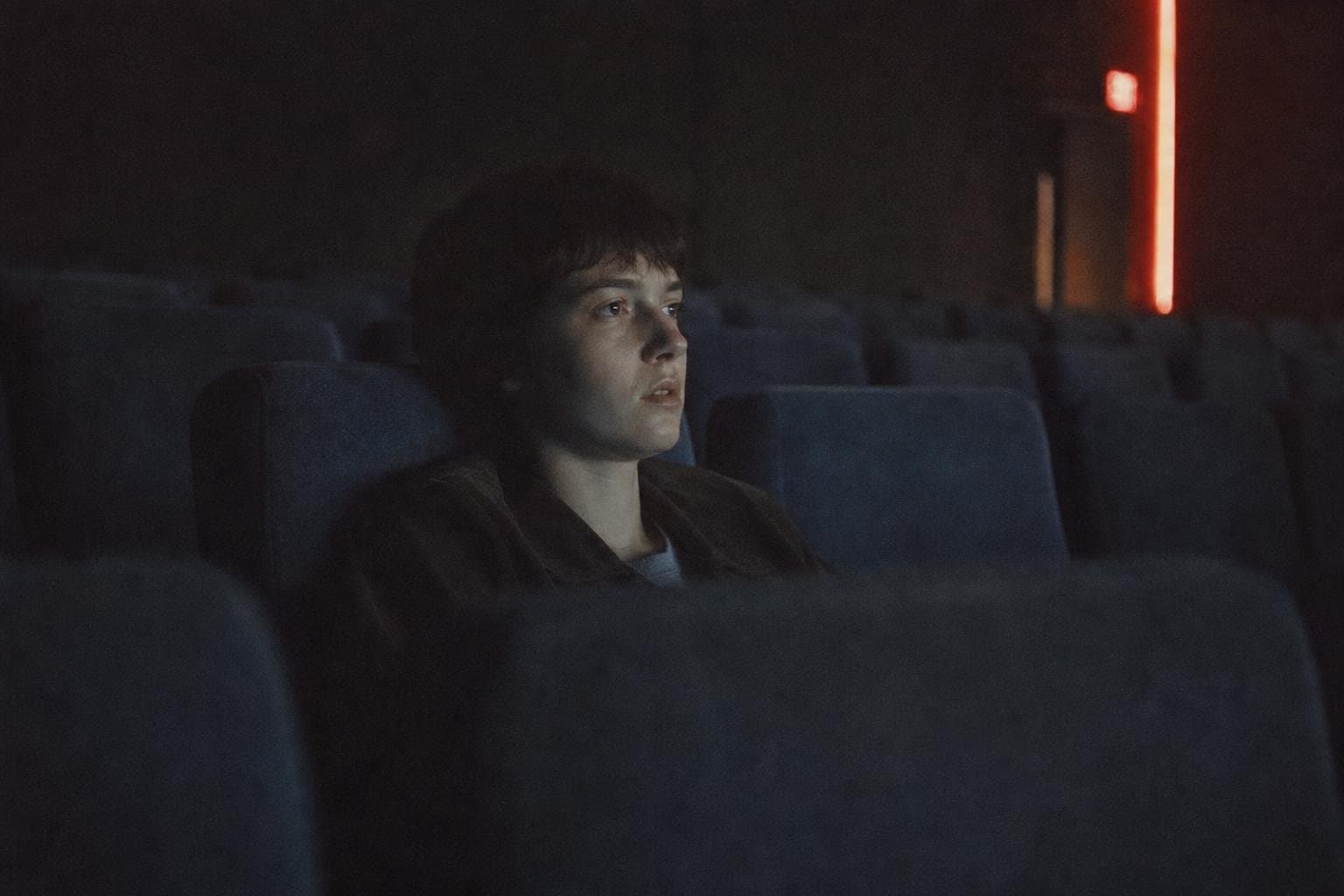

The per-screen average is the most honest number in indie film. It strips away the noise of wide-release saturation and asks a simple question: when you put this film in front of an audience, how badly did they want to see it? This week, Teenage Sex and Death at Camp Miasma answered that question with a $50,000 PSA from five screens — one of MUBI's best platform openings in years, and a number that puts it in direct conversation with A24's Anthony Bourdain biopic Tony, which led the specialized chart with a $60,047 PSA from six screens.
Think about what that comparison actually means. Tony is a prestige biopic from the most recognizable brand in indie film, built around one of the most beloved public figures of the last two decades. Teenage Sex and Death at Camp Miasma is Jane Schoenbrun's follow-up to I Saw the TV Glow, a horror-adjacent film with a title that sounds like a dare. That it's even in the same conversation — let alone within $10,000 per screen — is the story of the summer.
The Number That Actually Matters
To understand why the PSA matters here, some context: IndieWire's specialized box office report notes that The Invite, A24's earlier summer platform release, opened to a $56,000 PSA and has since legged out to $42.8 million worldwide. That trajectory — modest screen count, strong per-screen, gradual expansion — is the template for how A24 has built its theatrical model. The fact that both Tony and Teenage Sex and Death at Camp Miasma opened above or near that benchmark in the same weekend is remarkable.
What makes Schoenbrun's number more interesting than Tony's is the degree of difficulty. A Bourdain biopic has a built-in audience: food media readers, CNN documentary fans, people who watched Parts Unknown on Sunday nights and felt like they knew the man. The marketing practically writes itself. Teenage Sex and Death at Camp Miasma has no such pre-sold constituency. Its audience had to be built from scratch, out of the specific community that followed I Saw the TV Glow — a film that was itself a cult object, beloved by a particular slice of queer cinema viewers and horror-adjacent film obsessives who tend to evangelize hard and show up in person.
That's not a mass audience. It's a devoted one. And devoted audiences, it turns out, are exactly what platform releases need.
What MUBI Is Actually Betting On
I wrote about MUBI's financing infrastructure back in May, and about Schoenbrun's distribution strategy in late May and early June. The through-line in all of it has been MUBI's willingness to bet on filmmakers whose audiences are real but not large — and to treat theatrical not as a loss leader for streaming but as a genuine cultural event. The IndieWire report frames this opening as one of MUBI's best platform launches in years, outpacing Jim Jarmusch's Father Mother Sister Brother and films like The Mastermind and The History of Sound.
That's a meaningful benchmark. Jarmusch is one of the most canonized names in American independent cinema. The History of Sound was a prestige literary adaptation. The fact that Schoenbrun's horror film — with its deliberately provocative title and its refusal to be easily categorized — outperformed those releases on a per-screen basis says something about how MUBI has positioned it, and about the specific appetite Schoenbrun has cultivated.
The bet MUBI is making isn't just on this film. It's on a model: find filmmakers with genuine cult followings, give them theatrical windows that feel like events rather than obligations, and let the community do the marketing. The five-screen opening is a feature, not a bug. It concentrates the audience, generates the kind of sold-out-show energy that drives word of mouth, and creates the conditions for expansion. Whether Teenage Sex and Death at Camp Miasma follows The Invite's expansion trajectory remains to be seen — but the opening gives it every structural reason to try.
The Schoenbrun Effect, Measured
Here's what's easy to forget about I Saw the TV Glow: it was not a conventional success by any metric. It didn't break out of its niche, didn't cross over to mainstream audiences, didn't generate the kind of aggregator-score consensus that gets films onto "best of" lists in December. What it did was create an intensely loyal audience that talked about it in the specific, obsessive way that people talk about films that feel like they were made for them personally.
That's a different kind of cultural capital, and it's harder to manufacture than a good review in the trades. The $50,000 PSA for Teenage Sex and Death at Camp Miasma is, in part, a measurement of how much of that capital Schoenbrun has accumulated — and how effectively MUBI converted it into ticket sales.
The broader box office context sharpens the picture. Screen Daily reported that Spider-Man: Brand New Day was setting records at the same time — the film has since crossed $1.7 billion globally, making it among the fastest-grossing releases ever. The indie specialized market and the blockbuster market exist in almost entirely separate ecosystems, but they share the same cultural oxygen. When a superhero film is consuming that much attention, the fact that a five-screen horror film from a queer indie filmmaker is generating genuine heat is worth noting. It suggests the audience for Teenage Sex and Death at Camp Miasma isn't being pulled away by the spectacle next door. They came specifically for this.
The Title as Argument
A word about the title, because it's doing real work. Teenage Sex and Death at Camp Miasma is a provocation — it's also a genre declaration, a tonal signal, and a kind of dare to the audience. It announces that this film is aware of slasher conventions, is probably doing something with them, and is not interested in softening itself for casual viewers. That's a risky commercial choice. Titles like that don't play well in certain markets, don't get the same algorithmic amplification, and require distributors willing to stand behind them without flinching.
MUBI stood behind it. That matters. One of the persistent failures of indie distribution is the tendency to sand down a film's edges in marketing — to make the weird thing seem more accessible than it is, which alienates the core audience without actually attracting a broader one. The decision to release Teenage Sex and Death at Camp Miasma under its actual title, in a theatrical window that treats it as an event, is a statement about what kind of distributor MUBI wants to be.
Gillian Anderson and Hannah Einbinder are among the film's cast — a pairing that brings its own specific cultural freight. Anderson's presence in particular, given her history with genre television, is the kind of casting that signals to a specific audience that this film is in conversation with things they already care about. It's not stunt casting; it's alignment.
What Comes Next — and What to Watch
The specialized box office is a mood ring, as I've argued before, and right now it's reading something specific: audiences for genuinely strange films are showing up in person when the theatrical experience feels curated rather than perfunctory. CatVideoFest 2026 landing in the overall top 10 for the week — per the IndieWire specialized chart — is a reminder that theatrical exhibition is, at its core, a communal experience. People go to the movies to be in a room with other people who chose the same thing. The more a release can activate that feeling, the better it performs.
Schoenbrun's film activated it. The question now is whether MUBI expands it — and how aggressively. The Invite model suggests patience: let the PSA do its work, let the word of mouth build, then add screens as demand justifies it rather than flooding the market and diluting the event quality. If MUBI follows that playbook, watch for screen count announcements over the next two to three weeks. A jump from five to twenty-five screens would be a signal that the opening weekend data is holding; a jump to fifty or more would suggest they're betting on genuine crossover.
Also worth watching: the NYFF main slate. The Playlist reported that All of a Sudden, Fatherland, and Misty Green are among the 2026 selections — a lineup that will shape the fall acquisition conversation and give distributors a clearer sense of what the awards-season audience is actually hungry for. How Teenage Sex and Death at Camp Miasma performs between now and NYFF will determine whether Schoenbrun's film is still in the cultural conversation when that conversation heats up, or whether it becomes a beloved cult object that peaked in August.
The $50,000 per-screen average says it has a real shot at the former. The five-screen count says MUBI is being careful not to waste it.
That's the right instinct. The worst thing you can do with a film like this is rush it into markets where the audience doesn't exist yet. Build the event. Let the devotion do its work. The numbers, for now, suggest it's working.


