
The Critics Choice Documentary Awards nominations landed this week with Ava DuVernay's 14th leading the field with six nods for her Netflix film on the amendment that enshrines birthright citizenship (Screen Daily). That's the headline. The more interesting document is the nominee list itself, because if you read it as a map of who's actually distributing nonfiction film in 2026, you get a portrait of an industry that has stopped pretending there's a center.
Count the best-documentary-feature field: Netflix has 14th. National Geographic has Everest: The Other Side. Icarus Films has Everybody To Kenmure Street. Magnolia Pictures has The History Of Concrete. Bleecker Street has Musk. Neon has Once Upon A Time In Harlem. Sony Pictures Classics has Rehearsals For A Revolution. Music Box Films has Remake. A24 has You Can See Everything. Add Variance Films, Oscilloscope Laboratories, and Watermelon Pictures in the adjacent categories, and The Guardian and mk2 films co-credited on NAZA — a journalism outlet with a theatrical distribution credit, which is its own small sign of where documentary financing has had to go looking for partners (per Screen Daily).
That's close to a dozen distinct distributors chasing roughly a dozen films in one category. No studio classics division, no single streamer, no specialty label owns this conversation. And that fragmentation isn't a symptom of documentary film being a backwater — it's evidence that everyone wants in, on wildly different terms.
A24 Keeps Doubling Down, and It's Starting to Look Like Strategy, Not Accident
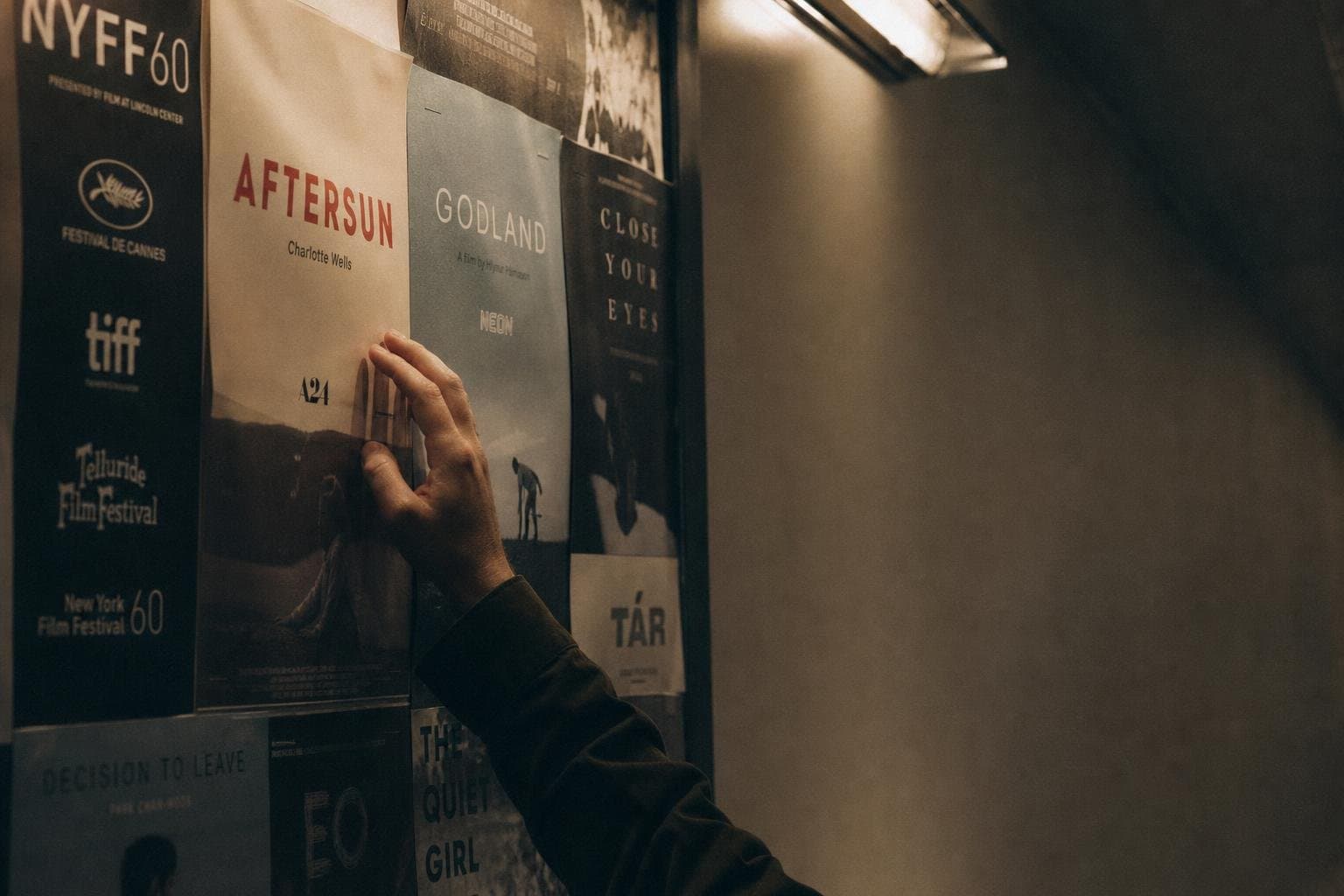
I wrote back on October 14 about Nathan Fielder and Lance Oppenheim's 174-minute Elizabeth Holmes documentary, which landed at A24 under the title You Can See Everything. The Critics Choice nominations confirm that film wasn't a one-off curiosity: it's up for best documentary feature, best first documentary feature, and best cinematography (shot by David Bolen), the kind of multi-category spread that suggests the film has real support inside the critics' bloc, not just internet buzz (per Screen Daily). The film's cultural footprint has outpaced the nominations, too — Letterboxd's own Journal has been running interviews with Oppenheim about the project alongside its festival dispatches, treating the film as one of the season's central conversations rather than a niche awards play (Letterboxd). The Playlist, for its part, has noted that online audiences have been pushing the film into outright Best Picture chatter, which the outlet is quick to temper against actual Oscars history (The Playlist).
Neon, meanwhile, is doing something similar but louder: Once Upon A Time In Harlem sits alongside Baz Luhrmann's EPiC: Elvis Presley In Concert in the first-documentary-feature category (per Screen Daily). A music-doc swing from a splashy director's name, paired with a quieter historical piece — that's a label hedging its bets across tone rather than committing to one lane. Letterboxd's team has separately interviewed Harlem co-director David Greaves and producer Liani Greaves this season, a sign the film is generating its own critical conversation independent of the awards calendar (Letterboxd).
The Festival-to-Release Pipeline Is Still the Real Story, and It's Getting More Legible
One frustration I've had with festival coverage generally is how often premiere, acquisition, and release date get collapsed into one undifferentiated "coming soon." The lineup for the 30th American French Film Festival, running November 3–8 in Los Angeles, is a useful corrective because it shows the pipeline stages distinctly, film by film (Screen Daily).
Take In Waves, Phuong Mai Nguyen's animated feature about surfing, love, and loss, which already screened at Cannes' Critics' Week and the Annecy animation festival. Netflix holds rights outside France and will give it an awards-qualifying theatrical run in the US in December before it moves to streaming — a specific, sequenced plan, not a vague "will be available soon" (per Screen Daily). Compare that to Minotaur, Andrey Zvyagintsev's Cannes Grand Prix winner and France's Oscar submission, where MUBI holds North American rights but no release date is specified in the festival's own announcement. That distinction matters for a distributor whose entire identity is built around curation rather than mass release — MUBI describes itself as a service dedicated to "elevating great cinema" through hand-picked acquisitions, not wide day-and-date drops (MUBI), which makes an undated festival rights deal a perfectly normal, if unglamorous, stage of the process rather than a delay to flag.
Neon's presence here is worth flagging too: it holds Fjord, Cristian Mungiu's Palme d'Or winner starring Sebastian Stan and Renate Reinsve, as well as Ryusuke Hamaguchi's All Of A Sudden, Japan's Oscar entry (per Screen Daily). That's a distributor stacking multiple awards-season imports into one slate, the same instinct it's showing on the documentary side with Once Upon A Time In Harlem and EPiC. Letterboxd's coverage of the fall season has already treated Mungiu as a figure worth a standalone conversation, running an interview with the Fjord filmmaker ahead of the festival circuit (Letterboxd). Whatever Neon's internal math looks like this quarter, the external pattern reads as a company betting hard and broad simultaneously, rather than picking one prestige lane and defending it.
What's Actually Watchable This Weekend Looks Nothing Like the Awards Conversation
Here's the gap that matters for anyone deciding what to watch tonight rather than what to predict in February: almost none of the films driving awards-season chatter are available to stream right now, and the films that are quietly available this week aren't getting any of that chatter.
Letterboxd's Watchlist This! column flags Jordan Downey's The Cycle, a cold-case procedural that reportedly turns into a creature feature around the hour mark, starring Deborah Ann Woll, streaming this Friday, October 23 (Letterboxd). That's a specific, confirmed streaming date for a genre film nobody is putting in a Best Documentary conversation, which is precisely the kind of under-the-radar title this column exists to surface, alongside the documentaries My Undesirable Friends: Part II – Exile and Traces of Home.
Meanwhile, if you're the kind of viewer who tracks where specific titles land across platforms, IndieWire's October streaming guide points to Apple TV's unusually dense slate of two mountaineering documentaries this month, including Amir Bar-Lev's Sundance film The Last First: Winter K2, examining the social and political pressures that shape high-altitude expeditions (IndieWire). That's a platform-specific curation decision — two films about climbing the world's tallest peaks on the same service in the same month — that tells you more about how Apple TV thinks about its own catalog than any single review could. It's worth setting that against what's happening in theatrical new-release coverage this week, too: The Playlist's own review slate this cycle includes everything from a stop-motion feature to an Ari Aster casting update, a reminder that the specialty press is tracking narrative and nonfiction cinema on entirely separate, overlapping clocks (The Playlist).
The Takeaway Isn't That Fragmentation Is Bad
I don't think a dozen distributors splitting the documentary category is a crisis. A single dominant buyer for nonfiction film would be worse — it would mean one company's taste determining what counts as an important documentary in a given year. What the Critics Choice list actually shows is a genre healthy enough to support simultaneous bets from a streamer, two specialty labels with opposite aesthetics, a human-rights nonprofit distributor, and a newspaper. The problem isn't the spread. It's that almost nobody outside the trade press is tracking where these films actually live, which means audiences have to do detective work a critics' group doesn't.
Watch the Critics Choice Documentary Awards gala on November 8 in Manhattan for how these nominations shake out (Screen Daily), and watch December for In Waves' theatrical qualifying run, which will be the clearest test yet of whether Netflix's hybrid release strategy can actually build awards momentum for an animated film before it disappears into the algorithm.


