
Three things happened this week that, taken separately, are just news items. Taken together, they sketch something like a thesis about where independent cinema is right now: who gets to make it, who gets to see it, and what happens when the ecosystem actually works.
Let's start with the one that opened today.
Obsession Is the Real Thing, and Focus Features Knew It First
Curry Barker is a YouTube prankster. That sentence should be a warning label. It isn't.
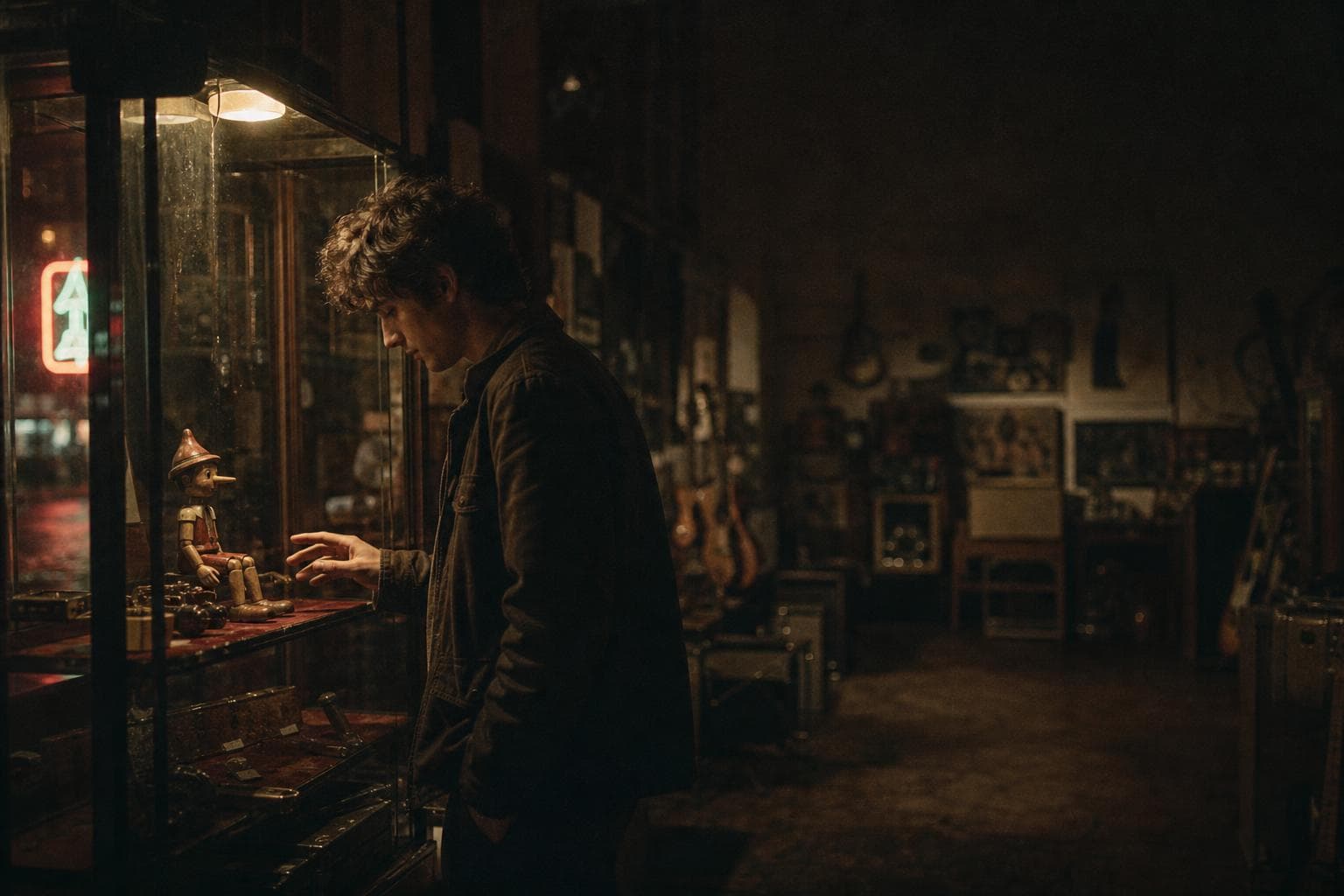
Obsession — which Focus Features is releasing in theaters beginning today, May 15 — premiered at TIFF 2025, and IndieWire's Christian Zilko called it one of the best horror films of 2026. The premise is deceptively simple: Bear, a shy music store employee, buys a kitschy antique toy called a One Wish Willow and wishes that his childhood friend Nikki would love him more than anything in the world. She does. Immediately. Terrifyingly. The horror, as Zilko describes it, isn't the wish going wrong in some supernatural blowback sense — it's the wish going right, and Bear having to live inside the consequences of what he actually wanted.
That's a genuinely sophisticated horror premise, and it's the kind of thing that separates films that understand the genre from films that just use its furniture. The best horror is always about the thing the protagonist can't admit to themselves. Barker apparently gets that.
What's worth pausing on is the distribution story. Focus Features acquired this at TIFF, held it through the winter, and is dropping it into theaters now — not on streaming, not day-and-date, but a proper theatrical release. That's a bet. Focus has been making quieter bets lately while the rest of the specialty market consolidates around streaming-first strategies, and Obsession is the kind of film that could either disappear in a crowded May or find its audience through word of mouth if the opening weekend gives it room to breathe.
The Peele-to-Cregger-to-Philippou lineage that Zilko traces is real, and it points to something the horror genre has figured out that prestige drama hasn't: comedic timing and horror timing are structurally similar. Both depend on rhythm, on withholding, on the gap between what the audience expects and what they get. Barker, coming from short-form comedy, apparently has that instinct. The question is whether his feature-length control matches his premise's ambition — and the reviews suggest it does.
This is the week's featured release. Go find it.
Diego Luna's Ashes Is Messier and More Alive Than Anything Playing at the Multiplex
Ashes (Cenizas en la boca), Diego Luna's adaptation of Brenda Navarro's 2022 novel, is the kind of film that gets undersold by its own synopsis. "Migration story" makes it sound like a social-issue drama with a checklist. What IndieWire's review describes is something more granular and more uncomfortable: a film about the specific texture of displacement, about what it costs to survive in a country that doesn't want you even when it technically speaks your language.
Lucila and Diego migrated from Mexico City to Madrid after their mother moved there years earlier, leaving them behind. Lucila works as a nanny for a Spanish employer who barely conceals her contempt for Latin American workers. She hides her job from her white, English-speaking boyfriend, who assumes she's a student. Her teenage brother fights off xenophobic bullies at school. The film, per the review, "displays a strong class consciousness through the situations Lucila experiences" — not through speeches, but through the gap between how characters from privilege perceive her reality and what that reality actually is.
Luna assembles this from pivotal scenes rather than a conventional three-act structure, which is either the film's greatest strength or the thing that will frustrate viewers expecting cleaner narrative resolution. I'd argue it's a strength — the episodic construction mirrors the actual experience of immigrant life, which doesn't resolve into tidy arcs. The teenager's line midway through — "It's all the same. Here or wherever, it's all just surviving" — lands harder because the film has earned it structurally, not just emotionally.
Adriana Paz, fresh off Emilia Pérez, plays the mother Isabel. That casting is doing real work: she arrives in the film carrying the weight of a performance audiences already associate with a certain kind of survival, and Luna uses that residue deliberately.
Distribution details for Ashes aren't confirmed in available sources — this is one to track for festival circuit placement and acquisition news coming out of Cannes this week.
John Sayles Is Back, and the Cannes Market Is Where It Starts
The John Sayles news is the week's most quietly significant story, and it's getting less attention than it deserves.
Sayles is returning to direct his first film since 2013's Go for Sisters — a Western called I Passed This Way, based on a 1927 novella by Eugene Manlove Rhodes. Amy Madigan and Chris Cooper are starring. The film is currently being shopped to buyers at the Cannes Film Market. Principal photography is scheduled for Q4 of this year in the Canary Islands and Almería, Spain. UTA Independent Film Group is handling North American sales; Latido Films has international.
Thirteen years is a long time. Sayles spent part of that period seeing his classics Lone Star and City of Hope restored and re-released on Blu-ray — which is its own kind of vindication, the ecosystem acknowledging what it had undervalued. But a restoration tour is not the same as a new film, and I Passed This Way represents something the indie world doesn't get very often: a genuine elder statesman returning not with a vanity project but with a genre film, a Western with a moral architecture built around a man who has to choose between his freedom and someone else's survival.
That premise — the outlaw who can escape or stay and help — is classically Sayles. His best work (Lone Star, Matewan, City of Hope) has always been about the weight of historical and moral obligation, about characters who understand the systems they're trapped in and have to decide whether to work within them or against them. A Western is the right genre for that. It's also a commercially legible pitch, which matters when you're shopping at Cannes.
The Cannes Film Market timing is worth noting. This isn't a competition premiere — it's a pre-sales play, which means Sayles and his producers are raising money and finding distribution partners before the film exists. That's how independent film actually gets made at this level: not through a studio green light, but through a market, a package, and a bet that buyers will see the value in a name that hasn't been on a marquee in over a decade. The fact that Madigan just won an Oscar (per the IndieWire report) makes the package significantly more attractive. Oscar winners move markets.
The Week's Actual Through-Line: The Ecosystem Working as Designed
Here's what connects Obsession, Ashes, and the Sayles announcement, and it's not a theme or a genre — it's a structural observation about how independent film gets made and seen in 2026.
Obsession is the festival-to-theatrical pipeline functioning correctly: TIFF premiere, Focus Features acquisition, eight-month hold, proper theatrical release. That's the model. It's increasingly rare, which is why it's worth naming when it happens.
Ashes is the auteur-with-literary-source model — a director with industry credibility adapting a recent novel with a clear political consciousness. It's the kind of film that gets made because Diego Luna can get it made, and it's the kind of film that needs a distributor willing to trust that "migration story with class consciousness" is not a box-office death sentence if the craft is there.
The Sayles project is the pre-sales model — the Cannes Market as financing mechanism, the package as the pitch, the genre as the commercial hook for a filmmaker whose name means something to a specific audience. It's also a reminder that the indie ecosystem has a memory. Sayles matters because Lone Star matters, because Matewan matters, because there's a lineage of American independent cinema that runs through him and that younger filmmakers — including, arguably, Curry Barker — are working in the shadow of whether they know it or not.
None of these films are guaranteed to find their audiences. Obsession opens today in theaters and will live or die on its first two weekends. Ashes needs a distributor willing to position it correctly. I Passed This Way hasn't started shooting yet.
But the fact that all three exist — a YouTube comedian making sophisticated horror, a Mexican actor-director adapting a novel about displacement, a 74-year-old indie legend returning with a Western and an Oscar winner attached — suggests the ecosystem is generating the right kinds of bets. Watch Obsession's opening weekend numbers. Watch whether Ashes lands a North American distributor at Cannes. Watch whether Sayles closes his financing before the market ends Friday.
Those three data points will tell you more about the state of independent film in 2026 than any aggregator score.


