


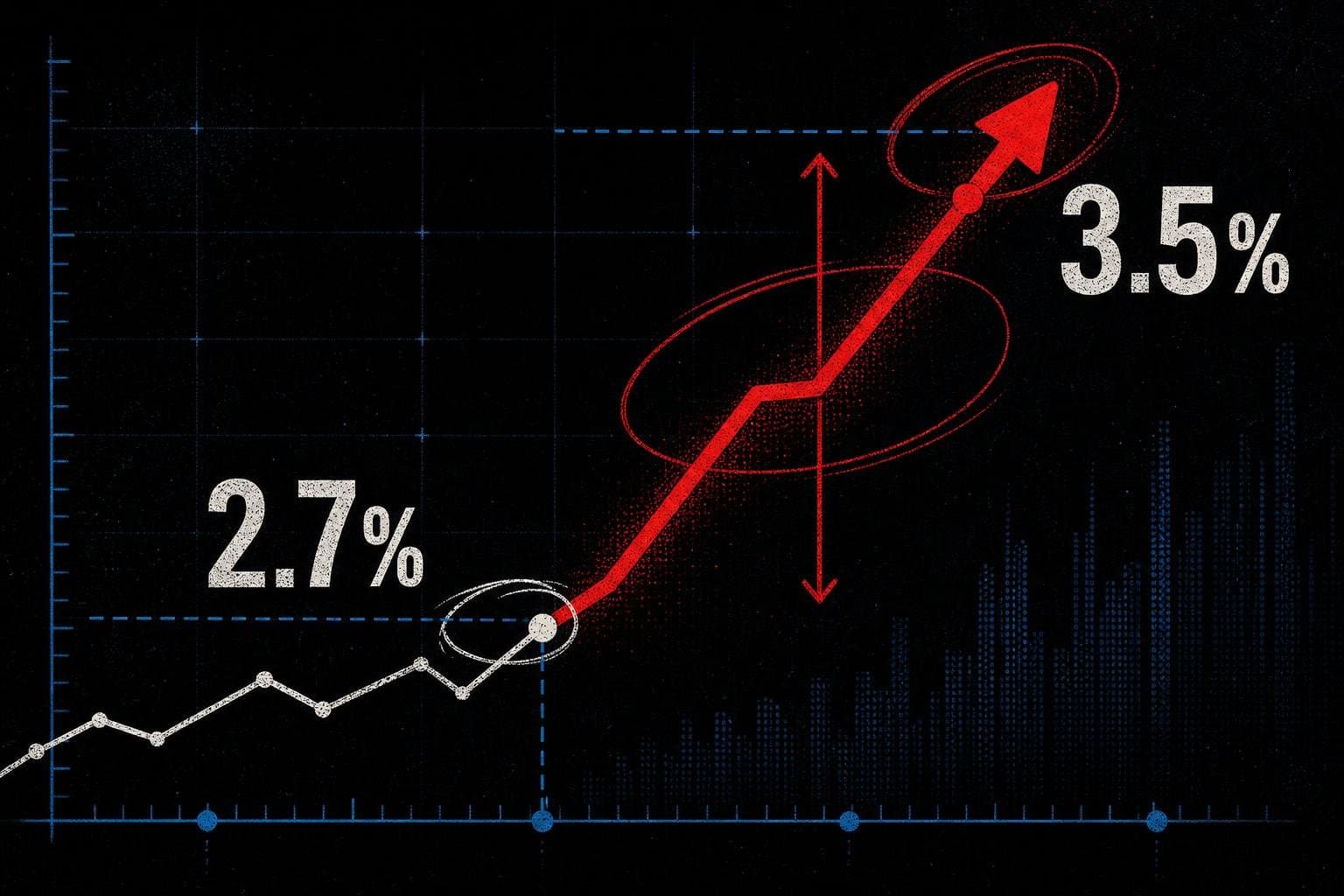

A month ago, I wrote about the June CPI print of 2.7% and what its denominator was actually measuring. Here's the update: that number is no longer the headline. The BLS now reports consumer prices up 3.5% over the year ended June 2026. Same month, different number. That gap deserves more attention than it's getting.
The Revision Isn't the Problem. The Framing Is.
To be clear: revisions are normal. The BLS methodology is sound, and updating figures as more complete data arrives is exactly what a rigorous statistical agency should do. The problem is what happens to the revised number once it leaves the agency.
The 2.7% figure circulated widely — in headlines, in Fed commentary framing, in political talking points about cooling inflation. The 3.5% figure is the corrected record. Those are not interchangeable. A 0.8 percentage point difference on an annualized inflation rate is not rounding error; compounded over a year, it represents a meaningfully different picture of purchasing power erosion for anyone using that number to make decisions — wage negotiations, lease renewals, fixed-income planning.
The specific mechanism matters here. Year-over-year CPI measures the price level in June 2026 against the price level in June 2025. The base period doesn't change. What changes is the numerator — the current-period price index — as late-arriving data from survey respondents gets incorporated. So when the number moves from 2.7% to 3.5%, it means the current price level was higher than initially estimated, not that June 2025 was re-measured.
That's a meaningful distinction. It tells you the measurement error was on the recent side, not the historical side. And it means any analysis built on the 2.7% figure — any model, any policy argument, any "inflation is nearly back to target" take — was working from an undercount of current prices.
The BLS is doing its job correctly. The question is whether the consumers of that data — journalists, analysts, policymakers — are tracking corrections with the same energy they brought to the original release. Based on the coverage pattern I've seen, the answer is no. The 2.7% got the headline. The 3.5% got a footnote.
Watch for the July CPI release, which will give the first read on whether the 3.5% trend is holding or accelerating. That number will also be preliminary. Treat it accordingly.