



The Headline Number
"We just approved two new oncology drugs in record time, one in 45 days. The closest before that was 310 days." — HHS Secretary Robert F. Kennedy Jr., April 16 congressional hearing
The Audit
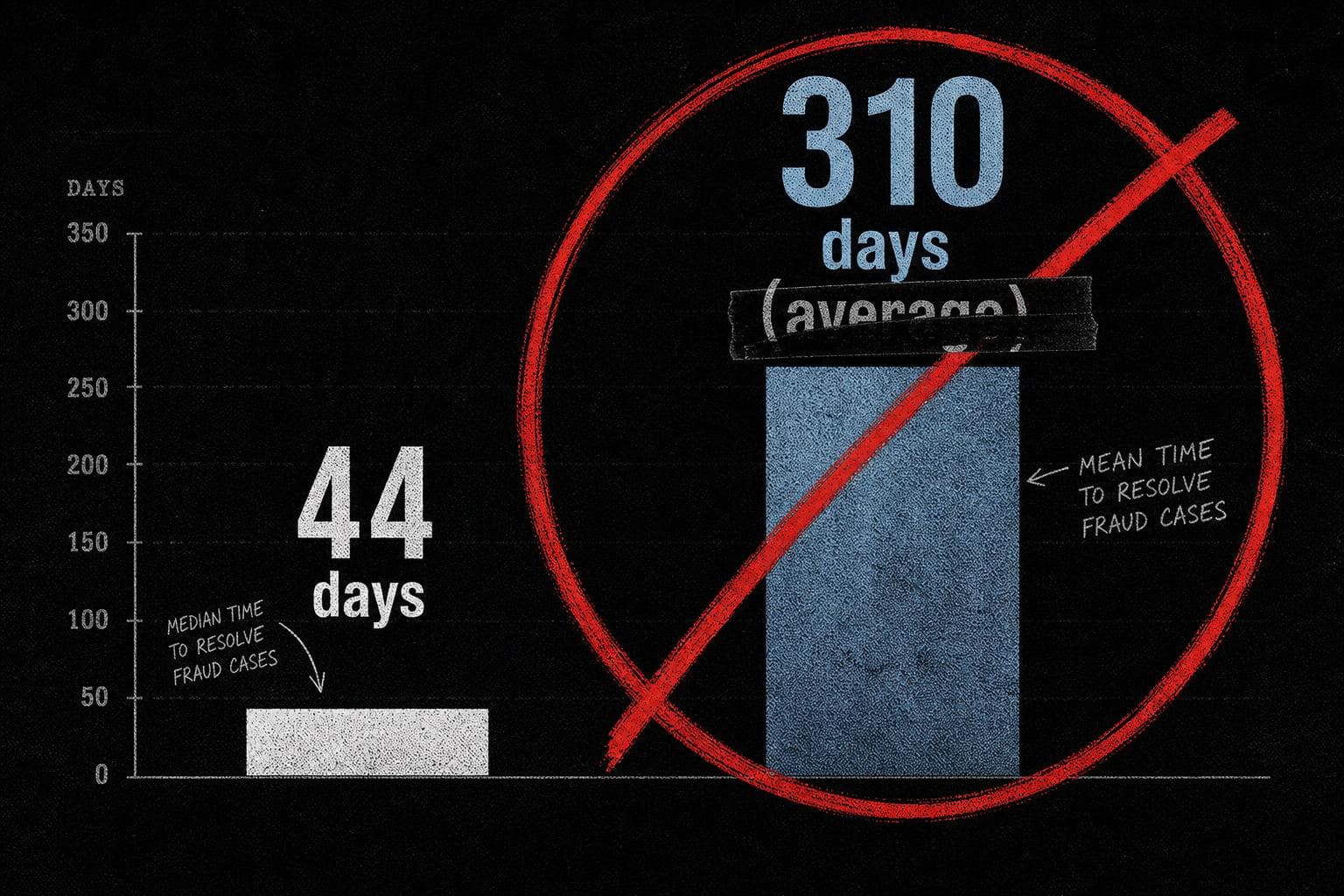
The 310-day figure is real. The comparison is not.
FactCheck.org's analysis traced Kennedy's numbers to their sources, and the arithmetic checks out individually: the two oncology drugs were reviewed in 44 and 55 days respectively, and 310 days is a documented figure for FDA review times. The problem is what 310 days actually measures. It's the average new drug application review time for all drugs in 2025, per remarks from then-FDA Commissioner Dr. Marty Makary. Kennedy presented it as though it were the previous fastest approval — the record the new drugs shattered.
That's not a record. That's a mean.
Comparing a cherry-picked fast approval to an average across all drug types is the statistical equivalent of saying you ran a 4.3-second 40-yard dash and the previous best was "about 12 minutes" — because the previous best you're citing is the average time it takes everyone in the building to walk to the parking lot.
Dr. Aaron Kesselheim, who studies drug regulation at Harvard Medical School and Brigham and Women's Hospital, put it more precisely to FactCheck: comparing these approvals to the all-drug average is like "comparing apples and gorillas." The reason matters. These weren't entirely new drugs. One was an expanded indication for a previously approved drug; the other was a new combination of previously approved drugs. Both had existing safety and efficacy records the FDA could lean on. Of course they reviewed faster — the evidentiary burden was structurally lighter from the start, independent of any new expedited program.
The denominator problem here is the comparison pool. Kennedy's implicit claim is: "drugs used to take 310 days minimum; now we're doing it in 44." But the 310-day figure includes complex first-in-class biologics, novel mechanisms of action, and drugs with thin clinical trial data — nothing like the supplemental applications that got the fast treatment here. The relevant comparison would be how long similar supplemental oncology applications took under prior administrations. That number doesn't appear in Kennedy's framing, because it would deflate the story.
There's also the "record" claim itself. Kennedy called these "the fastest in history." FactCheck reports that Makary himself acknowledged a faster HIV drug approval in the 1990s — and then, on May 8, the FDA approved a third cancer drug indication even more quickly, tying that older record. So the "fastest in history" claim was wrong when Kennedy made it, and the record has since been matched anyway.
The FDA's Commissioner's National Priority Voucher program, announced in June 2025, is a real initiative with a real goal: target review times of one to two months for drugs meeting national health priorities. Seven drugs have completed review through it so far — a sample size Kesselheim describes as "relatively small." Whether the program is producing systematically faster approvals, or whether it's routing the easiest-to-review applications through a fast lane and calling that a revolution, is genuinely unclear yet. "There's no evidence that there's been any major change yet in this administration," Kesselheim told FactCheck.
That's the honest answer. It might get better. It might not. Seven drugs is not a trend.
Verdict: Misleading. The 44-day approval is real. The "record" framing was wrong. The 310-day comparison is an average for all drugs, not a prior fastest time, and it's being compared to a structurally easier category of application. The gap Kennedy implied — 44 days versus 310 — does not exist in the data.
By the Numbers
77,000 — Net manufacturing jobs lost since the start of the Trump-Vance administration, even after a gain of 18,000 in Q1 2026, according to CNN's fact-check of VP Vance's claims. Vance called last quarter "the biggest growth in manufacturing employment since Trump's first term." In reality, six of Biden's seven full quarters in 2021–2022 had larger quarterly gains than 18,000.
$47.45 vs. $20 — Trump Mobile's monthly plan price versus the low end of comparable MVNO plans currently on the market, per Reuters. Senator Warner also noted that Liberty Mobile Wireless — the company facilitating Trump Mobile's network — charges $40/month for its own highest-tier prepaid plan, meaning Trump Mobile costs more than the infrastructure it runs on.