
The Headline Number
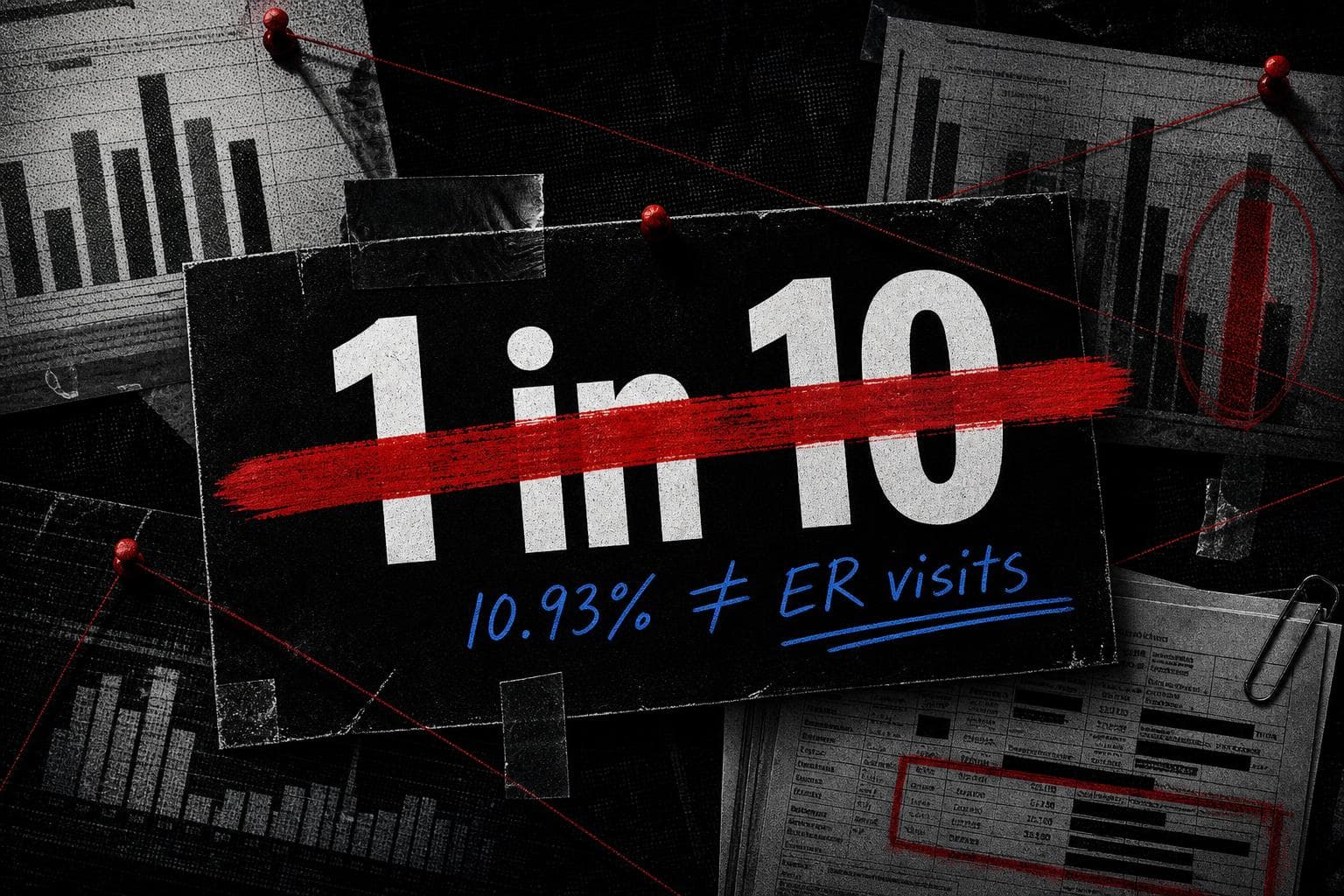
"Mifepristone sends 1 in 10 women who use it to the emergency room with life threatening conditions." — Sen. Josh Hawley, X, May 4, 2026
The Audit
I covered the EPPC's "1 in 10" mifepristone figure in the May 13 issue. It's back in circulation — louder this time, because the Supreme Court is actively weighing mifepristone mail access. So let's run the tape again, with the new context.
What the claim is actually based on
The 10.93% figure comes from a 2025 report by the Ethics and Public Policy Center, a conservative nonprofit that opposes abortion. The report analyzed health insurance claims data on more than 865,000 women — a large sample, which is why it sounds authoritative. But FactCheck.org flags two problems that gut the headline number:
- The data source is undisclosed. The EPPC report does not identify where the insurance claims data came from. You cannot evaluate methodology you cannot see.
- "Adverse event" ≠ "sent to the ER." The report counted serious adverse events — a clinical category that includes any health issue arising after drug use that is life-threatening or leads to hospitalization. Critically: adverse events are not necessarily caused by the drug. A woman who takes mifepristone and later visits an ER for an unrelated reason can appear in this count.
Hawley's phrasing — "sends 1 in 10 women to the emergency room with life threatening conditions" — is not what the EPPC report claims. The report claims 10.93% experienced serious adverse events within 45 days. That's already a contested figure. Hawley's version is a further distortion of a distortion.
What peer-reviewed research actually shows
A May 6 amicus brief from 360 reproductive health researchers, filed directly with the Supreme Court, called the EPPC report "riddled with methodological flaws." Peer-reviewed studies — which use disclosed data sources and survive external review — show serious complication rates far below 10%. The EPPC report was not published in a peer-reviewed journal.
Why this keeps working as a rhetorical move
The 45-day window is doing a lot of work here. Extend the observation window long enough after any medical event and you will accumulate adverse events — from unrelated causes — that can be attributed to the original drug in a claims-data analysis. This is a known limitation of insurance claims studies, which is precisely why methodology transparency matters. Without knowing the data source or the comparison group, there's no way to assess whether the 10.93% rate is elevated relative to a baseline.
The verdict: misleading. The underlying report has undisclosed data and a methodology criticized by hundreds of researchers. The politicians citing it have further distorted its already-contested claims. The number circulating in Senate floor statements and cable hits is not what the study found, and what the study found is itself disputed.
The new wrinkle
What's changed since May 13: the Supreme Court is now the venue. The EPPC report was cited by plaintiffs in the active case. A 360-researcher amicus brief pushed back directly. The Court temporarily restored mail access on May 4, then extended that order through May 14. The stat isn't just viral — it's in the legal record.
By the Numbers
14 of 50+ — Election leaflets in England containing charts that Full Fact assessed as misleading or unsourced, out of more than 50 leaflets with graphics analyzed from the first two weeks of April. The pattern: bars not proportional to the numbers they represent, national polling presented as local evidence, and "can't win here" claims with no ward-level data to support them.
1 of 2 — The number of presidential elections in which Black voter turnout in Louisiana actually exceeded white voter turnout, when measured against the citizen voting-age population. Justice Alito's majority opinion cited two elections — but The Guardian's analysis found the second data point only holds if you use total over-18 population, which includes non-citizens and people with felony convictions who cannot legally vote.
~700 — Articles by a single FiveThirtyEight editor, Nathaniel Rakich, that vanished when ABC News redirected fivethirtyeight.com to its own political news page, erasing thousands of pieces stretching back to 2008. Per the New York Times, the data subdomain technically still exists — but most of its links redirect to ABC News too. The archive that data journalists used to check their work is now largely gone.


