



Most expensive kitchen appliances are selling you a story. A few are selling you 20 years of not thinking about it again.
The distinction matters because the premium appliance market runs on aesthetics as much as performance — and plenty of beautiful machines underdeliver the moment you actually cook on them. The brands worth the money are the ones where the engineering justifies the invoice.
Two names come up consistently across professional reviews and long-term owner feedback: Miele and Gaggenau.
Miele's entire brand identity is built on a single promise — "Immer Besser," or "Forever Better" — and their appliances are engineered to back it up, with a reported lifespan of up to 20 years. That's not a marketing claim you can fake — it either holds up in the field or it doesn't, and Miele's owner retention rates suggest it does. For a busy professional who wants to buy a dishwasher once and never think about it again, that calculus is straightforward.
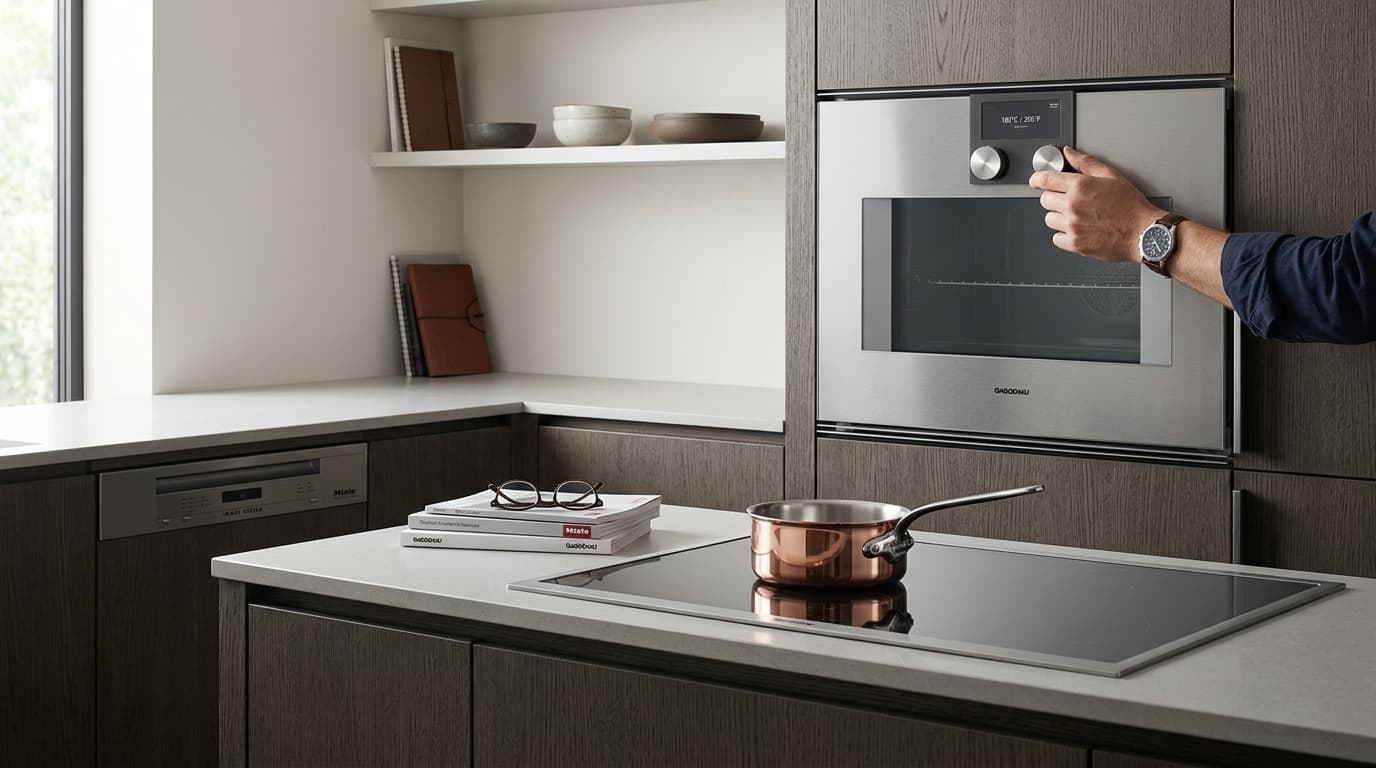
Gaggenau operates at an even higher register. With over 300 years of heritage and a reputation built on German precision engineering, their 400-series ovens and induction cooktops are the kind of thing professional chefs and serious home cooks reference in the same breath. The design is aggressively minimalist — handle-less refrigerators that disappear into cabinetry, touchscreen steam ovens that look like they belong in a lab. If you're building a kitchen where the appliances are part of the architecture, this is the tier.
What separates these from aspirational-but-hollow premium brands comes down to materials and specificity of engineering. High-end appliances at this level use brass burners for superior heat distribution, offer panel customization that integrates seamlessly into cabinetry, and include features — built-in coffee systems, dedicated ice makers, microwave drawers — that aren't available at lower price points. The customization isn't cosmetic. It's functional architecture.
The honest case for spending this much: premium appliances meaningfully boost resale value, and buyers recognize them on sight. But the stronger argument is simpler — if you cook seriously, the performance gap is real. Precise low-heat control, consistent high-heat searing, steam cooking that doesn't require a culinary degree to operate. These aren't features you notice in a showroom. They're features you notice every single day.
Buy the Miele if longevity and reliability are the priority. Buy the Gaggenau if you want the kitchen to feel like a statement and perform like a professional tool. Either way, you're buying out of the replacement cycle — and that's worth something.