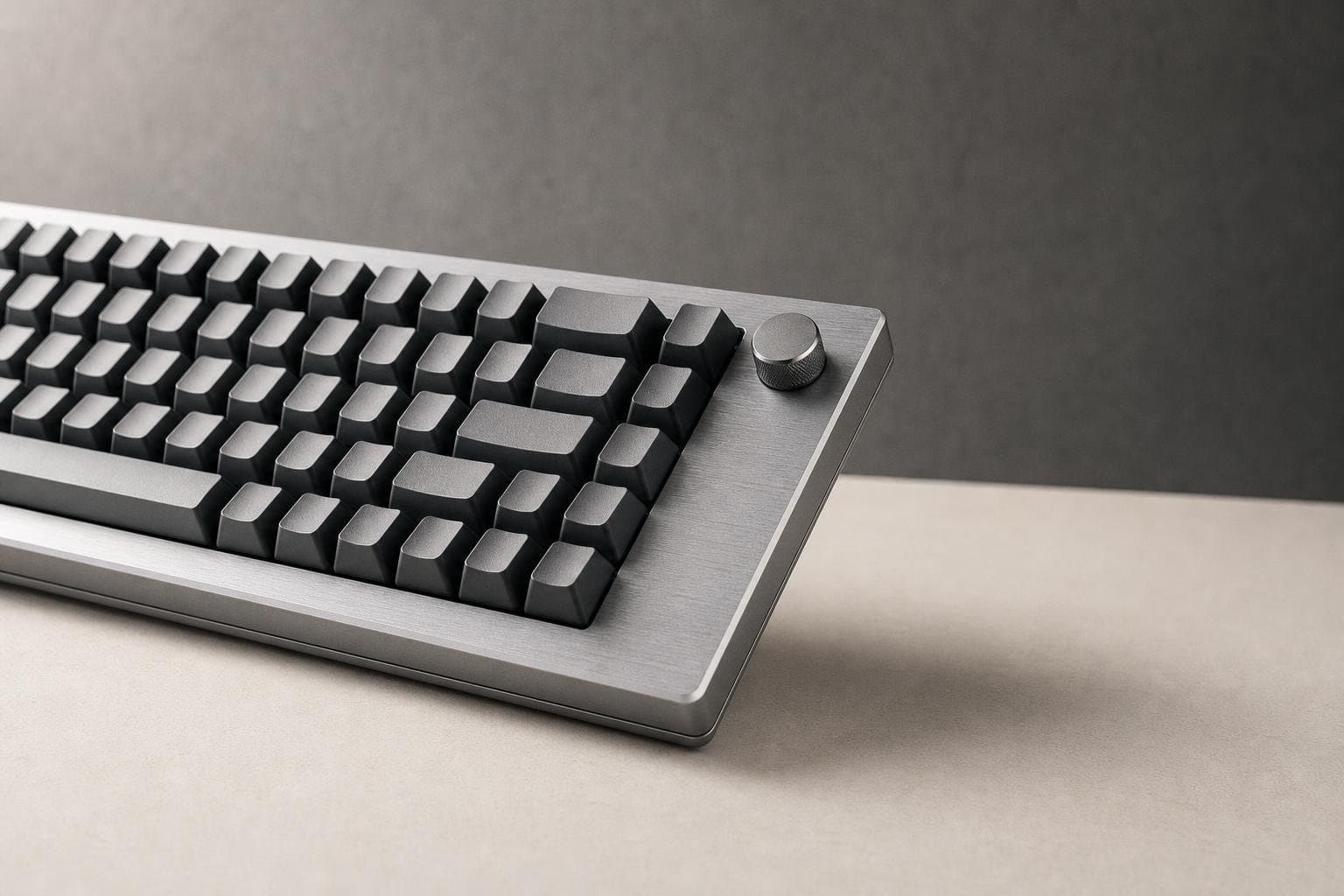

Most professionals buying a $200+ mechanical keyboard are paying for a feeling they can't quite articulate. The satisfying thud of a keypress. The sense that the tool in their hands was built to last a decade, not a product cycle. The problem is that the premium keyboard market is full of boards that charge luxury prices for gaming aesthetics dressed up in business casual clothing.
The good news: a few keyboards genuinely deliver on the promise. Here's how to cut through the noise.
The Spec That Actually Matters Most: Switch Technology
The switch is the soul of a mechanical keyboard, and the gap between entry-level and premium has never been wider. According to MKB Guide, Cherry MX switches dominated the market for decades on the strength of reliability and consistency — and they're still a defensible choice. But the more interesting action is happening in magnetic and Hall Effect switch technology, which eliminates the physical contact points that wear out over time.
The SteelSeries Apex Pro TKL's third-generation OmniPoint 3.0 magnetic switches are the clearest example of where premium switch engineering has landed. ComfyTechCheck's hands-on review clocked the keyboard's latency at 0.5ms at the fastest actuation setting, with adjustable actuation ranging from 0.1mm to 4.0mm per key. That means you can set your WASD keys to hair-trigger sensitivity while keeping less critical keys at a more deliberate 2.0mm to prevent accidental presses — a level of per-key customization that simply doesn't exist on fixed-switch boards.
For professionals who aren't competitive gamers, that granular control translates differently: the ability to tune your most-used shortcuts to a lighter touch while keeping the rest of the board at a weight that prevents fatigue during eight-hour writing sessions.
Build Quality: Where Premium Keyboards Earn (or Lose) the Price Tag
The chassis matters as much as the switches. A great switch in a hollow plastic case sounds like typing on a cereal box.
The Gear Audit's three-month testing of 20 keyboards identified the Keychron Q1 Max as the benchmark for build quality at its price point: a fully CNC-machined aluminum body, gasket-mounted PCB for a softer, more cushioned keystroke, and acoustic foam layers that eliminate the hollow resonance that plagues cheaper boards. Their assessment — that it "sounds and feels like a $500 custom keyboard" — is the kind of claim worth scrutinizing, but it held up across their 12-point evaluation covering stabilizer performance, acoustic profile, and long-term durability.
The SteelSeries Apex Pro TKL takes a different approach: aluminum top plate over a plastic base, which ComfyTechCheck notes delivers a premium feel without the weight penalty of an all-metal chassis. The double-shot PBT keycaps show no wear after months of use — a detail that separates keyboards built for longevity from those built for the unboxing video.
Hot-swappable switches are now table stakes at the premium tier. Both the Q1 Max and the Apex Pro TKL offer them, which means you're not locked into the factory switch choice. For professionals who want to experiment — or who simply want to replace worn switches in year three without buying a new board — this is the feature that turns a keyboard into a long-term investment.
The Right Board for the Right Professional
The honest answer is that "best premium mechanical keyboard" depends on what you're actually doing for eight hours a day.
Wirecutter's home office guide points to the Keychron V1 Max as its compact top pick, praising the combination of wireless connectivity, hot-swap capability, and full programmability via VIA software — features typically reserved for much pricier custom builds. At its price point, it's the most defensible choice for someone who wants a premium typing experience without the gaming-forward aesthetics.
For professionals who want the absolute ceiling of switch performance and don't mind paying for it, the Apex Pro TKL's adjustable actuation is genuinely differentiated. Tom's Guide's keyboard testing has consistently flagged Hall Effect and magnetic switch technology as the direction the premium market is moving — and the Apex Pro TKL is the most polished execution of that technology currently available.
The one caveat worth naming: ComfyTechCheck's review is explicit that casual users may find better value in fixed-switch alternatives. The adjustable actuation is a genuine competitive advantage — but only if you're willing to spend an afternoon in the software actually configuring it. Out of the box, it's a very good keyboard. Dialed in, it's a different category of tool.
The premium keyboard market has matured to the point where you're no longer paying for the idea of quality — you're paying for specific engineering decisions that have measurable effects on how you work. Know which decisions matter to you before you spend $200 or more. The keyboards that earn their price tags are the ones that were built around a clear answer to that question.


