
There's a specific failure mode that catches busy professionals every time: they spend $200 on a machine that technically makes espresso, hate it within a month, and conclude they're not "coffee people." They are. They just bought the wrong tool.
The home espresso market has a dirty secret — most machines sold at the $150–$350 price point don't produce real espresso. As CoffeeRoast Co. explains, genuine espresso requires sustained 9-bar pressure through a dosed coffee puck over a 25–30 second window. The machines that actually hit those numbers start around $350–$400. Everything below that threshold is making a different drink and calling it espresso.
For the professionals this newsletter is written for — people who've already optimized their mattress, their luggage, their headphones — the question isn't whether to spend real money on an espresso machine. It's which category of machine actually fits the way you live.
Two Philosophies, One Kitchen Counter
The premium home espresso market splits cleanly into two camps, and choosing the wrong one is expensive.
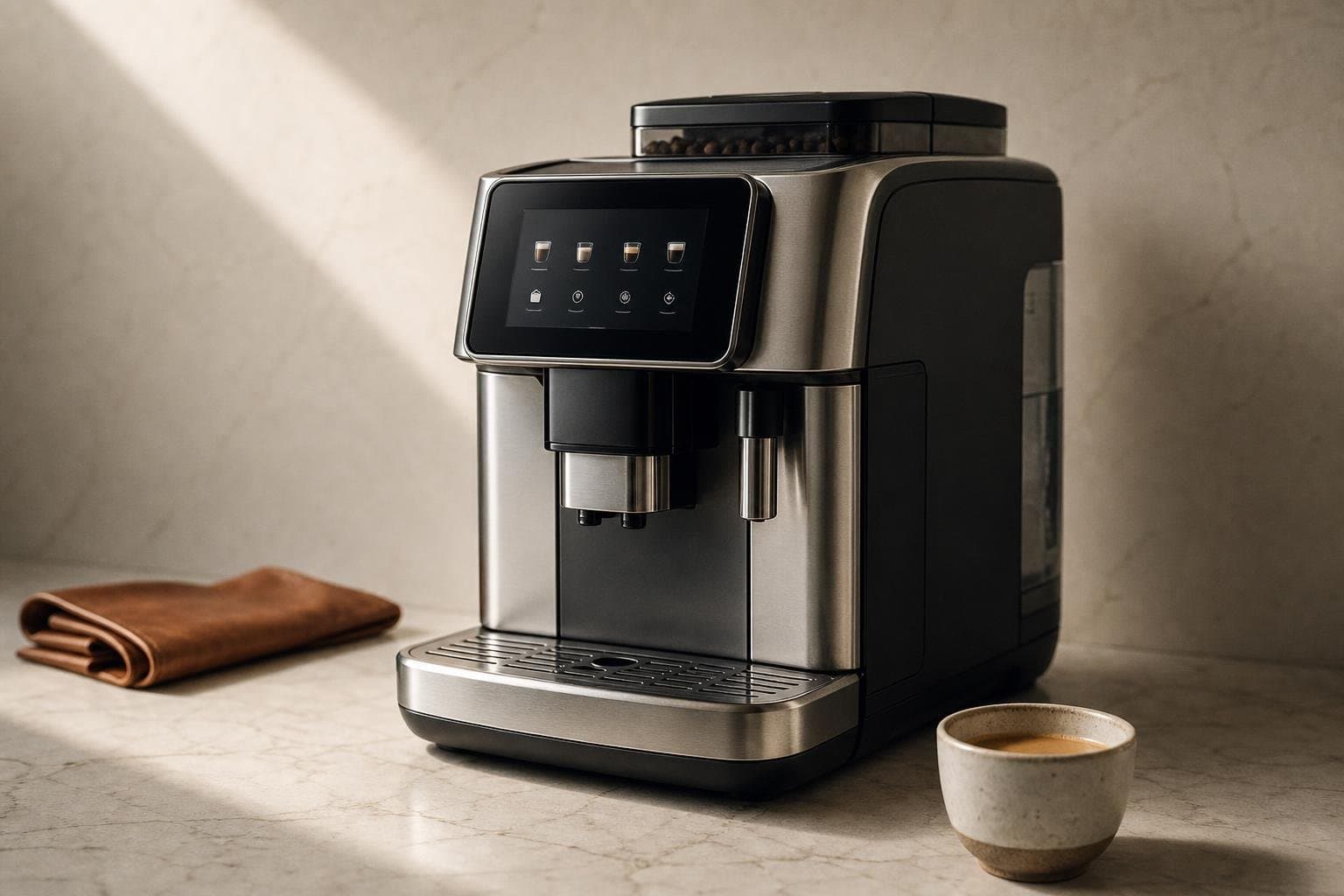
The super-automatic: You press a button, beans go in, espresso comes out. No technique required. These machines grind, tamp, brew, and sometimes froth milk entirely on their own. The tradeoff is that you surrender some control over the final cup in exchange for consistency and speed.
The semi-automatic: You grind separately, tamp manually, and pull the shot yourself. Higher ceiling, steeper learning curve, more variables to manage — and more to love when you get it right.
Neither is objectively better. They serve different people.
The Case for Going Fully Automatic
If your mornings run on calendar alerts and you want exceptional espresso without a barista education, the super-automatic category has matured considerably. Coffeeness, which has reviewed more than 50 fully automatic machines, consistently highlights the Jura Z10 as a standout at the premium end — praising its quiet electronic grinder, hot and cold coffee capability, and high-quality design, while noting it's genuinely expensive and doesn't include a milk container.
For those who want deep customization without sacrificing automation, the Saeco Xelsis Suprema at $2,199 is worth serious consideration. Its 5-inch color touchscreen and "Coffee Equalizer" feature let you adjust grind fineness, water temperature, milk foam density, and cup volume through visual sliders. Eight user profiles mean everyone in a household — or a small office — can save personalized recipes for instant recall. The dual boiler system handles simultaneous brewing and steaming, eliminating the wait that frustrates users of single-boiler machines. Cylio's review notes it competes directly with the Jura E8 and De'Longhi Eletta Explore, with its advantage being customization depth: no other machine in this class gives you this level of visual control over every variable.
The honest caveat: the Xelsis Suprema is not for someone who wants to press one button and forget about it. The learning curve is real, maintenance requirements are high, and the extensive menu system can feel overwhelming. But for the professional who treats their home setup like a craft — the same person who dialed in their standing desk and their noise-canceling headphones — it's genuinely rewarding.
At a more accessible price point, Food & Wine's testing names the KitchenAid KF7 (around $1,700) as their top fully automatic pick, while the Breville Barista Express ($693) earns their best overall espresso machine designation for those who want an integrated grinder without full automation.
When the Semi-Auto Is the Right Call
If you have fifteen minutes on weekend mornings and genuinely enjoy the ritual, a well-built semi-automatic will produce a better cup than any super-automatic at the same price. The physics favor it: you control every variable.
Coffee Kev's independent review makes a compelling case for the Gaggia Classic Pro E24 (around $500) as the entry point for serious home baristas — specifically praising its brass boiler, parts availability, repairability, and the fact that it holds its value and can be modded into something far more capable over time. It's the opposite of a sealed appliance you use until it dies. For professionals who hate replacing things, that longevity argument matters.
The step up from there — the Rancilio Silvia Pro X at roughly $900 — is where CoffeeRoast Co. points serious home baristas who are ready to spend more. Dual boilers, PID temperature control, and commercial-grade build quality in a machine sized for a home counter.
The Actual Decision
Spend five minutes honestly answering one question: do you want to make espresso or do you want to have espresso?
If the answer is "have" — you're optimizing for output, not process — the Saeco Xelsis Suprema or Jura Z10 will serve you better than any semi-auto you'll never learn to use properly. If the answer is "make" — if the fifteen-minute morning ritual sounds like a feature, not a bug — the Gaggia Classic Pro E24 or Rancilio Silvia Pro X will reward you in ways a super-automatic simply can't.
The worst outcome is buying the wrong category and blaming the coffee.


