


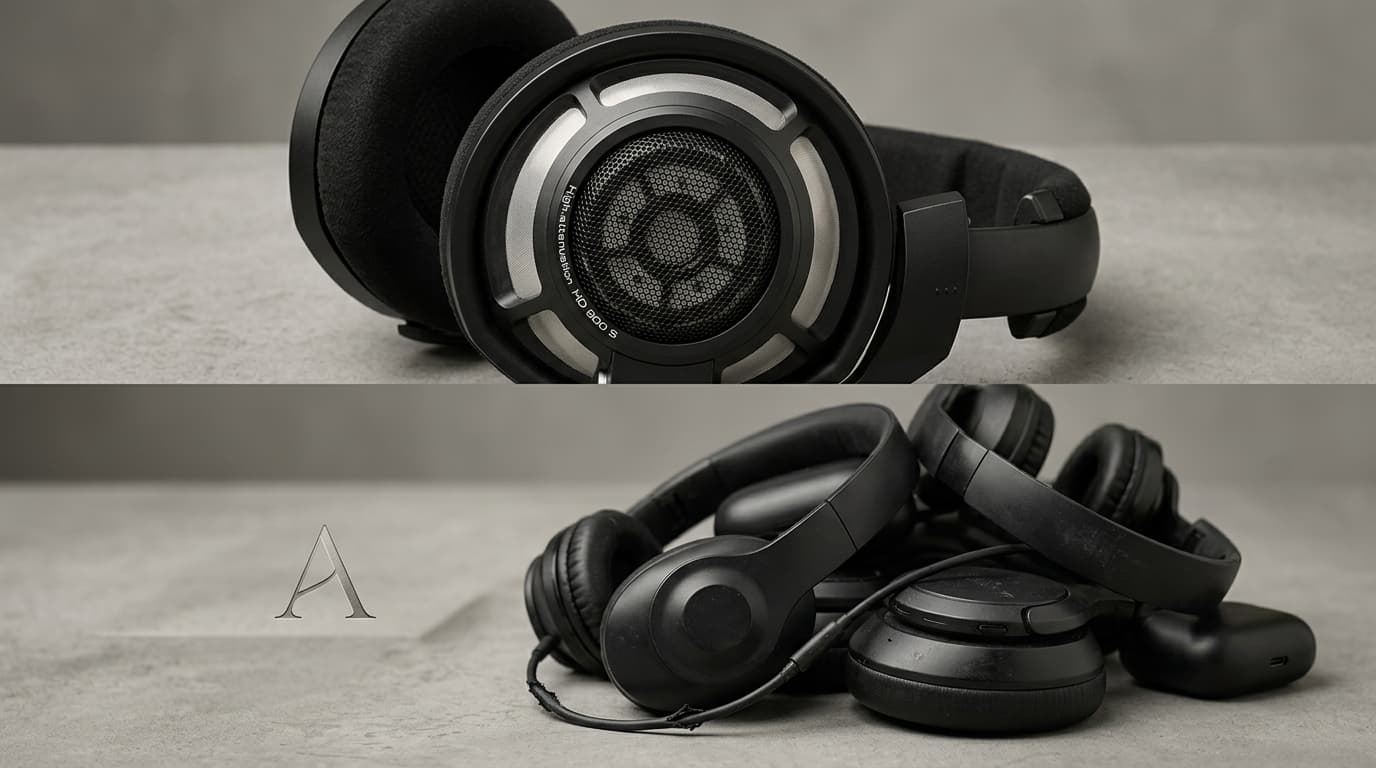

Most people buying premium headphones are paying for the box. The unboxing ritual, the brand name, the feeling of having made a serious purchase. The audio? Often an afterthought dressed up in marketing copy about "studio-quality sound" and "immersive listening experiences."
Here's what actually separates the gear worth owning from the gear worth avoiding.
The Wired Tier Still Wins on Pure Sound
If you're not tethered to a commute and you actually sit down to listen — to music, not podcasts at 1.5x speed — wired headphones remain the honest answer. RTINGS.com's 2026 roundup puts the Sennheiser HD 800 S at the top of their wired rankings, describing the sound as "incredibly immersive." That's not a surprise to anyone who's followed Sennheiser's audiophile line, but it's worth saying plainly: these are the headphones that reviewers with access to everything still reach for.
The HD 800 S isn't cheap. But the pattern I keep seeing in long-term user feedback is that people who buy them stop looking. That's the real metric — not the spec sheet, not the frequency response graph, but whether you're still researching alternatives six months later. With this tier of headphone, most people aren't.
Wireless Has Finally Closed the Gap (Mostly)
For the professional who needs Bluetooth — travel, office, calls — Wirecutter's 2026 wireless headphone guide lands on the JBL Tour One M2 as the standout: strong sound, long battery life, and premium features at a price point below the Sony and Bose flagships that dominate this category. The reviewer, Lauren Dragan, has tested over 2,000 headphones across a decade at Wirecutter. When someone with that sample size picks a winner, it's worth paying attention.
The honest caveat: wireless compression still exists. If you're an active listener who notices the difference between lossless and compressed audio, no Bluetooth headphone — regardless of price — fully closes that gap. For everyone else, the JBL Tour One M2 represents the current ceiling of what wireless can deliver without requiring you to spend flagship money on marginal gains.
The Upgrade Most People Skip (And Shouldn't)
Here's where I'll push back on the conventional buying path: most people buying $400+ headphones are plugging them into a laptop or phone and wondering why they don't sound as good as the reviews promised. The answer is almost always the DAC — the digital-to-analogue converter — buried inside that device, doing its best with hardware designed for multitasking, not audio fidelity.
What Hi-Fi?'s 2026 DAC guide makes the case clearly: the DACs inside everyday devices can't carry out their conversion duties as accurately as a dedicated external unit, and that directly affects what you hear. An external DAC slots between your source and your headphones and does one job — conversion — without competing with a processor managing seventeen other tasks simultaneously.
The practical implication: a $200 external DAC paired with a $300 headphone will frequently outperform a $600 headphone plugged straight into a MacBook. That's not a knock on the headphone. It's a system problem with a system solution.
What CanJam NYC 2026 Actually Revealed
The audiophile show circuit is useful as a signal, not a verdict. eCoustics covered CanJam NYC 2026 with appropriate honesty: the main ballroom is loud, listening sessions are brief, and the environment is nothing like your home or your commute. Their reporters spent significant time actually listening rather than just filming manufacturer interviews, which makes their impressions more credible than most show coverage.
The headline from their reporting: nothing truly groundbreaking emerged. The headphone market already offers hundreds of wired and wireless options, and the 2026 show confirmed that the current leaders are consolidating rather than being displaced. That's actually useful information. It means the gear worth buying now isn't about to be obsoleted by something announced last month.
Stereophile's 2026 Recommended Components list for headphones reinforces this — the names at the top of their rankings are familiar, which is either reassuring or boring depending on your appetite for novelty. I'd argue it's reassuring. In audio, stability at the top usually means the engineering is genuinely mature.
The Actual Buying Framework
Spend on headphones first, then the DAC, then the amp if your headphones are power-hungry. Don't buy wireless if you're primarily a home listener. Don't buy wired if you're primarily mobile. And don't buy anything based on a show floor demo in a crowded ballroom.
The gear that holds up is the gear that reviewers with thousands of hours of comparative listening still recommend — not because it's new, but because it's right.