


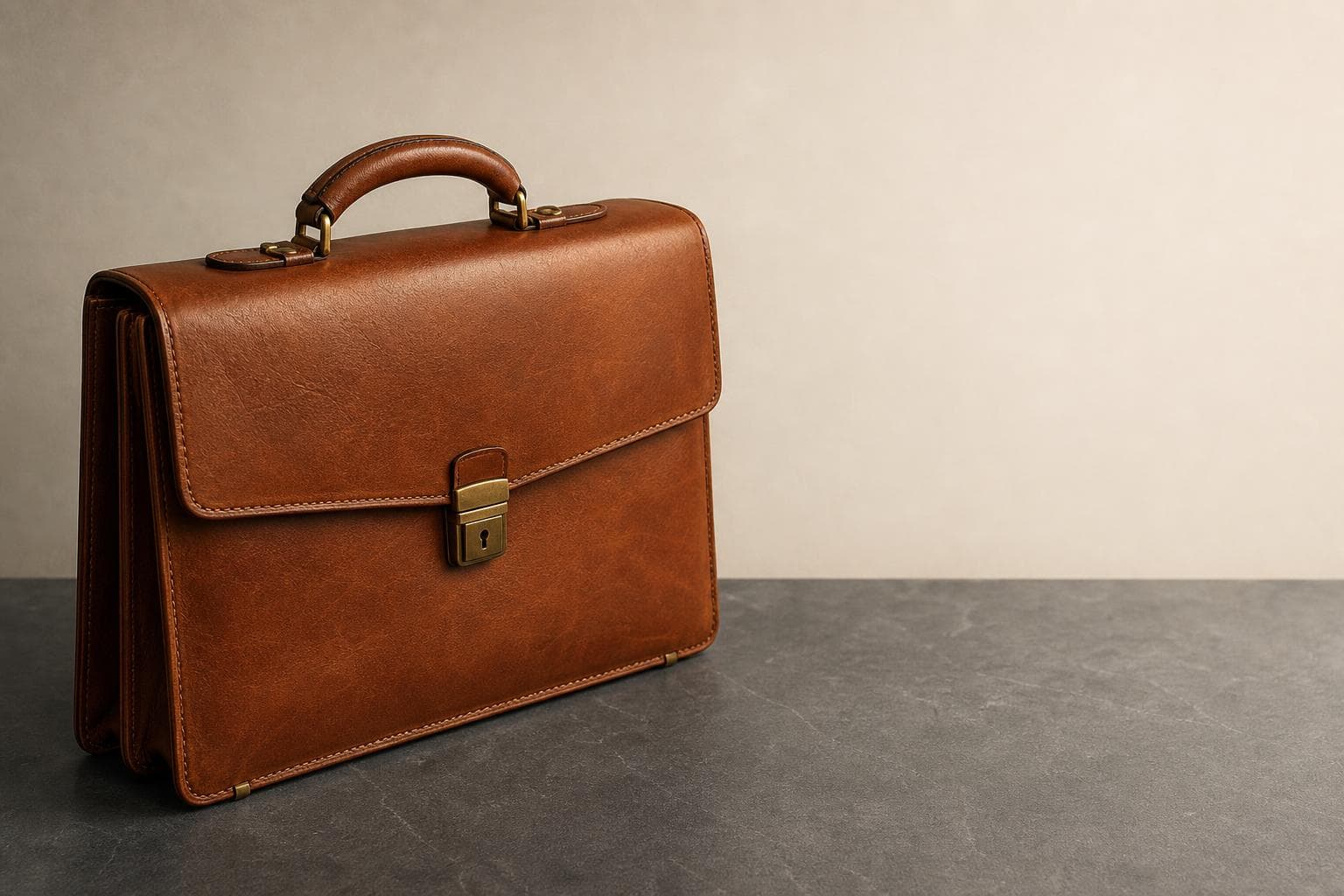

There's a specific kind of regret that comes from buying the wrong leather bag. You spend $400 on something that looks great in the product photos, carry it for eighteen months, and watch the corners split, the hardware tarnish, and the whole thing slowly announce that you made a compromise. The bag you should have bought — the one you talked yourself out of — would have been $600. The math was never in your favor.
Premium leather briefcases are one of the few categories where spending more genuinely changes the outcome. But the gap between "expensive" and "worth it" is wider here than almost anywhere else, and the signals that separate them are specific.
The Material Decision Is Made Before You Touch the Bag
The single most important choice happens at the leather grade, and most buyers don't know to ask. Steel Horse Leather's buying guide breaks this down cleanly: full-grain leather is cut from the outermost hide layer, preserving the dense fiber structure that gives leather its tensile strength and abrasion resistance. It ages into a patina. Top-grain leather has that natural surface sanded away for a uniform finish — it looks polished out of the box but loses durability in the trade. Genuine leather, despite the name, is bonded scraps. It's real leather the way particle board is real wood.
For a bag you're going to carry into boardrooms for a decade, full-grain is the only answer. The premium tier within that is vegetable-tanned full-grain — plant-derived tannins instead of chromium compounds, producing leather that develops a deeper, richer character over time. It's the difference between a bag that ages and a bag that wears out.
Hardware matters almost as much. Luhxe's luxury travel guide flags brass and stainless steel hardware as the markers of serious construction — they resist corrosion and maintain their action over years of daily use. Reinforced stitching at stress points (where handles meet the body, where straps attach) is where cheap bags fail first. These aren't details you notice when you buy the bag. They're details you notice when the bag is still holding together five years later.
Two Ends of the Premium Spectrum
The Saddleback Large Classic Briefcase is the bag that gets argued about on Reddit more than any other. Stridewise reviewed two of them — one six months old, one eleven years old — and the eleven-year-old bag is the actual argument. The leather comes from Lefarc Tannery in León, runs about a quarter inch thick, and produces a bag that weighs seven pounds empty. That's not a typo. This is a bag built like it expects to be handed down. It comes with a 100-year warranty, which is either marketing theater or a genuine statement of intent depending on how you read the construction. The honest downsides: no dedicated laptop sleeve, unfinished edges, and enough buckle noise to announce your arrival. It's overbuilt in ways that occasionally work against you.
On the opposite end of the aesthetic register, the Carl Fredrik Palissy Double Briefcase at $995 is what happens when the design brief starts with "slim and authoritative" rather than "indestructible." It carries a 4.9-star rating across 55 reviews and ships with a lifetime warranty. The cognac colorway in particular is the kind of thing that photographs beautifully and reads even better in person — that warm amber tone against a dark suit is a considered choice, not an accident. Two zipped compartments, a 15-inch laptop sleeve, pen slots, and organizational pockets inside a profile that doesn't look like you're hauling equipment. For client-facing professionals who need the bag to disappear into the meeting rather than dominate it, this is the more intelligent choice.
What the Reviews Actually Tell You
The pattern in long-term reviews for premium leather bags is consistent: buyers who stretched their budget and bought full-grain construction almost never regret it. The complaints that disqualify otherwise well-rated bags cluster around a few specific failures — hardware that corrodes, stitching that separates at stress points, leather that cracks rather than patinas. These aren't random failures. They're predictable outcomes of top-grain or chrome-tanned leather under daily load.
The SageBrown Harvard Briefcase illustrates the hardware point well: a handmade matt brass lock, suede lining, and premium calf hide construction, with a personalisation option (hand-engraved initials on the lock) that turns a briefcase into something you don't replace. That's the logic of the whole category. You're not buying a bag. You're buying out of the replacement cycle.
The question worth sitting with before you buy: are you optimizing for how the bag looks on day one, or for how it looks on day 1,500? Those are different bags. The ones built for day 1,500 are almost always the better investment — and they're usually obvious once you know what to look for.