
When a platform starts writing exclusivity checks to keep talent from defecting to a competitor, it's not a sign of strength. It's a sign that the competitor is winning on terms the incumbent can't match.
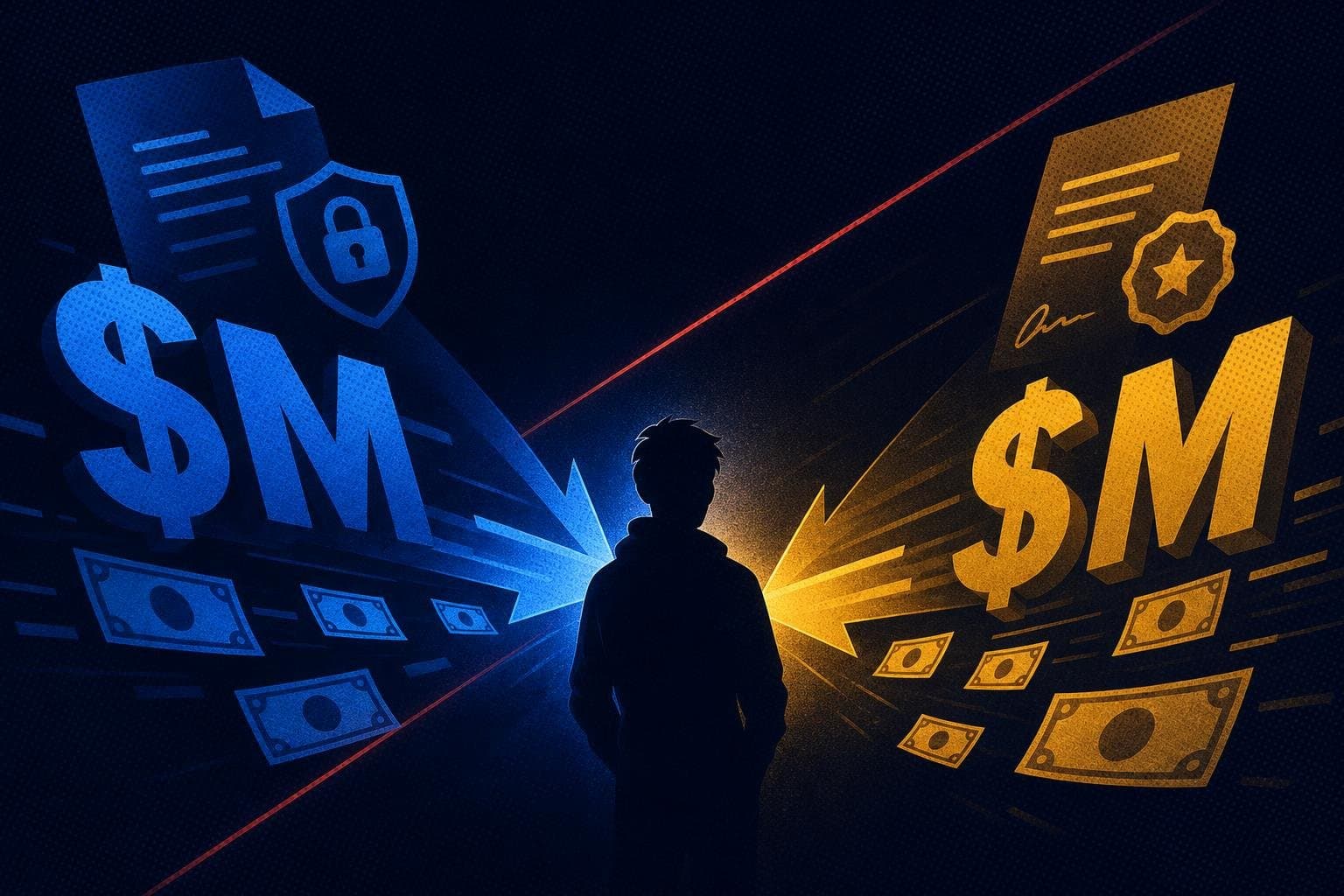
Bloomberg reported this week that YouTube is offering millions of dollars to popular creators in exchange for uploading their videos to YouTube before any other service — with consequences for creators who post to YouTube and Netflix simultaneously. The payments come in two forms: direct program financing and a share of major brand deals. The target is explicit. Netflix has been recruiting YouTube's biggest stars, and YouTube is paying to stop them.
Read that again: YouTube, which controls the dominant share of online video consumption and has spent years positioning itself as the natural home for creator-driven content, is now in a bidding war to retain talent. That's a significant strategic shift, and the financial logic behind it reveals something important about where the streaming business is actually heading.
Netflix Is Buying What YouTube Built
Netflix's move into creator content isn't a vanity play. It's a calculated bet on where subscriber acquisition is cheapest. Traditional scripted television costs tens of millions of dollars per episode to produce, market, and distribute. A top YouTube creator already arrives with an audience, a production rhythm, and a brand. Netflix doesn't have to build the fandom — it just has to rent it.
For Netflix, the math is straightforward: if a creator with 20 million subscribers can drive even a fraction of those viewers toward a Netflix subscription, the cost-per-acquired-subscriber on a creator deal can look attractive compared to a prestige drama that might cost $100 million to produce and still underperform. Netflix has been public about its interest in expanding beyond scripted content, and creator partnerships are a logical extension of that strategy.
YouTube's response — paying creators to stay exclusive — tells you that this threat is real enough to spend against. YouTube's business model depends on advertising revenue generated by creator content. If the platform's highest-value creators migrate to Netflix, even partially, the inventory quality drops and advertiser rates follow. YouTube isn't protecting culture. It's protecting CPMs.
The Exclusivity Trap Has a History
There's a reason the streaming industry spent years moving away from rigid exclusivity deals. When Netflix, Disney+, and HBO Max were all chasing the same content simultaneously, the cost of exclusivity ballooned to the point where studios were signing deals that made no financial sense. The content arms race of 2020–2022 ended with mass cancellations, write-downs, and a collective industry hangover.
YouTube is now entering a version of that same dynamic, except the asset class is creator content rather than scripted television. The economics are different — creator deals are cheaper per unit — but the competitive logic is identical: pay now to lock out a rival, then figure out the returns later. That's a strategy that works until it doesn't, and it tends to stop working when the rival has deeper pockets or a more compelling offer for the talent.
Netflix's subscriber revenue gives it a fundamentally different financial structure than YouTube's ad-supported model. Netflix can offer creators something YouTube structurally cannot: guaranteed income that doesn't fluctuate with advertiser sentiment or algorithm changes. For a creator whose YouTube revenue swings 30% based on ad market conditions, a Netflix deal with a fixed guarantee is genuinely attractive — no exclusivity payment fully neutralizes that.
What This Means for the Broader Streaming Picture
The YouTube-Netflix creator conflict is a subplot in a larger story this newsletter has been tracking: the streaming industry is consolidating around a small number of platforms with the financial scale to compete across multiple content categories simultaneously. Netflix is moving into creator content. YouTube is moving into premium programming. Amazon has sports. Disney has franchises. The middle is hollowing out.
Meanwhile, the Paramount-Warner Bros. merger saga — now heading toward a March 2027 trial date after 12 state attorneys general filed suit — is a direct consequence of the same pressure. David Ellison's entire strategic rationale for the $111 billion deal is that neither Paramount nor Warner Bros. Discovery can individually generate the content volume and IP depth needed to compete with Netflix and Amazon at scale. The L.A. County economic report projecting $2.78 billion in lost economic value if the merger closes is a real cost — but so is the cost of two mid-tier studios trying to fight Netflix separately with shrinking balance sheets.
The YouTube exclusivity play fits the same pattern. When a dominant incumbent starts paying defensively to hold its position, it signals that the competitive threat has already crossed some internal threshold. YouTube isn't doing this because Netflix might eventually come for its creators. It's doing this because Netflix is already there.
Watch for how creators respond to these deals over the next two quarters. If top-tier talent takes YouTube's money but continues finding ways to build Netflix relationships — through production partnerships, licensing arrangements, or simply letting exclusivity windows expire — that tells you the financial incentives Netflix is offering are durable enough to survive a short-term buyout. If creators stay put, YouTube bought itself real runway. The terms of those deals, if they ever surface in earnings commentary or creator disclosures, will be the number that actually matters.


