
The math used to be simple: streaming platforms raised prices, subscribers grumbled, most stayed anyway, revenue grew. Repeat annually. That model is now running into a wall — and the industry's response tells you more about where streaming economics are headed than any earnings call talking point.
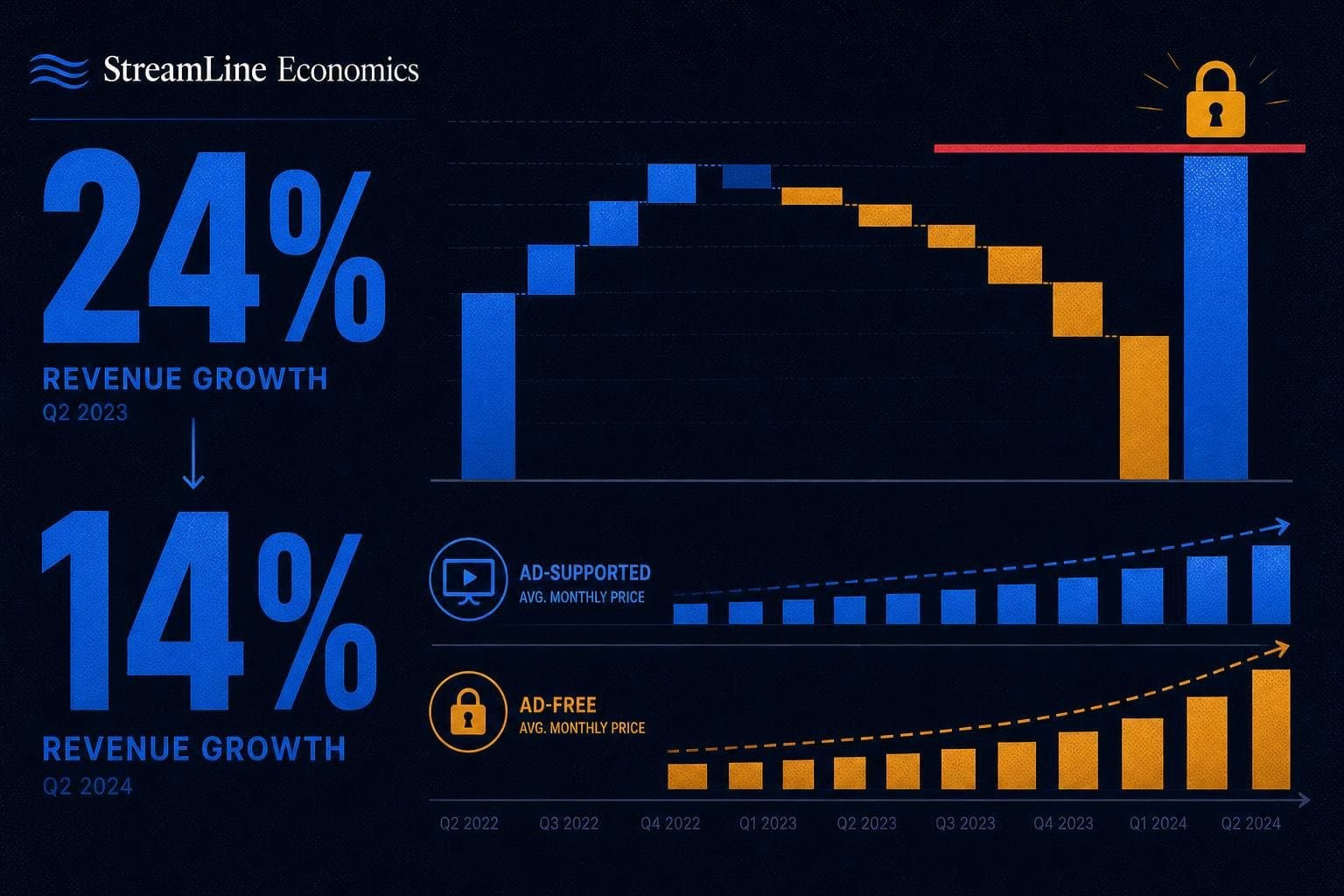
According to research from Ampere Analysis, Netflix, Disney+, and Amazon have been scaling back the size of their average price increases — from 24% per subscription in 2023/24 down to 14% in 2025/26. In dollar terms, the average monthly increase has actually declined slightly, from $1.67 to $1.54 over the same period. Ampere's conclusion is blunt: streamers are "moving closer to the limits of consumers' willingness to pay, leaving less headroom for larger price increases in the future."
That's a significant structural shift. For years, the streaming growth story was built on two pillars: subscriber acquisition and price escalation. If the second pillar is softening, platforms need a different way to grow revenue per user — and fast.
The Ad Tier Wedge Is Getting Wider on Purpose
The Ampere data reveals something specific about how platforms are managing this ceiling. Ad-free tiers have seen larger price increases than ad-supported tiers — $1.61 versus $1.21 per month — and the gap between the two options has grown. That's not accidental. It's a deliberate strategy to push subscribers toward ad-supported plans, where the platform monetizes them through advertising revenue rather than subscription fees alone.
Think about what that means structurally. A subscriber on an ad-supported tier pays less, but the platform earns ad revenue on top of that reduced fee. As Ampere notes, advertising has become "an increasingly important revenue stream, reducing reliance on subscription pricing alone." The platforms are essentially building a two-track revenue model: squeeze more from premium subscribers through price, and convert budget-conscious subscribers into ad inventory.
The regional breakdown adds texture. Western Europe has seen the largest average price increases over the past three years at $1.86 or 16%, ahead of North America at $1.79 or 15%. That's a meaningful data point for anyone watching international expansion as a growth lever — the markets where streaming was supposed to find its next wave of subscribers are also the markets being pushed hardest on price.
Password-sharing crackdowns fit into this same logic. Rather than raising prices to grow revenue, platforms are extracting more value from existing audiences by converting shared accounts into paid ones. It's growth through enforcement, not growth through product improvement.
When You Can't Raise Prices, You Bet on Franchises
Here's where the Manifest spinoff announcement becomes a business story rather than just an entertainment one.
Netflix greenlighted Arrivals: A New Manifest Mystery this past Friday — a spinoff from the original series, with the same creative team (showrunner Jeff Rake, co-showrunners Margaret Easley and Laura Putney) and a new premise involving a plane crash in Denver whose passengers emerge with no memory of who they are. The announcement timing — 8:28 a.m. on August 28th, a nod to the original show's Flight 828 — was a piece of fan service that doubles as a signal about Netflix's content strategy.
The business case is straightforward. All four seasons of Manifest have accumulated more than 130 million views since the first half of 2023, per Netflix's own figures. That's a proven audience with demonstrated loyalty. When subscriber growth slows and price increases face resistance, the cost-per-engaged-viewer math on a known franchise looks a lot better than the same math on an original concept that might or might not find its audience.
This is the franchise logic that has governed film studios for decades, now fully embedded in streaming. Established IP reduces marketing costs, reduces audience acquisition risk, and gives platforms a reason for lapsed subscribers to return — or for fence-sitters to finally sign up. In a world where you can't reliably charge more, you need to give people more reasons to stay.
What the Ceiling Actually Means for the Next 12 Months
The Ampere findings, combined with Netflix's franchise pivot, sketch out a fairly clear picture of where streaming revenue strategy is heading. Price increases will continue, but in smaller increments. Ad-supported tiers will be incentivized more aggressively. And content investment will increasingly flow toward proven IP rather than speculative originals — because the subscriber acquisition cost on a Manifest spinoff is lower than on a show nobody has heard of.
Watch for two things in the next round of earnings calls: how platforms characterize their ad-tier subscriber mix (the ratio matters enormously for revenue per user calculations), and whether content spending guidance shifts toward franchise extensions at the expense of new IP development. If platforms are hitting a price ceiling, the content budget becomes the primary lever — and how they allocate it will tell you everything about who they think their subscribers actually are.


