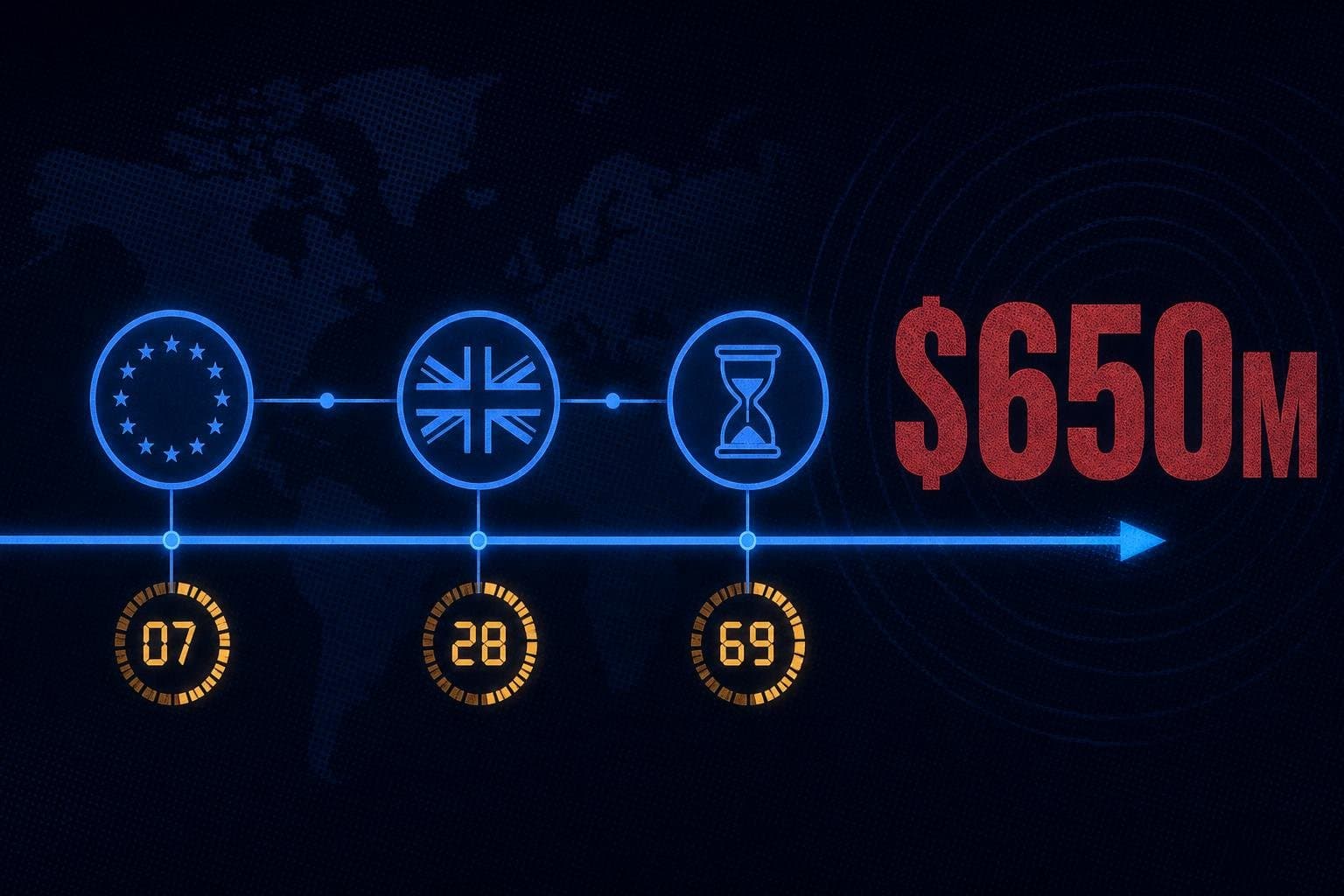

David Ellison has a clock problem. And the clock is in London.
The Paramount-WBD merger cleared its biggest hurdle when the DOJ signed off last month — a moment I covered in detail in the June 14 issue. But regulatory approval in the U.S. turns out to be the easy part. Right now, the deal's September closing target is being held hostage by European regulators, and the financial math behind that deadline is brutal enough that every week of delay has a price tag attached.
The Ticking Fee Is the Real Story
Here's the number that concentrates minds: Paramount has committed to paying WBD shareholders 25 cents per share — roughly $650 million — for every quarter the deal doesn't close beyond Q3. That's not a rounding error. That's a structural penalty baked into the merger agreement that turns regulatory delay directly into cash out the door.
September 30 is the line. Miss it, and Ellison's first major act as the architect of a combined Paramount-WBD entity is writing a $650 million check to the people he just bought out. Miss it by two quarters, and that number doubles. The deal's financial logic — the whole thesis about combining content libraries, rationalizing streaming costs, and building a competitor to Netflix at scale — starts to erode the moment that clock runs past midnight on Q3.
This is why the European regulatory timeline matters so much more than it might appear from the outside.
Two Fronts, Two Different Risk Profiles
The EU situation looks manageable. Paramount has agreed to exit United International Pictures, its international film distribution joint venture with Universal Pictures, as a concession to address antitrust concerns from European cinema operators. UIP — a London-based operation founded in 1981 that now operates in a handful of markets including Denmark, Norway, and Poland — is a relatively modest asset to sacrifice for a $111 billion deal. The European Commission extended its provisional deadline from July 7 to July 22, a move that suggests EU approval is likely forthcoming. Giving up a scaled-back distribution operation in seven European markets to unlock a continent-wide green light is the kind of trade Ellison's advisors would take every time.
The UK is a different animal. Culture Secretary Lisa Nandy has said she is "minded to intervene," calling the $110 billion union "unprecedented" in a letter to Paramount. Her specific concern is media plurality — the combination of Channel 5 and TNT Sports with Paramount+ and HBO Max under single ownership. Paramount had until July 6 to make final representations to Nandy, after which she is expected to issue a formal intervention notice. That notice would trigger investigations by both Ofcom and the Competition and Markets Authority, with a 40-day window to complete. Do the arithmetic: a formal intervention notice issued this week, plus 40 days of CMA review, puts the UK decision well into August — leaving almost no margin before the September ticking-fee deadline.
The uncomfortable reality for Ellison is that the UK government's process runs on its own schedule. Paramount is not in control of this timeline.
What HBO Max Is Doing While the Lawyers Work
While the merger grinds through regulatory review, the asset at the center of it — HBO Max — is executing its own subscriber strategy. HBO has cut subscription prices 40 percent ahead of House of the Dragon Season 3, discounting all three tiers on annual plans through July 15. The streamer is currently at 140 million subscribers and projecting 150 million by year-end, per Warner Bros. Discovery's most recent quarterly report.
The timing is worth noting. A 40 percent price cut on annual subscriptions — locking subscribers in for 12 months — right before a major regulatory decision is a smart defensive move. If the merger closes and the combined entity needs to restructure pricing or bundles, annual subscribers are already committed. And with Harry Potter arriving in December, HBO Max is stacking reasons for subscribers to stay through the end of the year regardless of what happens to the corporate structure above them.
That subscriber momentum is exactly what makes the WBD asset worth the regulatory headache. The combined deal includes $24 billion in investment from sovereign wealth funds including Saudi Arabia's Public Investment Fund, Abu Dhabi's L'imad Holding Company, and the Qatar Investment Authority — a capital structure that signals how much is riding on a clean close. A service trending toward 150 million subscribers is a meaningful counterweight to Netflix's dominance, which is precisely why Netflix made its own competing bid for WBD earlier this year, and precisely why Ellison is willing to absorb $650 million per quarter in ticking fees to get this done.
The question now is whether the UK government moves fast enough to let him.
Watch for Nandy's formal intervention notice — expected imminently — and whether the CMA signals a fast-track or standard review. A standard 40-day review running to mid-August leaves Ellison with roughly six weeks to satisfy any conditions before the Q3 deadline. That's not impossible. It's also not comfortable.


