
The most expensive word in Hollywood right now is "wait."
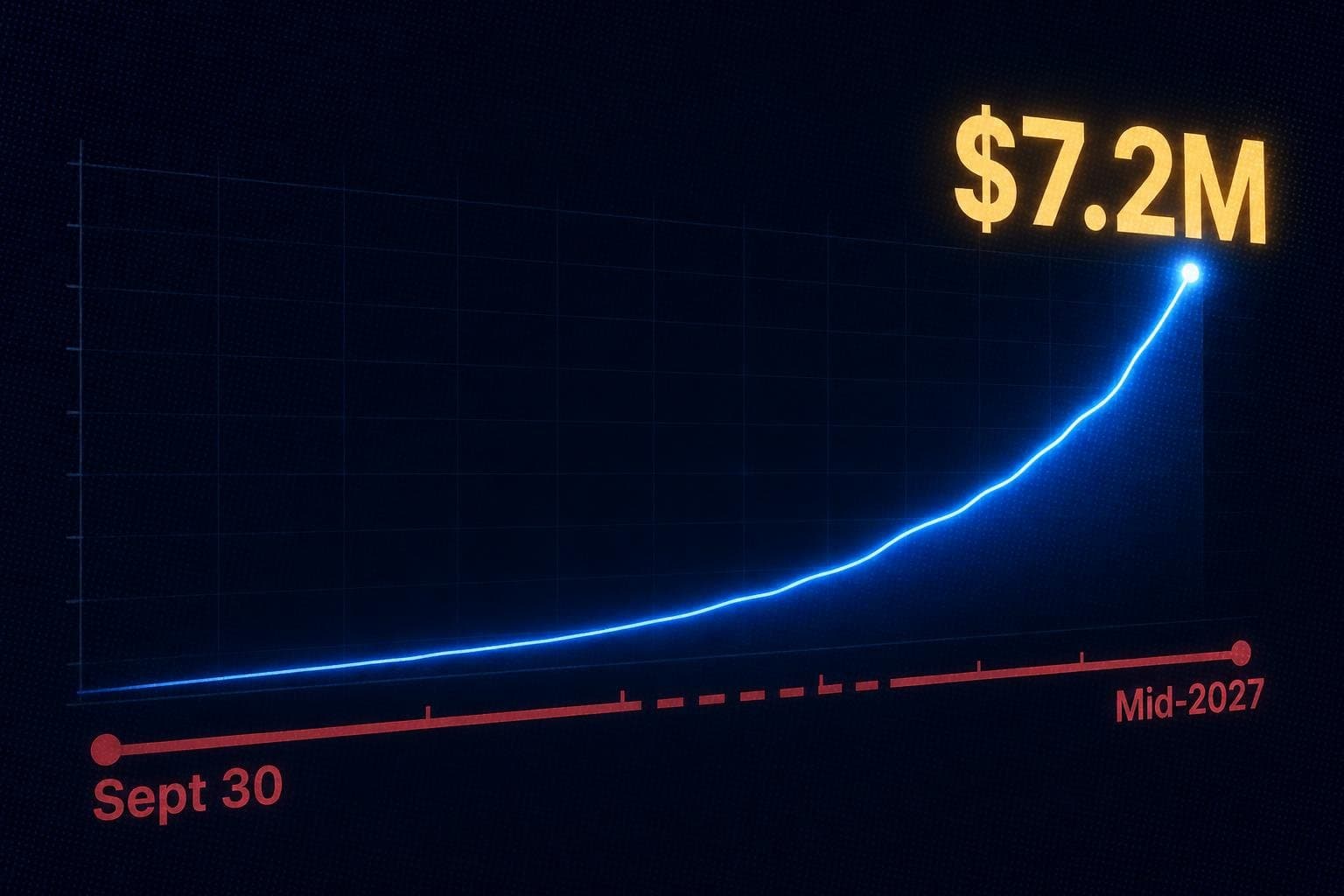
When Paramount agreed last Friday to hold off on closing its $111 billion takeover of Warner Bros. Discovery until at least June 2027 — or until a court rules on the antitrust challenge — the company didn't just lose a timeline. It accepted a financial penalty that compounds daily. Under the merger agreement, WBD shareholders are owed roughly $6.9 million per day if the deal isn't closed by September 30. That "ticking fee" was originally designed as a sweetener to reassure WBD shareholders the deal would close fast. It has become something else entirely: a meter running on Paramount's balance sheet while lawyers argue in court.
This is the deal's new reality, and the financial logic behind it deserves more attention than the legal drama is getting.
The Ticking Fee Was a Confidence Bet That Didn't Pay Off
To understand how Paramount ended up here, you have to go back to the original deal structure. Paramount's team was so confident they'd cruise through regulatory approvals that they voluntarily offered the ticking fee provision — 25 cents per WBD share per quarter past September 30. That confidence wasn't irrational at the time: the Justice Department cleared the deal in June, and the EU followed with approval after Paramount agreed to end its European film distribution partnership with Universal.
What Paramount didn't fully price in was the state-level antitrust challenge. A coalition of 12 state attorneys general, led by California, filed suit on July 13, alleging the combined company would harm competition in basic cable, tentpole theatrical releases, and wide-release film distribution. U.S. District Judge Araceli Martínez-Olguín granted a temporary restraining order, then extended it. Both sides ultimately agreed to cancel a preliminary injunction hearing and push toward a full trial, with a joint scheduling statement due July 31.
The ticking fee was a bet that regulatory risk was manageable. State AGs just called that bet.
What the Delay Actually Costs — and Who Pays
The math here is straightforward and brutal. At $7.2 million per day, every month past September 30 adds roughly $216 million to Paramount's tab. A trial that runs into mid-2027 could push total ticking-fee exposure into the billions — on top of legal costs, management distraction, and the operational limbo both companies now inhabit.
Paramount stock touched a 52-week low on the news before closing at $8.21, with WBD shares falling nearly 1% during the trading day and drifting further after hours. The market is pricing in what the press releases won't say directly: this deal is now a long, expensive fight with an uncertain outcome.
The Writers Guild of America, which has been vocal in opposing the merger, argued at a press briefing that the deal would push down writer compensation and reduce output. Paramount has called the merger "pro-Hollywood" and disputes those claims. But the WGA's involvement — alongside 12 state AGs — signals that this isn't a standard antitrust review where the parties negotiate remedies and move on. The opposition has organized, and it has time on its side.
The Broader Signal for Streaming Consolidation
I've been tracking this merger since the $110 billion announcement in May and through the DOJ clearance in June. The consistent theme has been that federal approval was treated as the finish line. It wasn't.
The state AG challenge introduces a variable that deal architects at major media companies will now have to model explicitly: even after federal clearance, a coordinated state-level challenge can impose months of delay and nine-figure carrying costs. That changes the calculus for future consolidation. Deals that look profitable at close can look very different after a year of ticking fees and legal spend.
For streaming specifically, the strategic logic of the Paramount-WBD combination — combining HBO Max's prestige content library with Paramount+'s sports and franchise IP — hasn't changed. But the companies executing that strategy are now burning cash to wait for permission to try. Every quarter of delay is a quarter where Netflix continues compounding its subscriber and margin advantages, where the combined entity's integration planning sits in legal purgatory, and where the $6.9 million daily meter keeps running.
Watch for the July 31 joint scheduling statement, which will give the first real signal of how long this trial timeline actually runs. If the court sets a trial date deep into 2027, expect another leg down in both stocks — and a serious conversation about whether the deal's financial terms need to be renegotiated before anyone gets to close.


