
A temporary restraining order was supposed to be a speed bump. It's becoming a wall.
When I last wrote about the Paramount-WBD merger, the story was about the $7 million-per-day cost of delay and a Q3 closing timeline that was already slipping. The situation has since moved into different territory. A dozen state attorneys general, led by California's Rob Bonta, sued to block the deal on antitrust grounds — and rather than fight a preliminary injunction hearing, Paramount agreed to go directly to trial. Paramount is pushing for a November start date; the AGs want January. The court will set the schedule after reviewing discussions due July 31.
That's not a delay. That's a restructuring of the entire deal's risk profile.
The Trial Path Is a Different Kind of Uncertainty
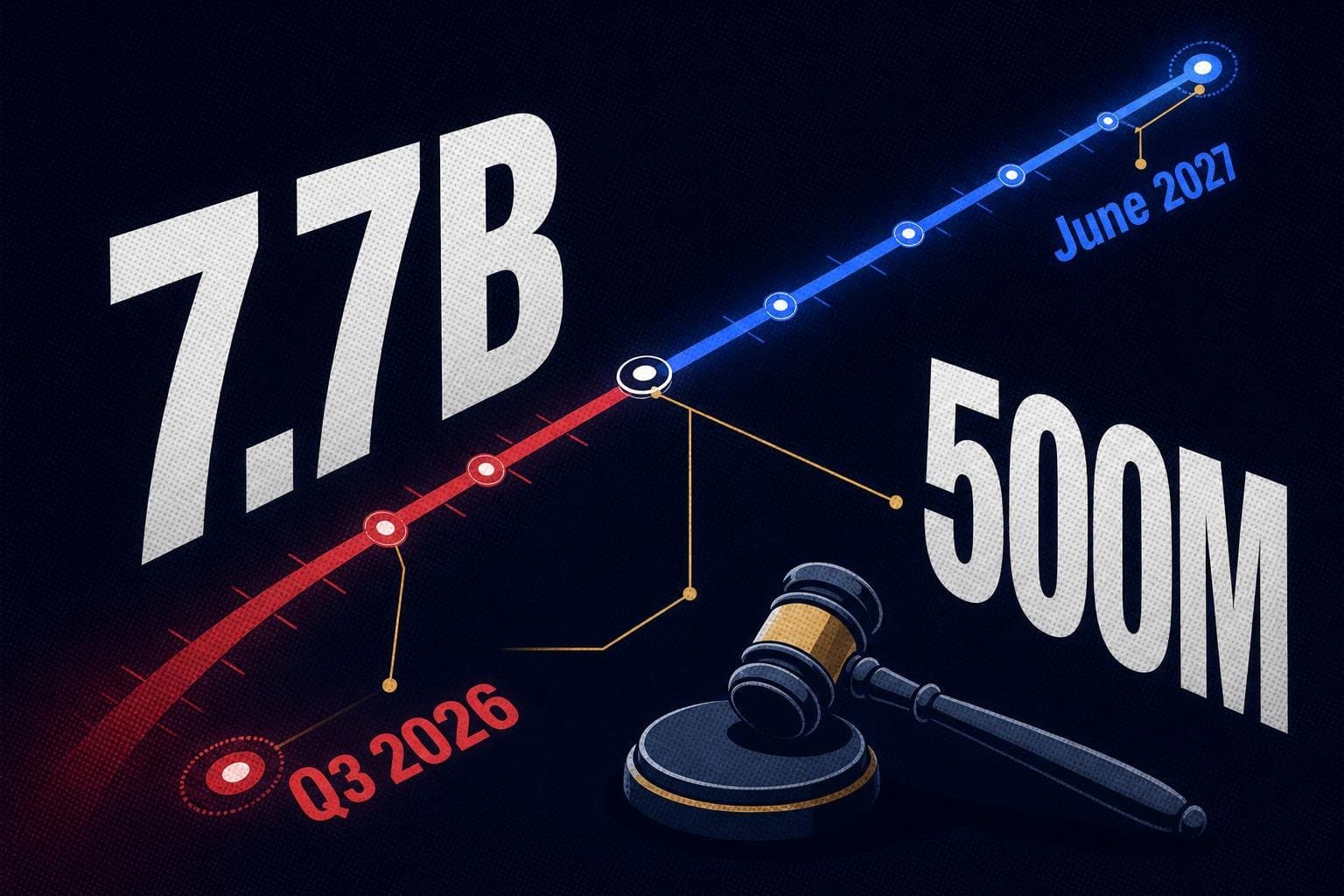
David Ellison, in a memo to staff obtained by Deadline, said he's "confident" the combination "does not pose any legal issues, and we will complete it." He also committed Paramount to not taking any integration steps until five days after a trial outcome, or June 1, 2027 — whichever comes first.
Read that date again: June 1, 2027. That's the outer boundary of the standstill. The Ellisons had hoped to close in Q3 2026. The realistic scenario now involves a trial that starts in November at the earliest, a verdict that follows months later, and a closing that could slip well into next year — assuming they win.
Meanwhile, both companies continue operating independently, burning cash, and unable to realize any of the cost synergies that justified the deal's financial logic in the first place. The WGA has also filed its own lawsuit to block the merger, with both cases before the same judge in the Northern District of California. The EU approved the deal with concessions around film distribution; the UK decision is still pending.
The Industry's Loudest Cheerleader Reveals the Pressure
Into this uncertainty stepped Ari Emanuel, CEO of TKO Group and executive chairman of WME, with an op-ed in the Wall Street Journal calling the state AGs' antitrust case "trash." Variety and The Hollywood Reporter both covered it — and it's worth noting what Emanuel's intervention actually signals about the deal's current state.
Emanuel's TKO inked a $7.7 billion, seven-year deal with Ellison's Paramount Skydance last summer for exclusive UFC rights. He sat next to President Trump at a White House UFC event last month, with Ellison seated nearby. His financial and personal ties to this deal are not incidental. When someone with that much skin in the game writes a public op-ed, it's because the private channels aren't moving fast enough.
His substantive argument — that the AGs are ignoring Amazon, Netflix, A24, and Lionsgate as real competitors — is the same argument Paramount's lawyers will make at trial. Emanuel points to Amazon MGM's "Project Hail Mary" generating nearly $700 million globally and Lionsgate's "Michael" crossing $1 billion as evidence of a fiercely competitive market the AGs are pretending doesn't exist. Whether a judge finds that argument persuasive is a different question. But the fact that it's being made loudly in the press, by a business ally, before the trial schedule is even set, tells you how much the deal's supporters want to shape the narrative before proceedings begin.
What the Streaming Business Looks Like While the Merger Waits
The irony is that while Paramount and WBD are frozen in legal limbo, the rest of the streaming industry is making moves. Netflix and AMC Global Media closed a five-year, $500 million global streaming rights deal for the entire Walking Dead universe — 371 episodes across six series — expanding the franchise to new territories including the UK, Italy, Australia, and New Zealand. AMC's own quarterly revenue came in at $547 million, down 9% year over year, with adjusted operating income falling 58%. The Walking Dead deal is AMC monetizing its most durable IP at a moment when its core business is under pressure. Netflix, meanwhile, is acquiring proven franchise content at scale rather than betting on originals.
Amazon's Prime Video separately locked up exclusive NHL playoff rights in Canada in a 12-year deal with Rogers Communications, buying rights to two first-round series and one second-round series per year. Sports rights in a hockey-obsessed market are a subscriber acquisition tool — the same logic that's driven every major live sports deal in streaming.
The pattern is consistent: the platforms with financial stability are deploying capital into long-term content and rights deals. The platforms caught in merger uncertainty are watching from the sidelines.
The November Date Is the One to Watch
The Paramount-WBD story now has a concrete milestone that matters more than any press release or op-ed: whether a trial actually begins in November 2026 or slips to January 2027. A November start gives the deal a theoretical path to resolution before mid-2027. A January start pushes everything later, extends the standstill, and adds more months of operating independently to the cost ledger.
Watch for the court's scheduling order following the July 31 update. That date — not Ellison's confidence, not Emanuel's op-ed — is where the deal's actual timeline gets written.


