
David Zaslav has sold more than $195 million worth of Warner Bros. Discovery stock since the Paramount-WBD merger was announced. That number, buried in an SEC filing, tells you more about where this deal actually stands than any press release Paramount has issued.
The merger is stuck. The trial is set. And everyone involved is now doing math on how much delay costs them — which is shaping every move being made in public.
The Ticking Clock Is the Only Number That Matters
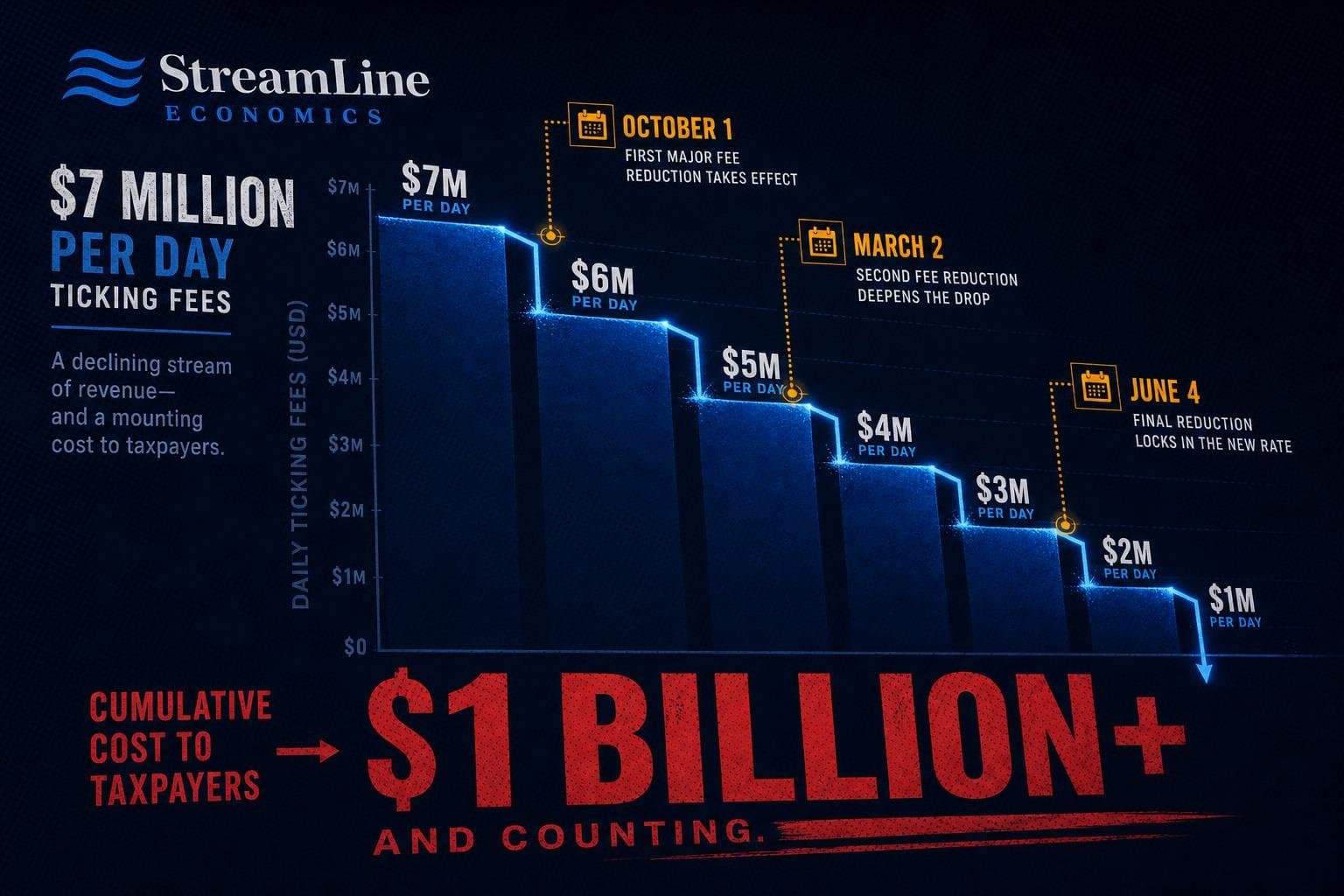
Starting October 1, Paramount begins paying WBD shareholders $7 million per day in "ticking fees" for every day the deal doesn't close. The trial isn't scheduled to begin until March 2, 2027, with a final pretrial conference on February 24 and post-trial filings due April 5. Run the arithmetic: if this goes all the way through trial and a judge rules quickly, Paramount is looking at well over $1 billion in ticking fees before anyone gets a verdict. There's also a June 4 deadline for deal expiration, with a $7 billion termination fee waiting if the whole thing collapses.
This is why Paramount CEO David Ellison issued what Deadline described as a "Friday news dump" complaining about the "needless costs" of the state attorneys general lawsuit — noting that Mexico had just become the 69th jurisdiction to approve the merger, joining the EU, UK, DOJ, and dozens of others. The PR strategy is transparent: build a record that 12 state AGs are the only obstacle to a deal the rest of the world has blessed, then pressure them into a settlement before the fees start compounding.
Whether it works is another question. Paramount's legal chief Makan Delrahim has said "everything is on the table," but the parties' own court filing acknowledged they're still just "having constructive discussions" about which magistrate judges might preside over a settlement conference — not that settlement talks have actually begun.
The 30-Film Pledge Is a Concession Dressed as a Promise
Into this pressure cooker, Ellison has introduced what he's framing as a gift to the movie business: a contractual guarantee to release at least 30 films per year in theaters, with exclusive 45-day theatrical windows and a 90-day streaming moratorium, offered to AMC Entertainment and Regal Cinemas in three-year written agreements.
The CEOs of both chains have publicly backed the merger. Of course they have — this pledge is designed for them. But the real audience for the 30-film commitment isn't theater owners. It's the state attorneys general, who alleged in their antitrust suit that a merged Paramount-WBD would have excessive control over the theatrical release market and would funnel studio output toward its own streaming platforms. The contractual guarantee is Ellison's attempt to neutralize that specific allegation with a specific, enforceable counter.
The problem, as Variety noted, is that the pledge doesn't address the other major allegation in the suit: that Paramount-WBD would have excessive power in the U.S. basic cable market. And a guarantee of 30 films means nothing if the films don't draw audiences. A contractual obligation to release movies is not a contractual obligation to release good ones.
Zaslav's Stock Sales Are the Clearest Signal of All
While Ellison plays defense in court filings and op-eds, Zaslav has been methodically liquidating. His latest sale — 773,173 shares for roughly $21.7 million, handled by Fidelity under an SEC Rule 10b5-1 plan he adopted in March — brings his total to over $195 million in stock sold since the deal was announced. The 10b5-1 plan, which terminated August 14, was set up to execute sales automatically when shares hit certain price targets.
This is legal and disclosed. It's also clarifying. Zaslav, who stands to receive a golden parachute of at least $550 million if the merger closes, has been converting his WBD equity into cash at scale throughout the uncertainty. WBD shareholders, meanwhile, voted against both his golden parachute package and his 2025 compensation plan — a symbolic rebuke that carries no actual consequence.
The labor world is equally fractured. The Hollywood Reporter detailed how the DGA and IATSE are pushing for a fast settlement, worried that a prolonged trial will further suppress production work for their members. The WGA, which filed its own lawsuit to block the deal, is pulling in the opposite direction. SAG-AFTRA is demanding enforceable safeguards as a condition of support. The Teamsters want Paramount to "stop playing games."
Watch the October 1 date. That's when the financial pressure shifts from theoretical to daily and compounding — and when the real negotiation either begins or breaks down entirely.


