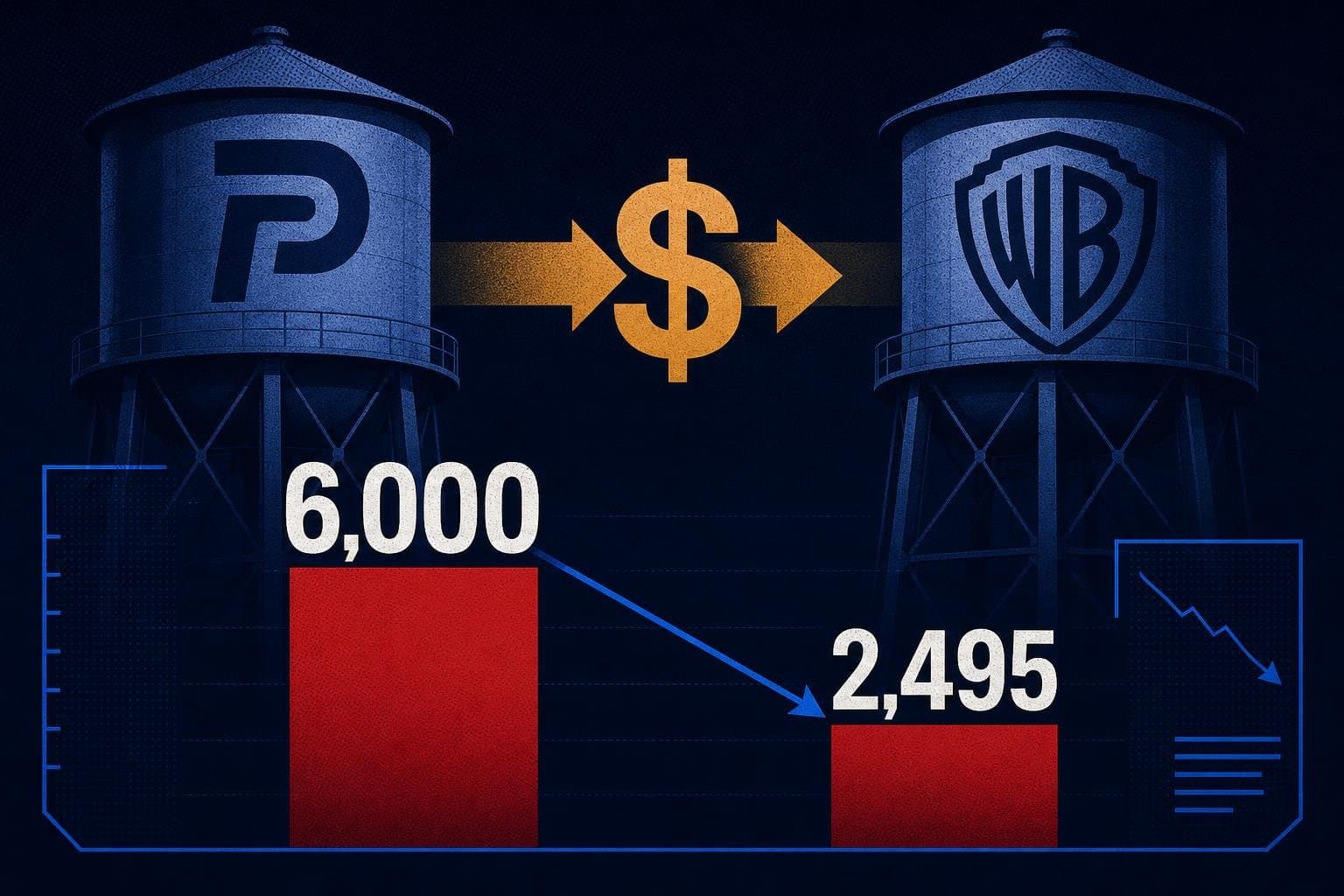

The $6 billion in "synergies" David Ellison's team has promised investors is a corporate euphemism with a very specific translation: jobs eliminated, offices consolidated, duplicate functions erased. This week, that translation got a lot more concrete.
The EU Clears the Path — With Conditions
The last major regulatory obstacle to the Paramount-Warner Bros. Discovery merger is nearly gone. According to a Financial Times report cited by both Variety and Deadline, the European Commission is expected to approve the deal rather than open a deeper investigation — though Paramount will need to accept certain remedies to address competition concerns. The Commission has until July 7 to make its decision.
One condition under discussion: Paramount exiting its international distribution joint venture with Universal Pictures. That's a meaningful concession — international distribution deals are how studios amortize production costs across markets — but it's the kind of structural remedy regulators typically accept as a clean fix. Paramount reportedly met with EU officials this past week to hammer out final details.
The UK's Competition and Markets Authority has its own separate merger inquiry still underway, so "cleared" isn't quite the right word yet. But the EU hurdle was the bigger one, and the direction of travel is unmistakable. Ellison is close.
The $6 Billion Synergy Number Has a Human Price Tag
Here's what "synergies" actually means in practice. Los Angeles County's Department of Economic Opportunity ran its own analysis and delivered the results to the County's board of supervisors in an June 18 report covered by The Hollywood Reporter: approximately 2,495 jobs in Greater Los Angeles County are "at potential risk," with roughly 6,000 more globally. The at-risk roles are concentrated in corporate, tech, real estate, and shared administrative functions — exactly the duplicative overhead that Ellison's team has been promising Wall Street it will eliminate.
Paramount's response to the County report was instructive. Rather than dispute the numbers, a spokesperson essentially argued that the status quo is already failing L.A. — pointing to declining linear TV revenues, reduced production output, and competing tax incentives pulling shoots to other markets. That's a real argument. It's also a preview of how Ellison will frame every round of layoffs: not as a consequence of the merger, but as a correction to an industry already in structural decline.
The political resistance is real — Jane Fonda-led protests, anti-merger billboards outside Paramount's Melrose Gate, California AG Rob Bonta reportedly coordinating a legal challenge with multiple states. But the federal DOJ already cleared the deal, and the EU appears to be following suit. State-level legal challenges face a steep climb once federal antitrust review is complete.
The jobs math is worth sitting with for a moment. Six billion dollars in synergies, spread across a combined entity with two studio lots, two streaming platforms, two news divisions, two sports rights portfolios, and overlapping international operations — that's not a rounding error. That's a restructuring.
Disney's UK Numbers Show What the Streaming Profit Model Actually Looks Like
While the merger drama plays out, Disney quietly filed its UK subsidiary accounts at Companies House — and the numbers are a useful reminder of what a mature streaming business can generate. Variety reported that The Walt Disney Company Limited posted £4.4 billion ($5.8 billion) in revenue for fiscal 2025, up 11.1% year-on-year, with post-tax profits rising 37.7% — from £589 million to £811 million.
The company's own annual report attributed the gains primarily to Disney+ subscriber growth and pricing increases, alongside theatrical performance from Moana 2 and the live-action Lilo & Stitch. The streaming contribution is the structural story: subscriber numbers up, pricing up, and operating costs essentially flat despite adding 95 employees.
That's the model Ellison is betting the combined Paramount+/Max entity can replicate. The logic is straightforward — two streaming services with overlapping content libraries and separate subscriber acquisition costs are less efficient than one consolidated platform. Whether the merged entity can actually execute that consolidation without hemorrhaging subscribers in the process is the question Wall Street will be watching.
What to Watch Before July 7
The EU Commission's deadline is the immediate milestone. If Brussels approves — with or without the Universal distribution remedy — the deal moves to its final phase. Watch for whether Paramount formally exits that Universal joint venture, which would have real implications for how the merged studio distributes films in international markets going forward.
The California AG's legal challenge is the longer-running uncertainty. State-level antitrust actions can delay implementation even after federal and international clearance, and Bonta's office has been explicit about coordinating with other states. The merger may be approved everywhere that matters and still face months of litigation before Ellison can actually consolidate operations.
The $6 billion synergy clock starts ticking the moment the deal closes. The L.A. County numbers suggest the first bill arrives quickly.


