


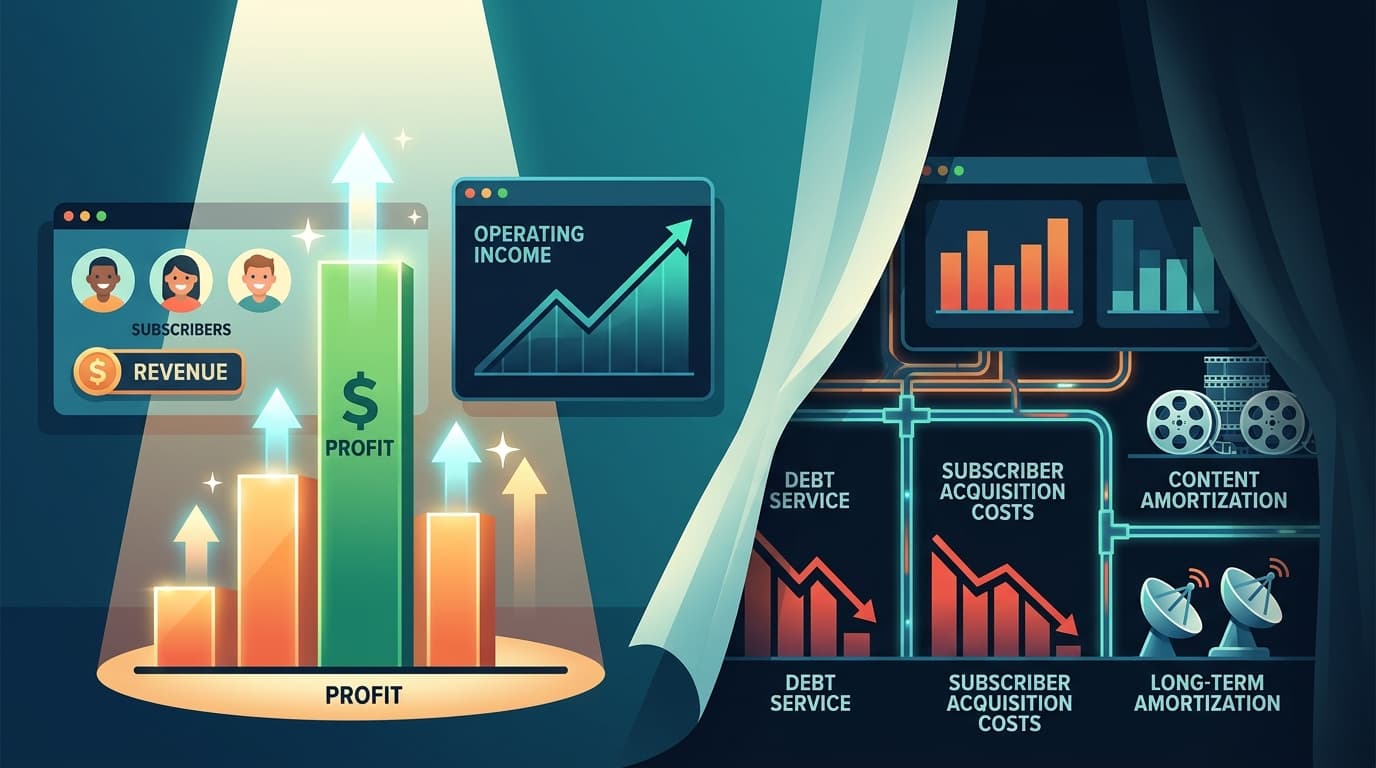

The major platforms have finally learned to say the word "profit" without flinching. That's progress. What they're less eager to explain is how narrowly that profit is defined.
When Netflix, Disney+, or a rival reports operating income from streaming, the number reflects a specific accounting perimeter — one that typically excludes content amortization schedules that can stretch years, debt service on the borrowing that funded the content arms race, and the ongoing subscriber acquisition costs that keep the growth story alive. The headline is real. The full picture requires more digging.
This matters because the industry is currently in a transition phase where every platform has an incentive to declare victory. The "streaming doesn't make money" narrative hurt valuations and invited activist pressure. The correction — demonstrating profitability — is legitimate, but the framing tends to be optimized for the earnings call, not the annual report footnotes.
The pattern to watch isn't whether a platform reports a profitable quarter. It's whether free cash flow is moving in the same direction as operating income, and whether content spending is being held flat or cut to manufacture the margin. A platform that's profitable because it greenlit fewer shows this year than last isn't the same business as one that's profitable while sustaining or growing its content investment. The distinction rarely makes the press release.
Cancellation announcements are where this tension surfaces most visibly. When a show gets cut after one or two seasons, the official explanation almost always invokes "creative direction" or "audience fit." The financial logic — content assets that don't hit viewership thresholds get written down, and the write-down hits earnings — goes unmentioned. Viewers are left with a narrative about storytelling when the actual decision was a balance sheet call.
None of this is scandal. It's normal corporate behavior. But streaming subscribers are also, in many cases, the same people making investment decisions or simply trying to understand why their favorite show disappeared. They deserve the translation.
Watch for Q2 earnings season to test how durable the current profitability narrative actually is — specifically whether content spending guidance holds or quietly contracts as platforms manage margin expectations heading into the back half of the year.