


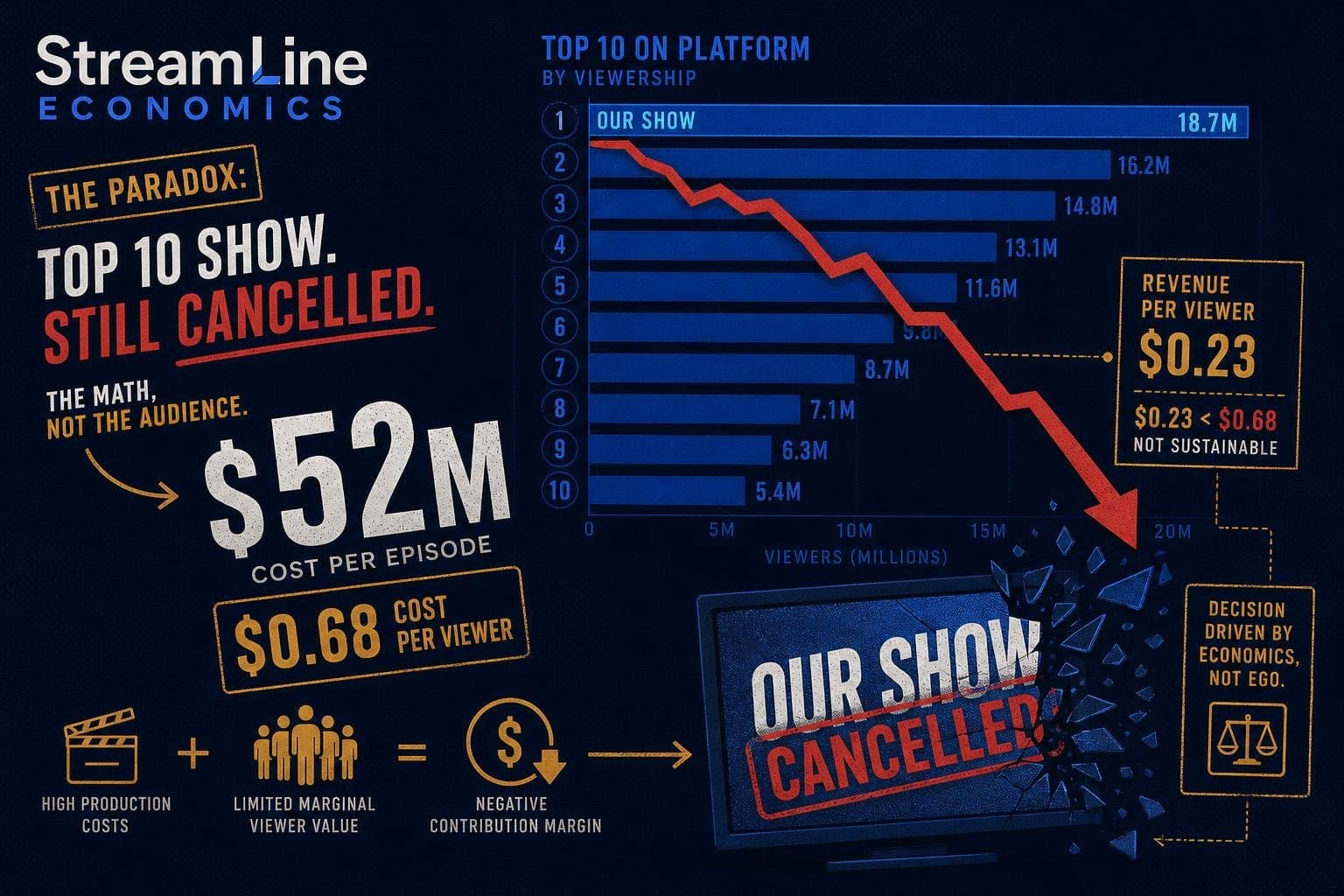

A show sitting in a platform's Top 10 just got cancelled anyway. That's the detail worth sitting with in last week's news that Criminal Minds: Evolution will end after its upcoming 20th season on Paramount+. Viewership wasn't the problem. The math was.
The Decision Nobody Expected From a Hit Show
According to Deadline, the call came from Casey Bloys, Skydance's new Co-Chair and Chief Content Officer for Direct to Consumer — his first official cancellation since taking over Paramount+'s content operation after the merger. The show is, in Deadline's words, "currently in Paramount+'s Top 10." Longtime showrunner Erica Messer said the decision felt sudden, even to the people making the series, and Season 20 — which already wrapped production — won't give the story a proper ending.
That's the tell. When a platform kills a top-performing show without even flagging viewership as the issue, the reasoning has to be structural. Deadline's framing points at it directly: Criminal Minds: Evolution is "the last of its kind on Paramount+" as a broadcast-style series on a streaming budget — following the platform's earlier sunset of continuations like SEAL Team, Frasier, and NCIS: Tony & Ziva. Broadcast-style procedurals run long seasons with large casts and ongoing production costs. Streaming subscriber revenue doesn't reward volume the way a network ad slot does. A show can pull strong numbers and still cost more per viewer than the platform wants to carry going forward.
HBO Max Has Already Shown the Alternative
What makes this more than a one-off cancellation is the model Skydance has sitting right next door. Deadline notes that sibling platform HBO Max has built its own version of the broadcast procedural — a show like The Pitt, which borrows network-style elements (large episode orders, a yearly cadence, procedural structure) but keeps production costs at streaming-premium levels rather than broadcast-volume levels. That's not a coincidence of timing. It's a signal of where Bloys intends to point Paramount+'s future slate: fewer shows that mimic broadcast economics, more shows that mimic broadcast feel while living inside a tighter cost structure.
The irony is that Paramount+ still has a deep bench of actual broadcast content to lean on — Deadline points out the streamer gets CBS's full slate next-day, which covers the "procedural fix" audience without Paramount+ having to fund the production itself. If you're Bloys, canceling an expensive original procedural is less risky when you've got CBS's catalog absorbing the audience that liked it.
The Industry-Wide Pattern Underneath This One Decision
This isn't happening in isolation. Bloomberg reported that Netflix just cut roughly 1,000 jobs — its largest layoff since 2022 — while pushing out chief content officer Bela Bajaria and film chief Dan Lin, a leadership overhaul that landed alongside slowing subscriber growth and a stock price at a two-year low. Variety separately confirmed the scale of those cuts and noted Netflix is still hiring selectively into growth bets like podcast acquisition even as it trims elsewhere. The pattern across both companies is the same: platforms aren't broadly retreating from content spending, they're getting ruthless about which content format justifies the spend.
Not every streaming player is cutting from weakness, either. The Hollywood Reporter reported that Starz grew revenue and narrowed its losses in its latest quarter, powered by established franchises like Power and Outlander — proof that a smaller, focused platform can find its own version of streaming profitability without chasing broadcast-scale volume. That's the contrast Bloys is presumably chasing with The Pitt-style programming: fewer bets, each one built for the economics it actually lives in.
What to Watch Next
The real test of Bloys's strategy comes with Paramount+'s next original greenlight decisions, not this cancellation. Watch whether any new Paramount+ series gets framed publicly in "premium, streaming-native" language the way HBO Max talks about The Pitt — that's the language that will tell you the model has been formally adopted rather than applied case by case. Also worth tracking: whether Jane Wiseman's exit as Head of Originals, which Deadline notes came amid the merger, gets followed by more departures from the team that greenlit shows like Criminal Minds: Evolution in the first place. A leadership purge alongside a format purge would confirm this is a full strategic reset, not a single budget call.