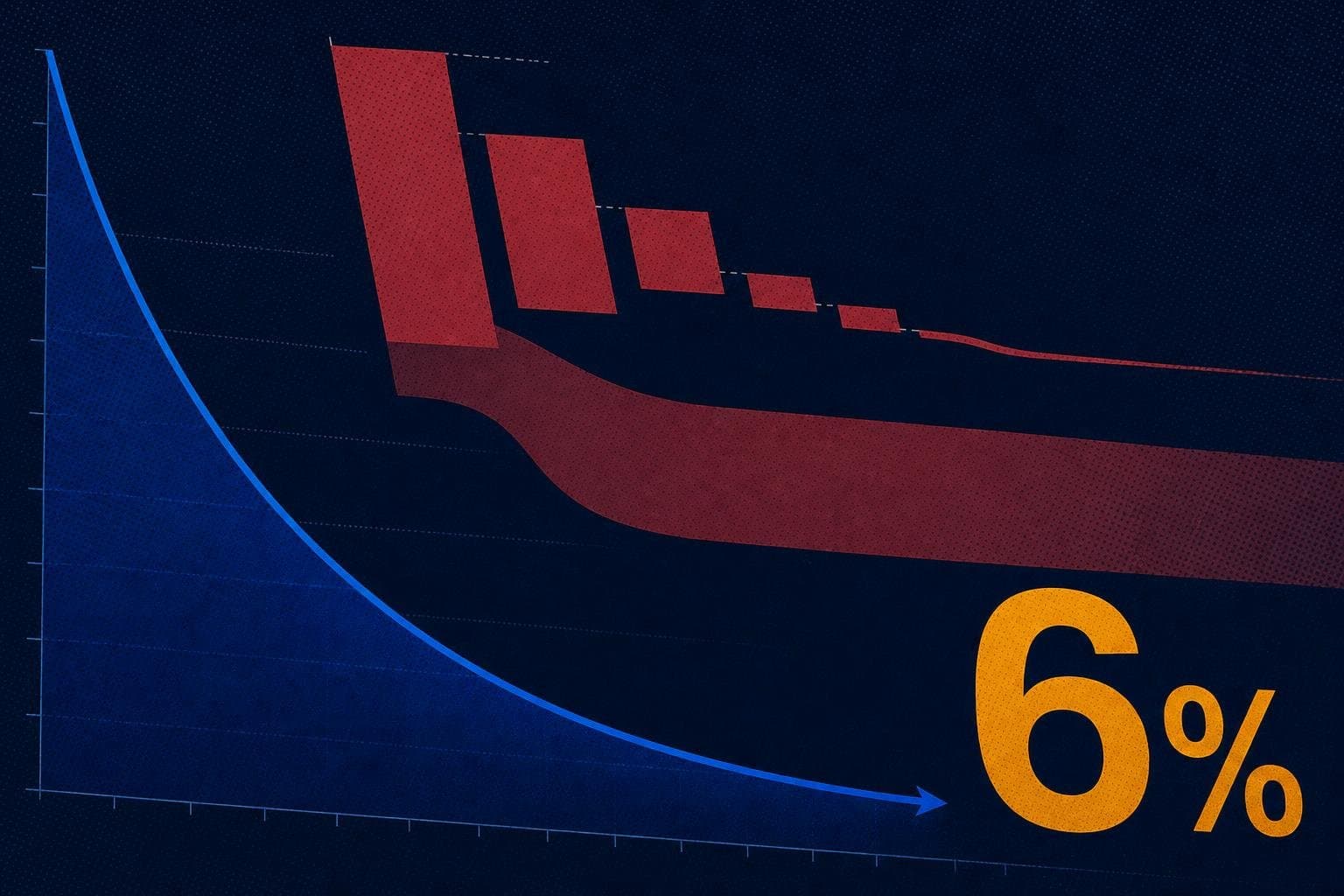

Nearly 6% of Paramount+ subscribers canceled in August, the second-highest churn rate among major streamers, according to subscription data firm Antenna cited via Business Insider. That single number explains more about Paramount's next few months than any merger press release will.
While David Ellison's company races to close its acquisition of Warner Bros. Discovery, Paramount+ itself is quietly being retooled — a free tier, micro-dramas, interactive ads, a comments section bolted onto its TikTok-style feed — according to an internal strategy document viewed by Business Insider. None of it has a firm launch date. Some of it is tagged for Q4 and Q1 2027. But the direction is unmistakable: Paramount+ isn't confident it can win subscribers on content alone, so it's chasing engagement mechanics instead.
The Churn Problem Predates the Merger — and Won't Wait for It
This matters because Paramount is about to inherit a much bigger, much more expensive streaming business. Morgan Stanley analysts estimate the combined HBO Max and Paramount+ platform could reach more than 240 million subscribers by 2030, calling the merger a "streaming powerhouse" capable of rivaling Disney and Amazon for the No. 2 and No. 3 spots behind Netflix, per Variety. That's the bull case. But scale doesn't fix a retention problem — it just makes the retention problem bigger and more expensive to ignore.
Antenna's June data found more than a third of Paramount+ subscribers only watch the service lightly, a higher share of low-engagement users than any other major paid competitor. Lightshed Partners analyst Rich Greenfield put it plainly: Paramount is "throwing a lot of things at the wall to see what drives engagement," in what he calls "a war for time spent" against YouTube, the actual juggernaut in the category Business Insider. That framing lines up with what's happening elsewhere in streaming's fight for attention: YouTube just outbid both Netflix and Amazon to keep the exclusive livestream rights to Coachella through 2030, a deal built around mini artist documentaries and pre-festival programming rather than the festival broadcast alone, per Bloomberg. A free tier isn't a content strategy. It's a funnel strategy — get more people through the door on any terms, then hope some of them convert to paying subscribers or stick around long enough to watch ads.
The Debt Load Makes the Engagement Chase Non-Negotiable
Here's why this can't wait for the merger paperwork to clear. The combined Paramount-Warner Bros. entity will carry more than $77 billion in debt, per Morgan Stanley's note cited by Variety. Servicing that kind of leverage requires either aggressive cost-cutting, aggressive revenue growth, or — more realistically — both at once. Deadline's running tally of media layoffs shows just how much of the "cost-cutting" lever has already been pulled across the industry, from Blumhouse to Xbox to Channel 4, well before the WBD deal even closes Deadline. A platform bleeding 6% of its subscriber base monthly and stocked with viewers who barely show up isn't a platform that can carry its share of a $77 billion balance sheet on premium subscription revenue alone. Hence the ad-tier expansion, the micro-dramas, the AI-assisted clipping tools designed to keep people scrolling inside Paramount's own feed rather than YouTube's.
The merger itself is still working through its final procedural steps. Paramount told the SEC it plans to move its stock listing from Nasdaq to the NYSE around Oct. 6, contingent on the deal actually closing, though the company acknowledged in the filing that the timing "if any, is not yet certain," per Variety. That uncertainty traces back to the antitrust settlement with a coalition of state attorneys general, which a court is still reviewing. The Hollywood Reporter's account of the settlement hearing captured how thin the concessions were — largely a film-quota commitment already promised by Ellison — and how California's lead attorney dismissed the idea that Paramount's threat to relocate operations drove the deal, calling that leverage claim one of the "voices that carry less weight" Hollywood Reporter.
What This Actually Signals
Forrester's Mike Proulx summed up the strategic gap well: Disney+ wants existing subscribers to visit more often, but "Paramount+ needs more people to actually come to the house," as quoted in Business Insider. That's a company admitting, in its own engineering roadmap, that its acquisition funnel is broken before it even absorbs a second one.
Watch the Oct. 6 exchange switch and whatever closing timeline follows for the actual WBD deal completion — but watch Paramount+'s Q4 free-tier rollout just as closely. If the free tier launches on schedule and churn doesn't improve, that's a sign the problem isn't pricing. It's that people simply aren't finding enough reason to stay, and no amount of debt-financed scale fixes that on its own.


