


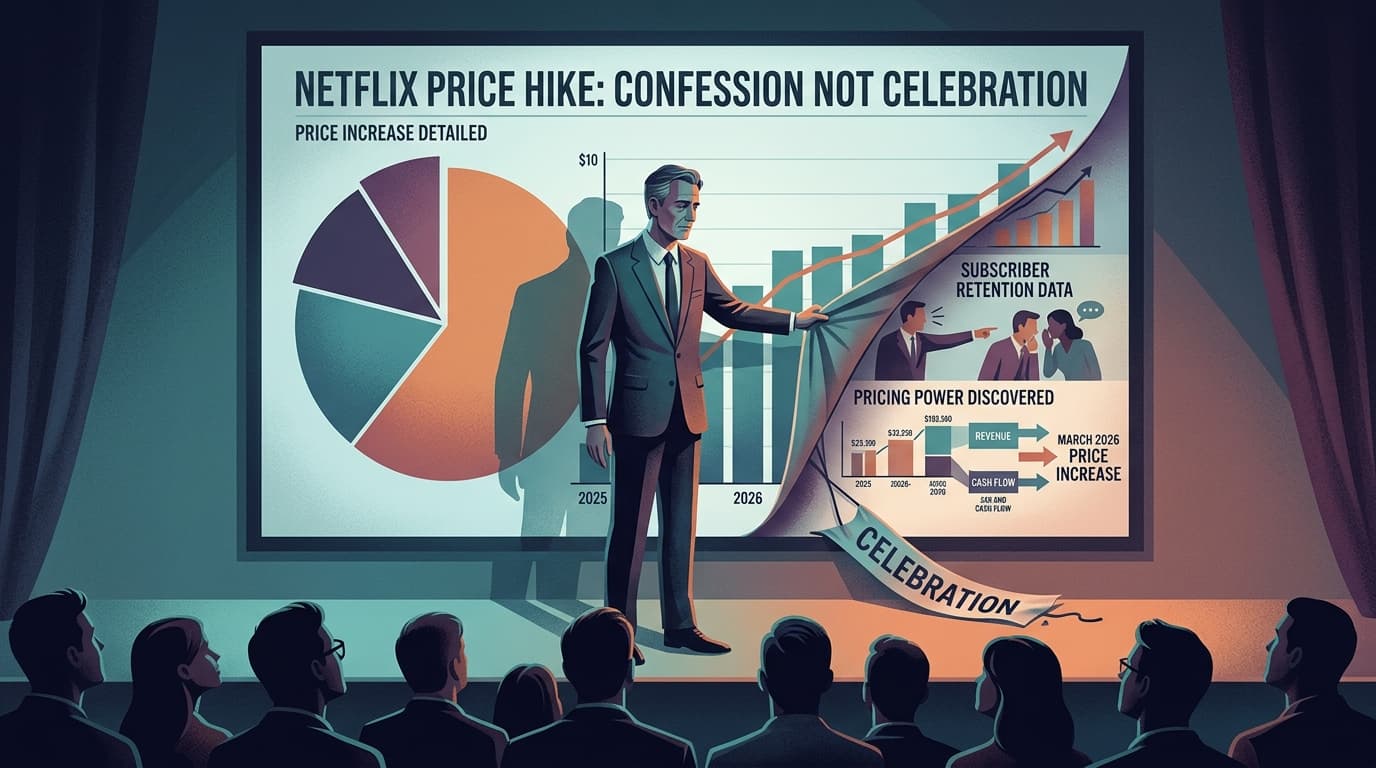

Netflix just raised prices again. Standard plans went from $17.99 to $19.99; Premium from $24.99 to $26.99; even the ad-supported tier ticked up a dollar to $8.99, according to reporting confirmed by TechCrunch. The official explanation: improvements to "our wide range of entertainment and the quality of our service." The actual explanation is simpler and more interesting.
This is the second price increase in just over a year. Netflix raised prices in January 2025. Now it's doing it again in March 2026. That's not a company rewarding subscribers for a better product — that's a company that has figured out its subscribers won't leave, and is extracting accordingly.
The Math Behind the Move
Netflix's 2025 numbers make the logic obvious. The company posted a 29.5% operating margin on $45.18 billion in revenue, with free cash flow of roughly $9.46 billion. Those are not the numbers of a business that needs more money to fund operations. They're the numbers of a business that has discovered pricing power and intends to use it.
The subscriber base now exceeds 325 million globally. At that scale, a $2 monthly increase on Standard plans doesn't require a single new subscriber to materially move revenue. It just works. Wall Street, predictably, cheered the move.
The company also walked away from its proposed acquisition of Warner Bros. Discovery — co-CEOs Ted Sarandos and Greg Peters declined to raise their $82.7 billion offer, calling the deal "no longer financially attractive." Read that alongside the price hike and a pattern emerges: Netflix is in capital discipline mode. It would rather squeeze more from existing subscribers than take on integration risk and debt to expand its content library.
What This Means for Everyone Else
The broader streaming market hit $157.1 billion in global subscription revenue in 2025, up 14% year over year, per Ampere Analysis research reported by Deadline. Ampere projects that figure reaches $200 billion by 2030, driven primarily by price increases and ad-tier adoption — not subscriber growth. Ad tiers have grown from under 5% of total streaming revenue in 2020 to 28% in 2025. The industry has collectively decided that the subscriber acquisition phase is over. Now it's about monetizing the subscribers it has.
Disney is running the same playbook from further behind. Its Disney+ and Hulu streaming segment generated $1.3 billion in operating income for fiscal 2025 — a ninefold increase from the prior year — and $450 million in Q1 2026 alone, per Motley Fool's analysis of Disney's earnings. Management is projecting a 10% operating margin for fiscal 2026, which would translate to roughly $2.1 billion in DTC operating income. That's real progress. It's also still less than a third of Netflix's 2025 operating margin. Disney is profitable now; it's just profitable the way a regional airline is profitable when Southwest is in the same terminal.
The Subscriber Is Now the Product
Here's what the price hike actually signals: Netflix has stopped competing for your subscription and started managing your tolerance for price increases. That's a fundamentally different business than the one that spent years burning cash to acquire subscribers. The content investment continues — Netflix says it plans to spend $20 billion on content — but the strategic logic has shifted from growth to extraction.
For subscribers, the honest question is whether the value equation still holds. For competitors, the question is whether they can reach Netflix's margin profile before their own subscribers start doing the math.
Watch Disney's Q2 2026 earnings for whether the DTC margin trajectory holds at 10% or whether content costs are compressing it. And watch whether Netflix's churn numbers — which the company doesn't report with much granularity — show any movement after two price hikes in fourteen months. If they don't, expect a third.