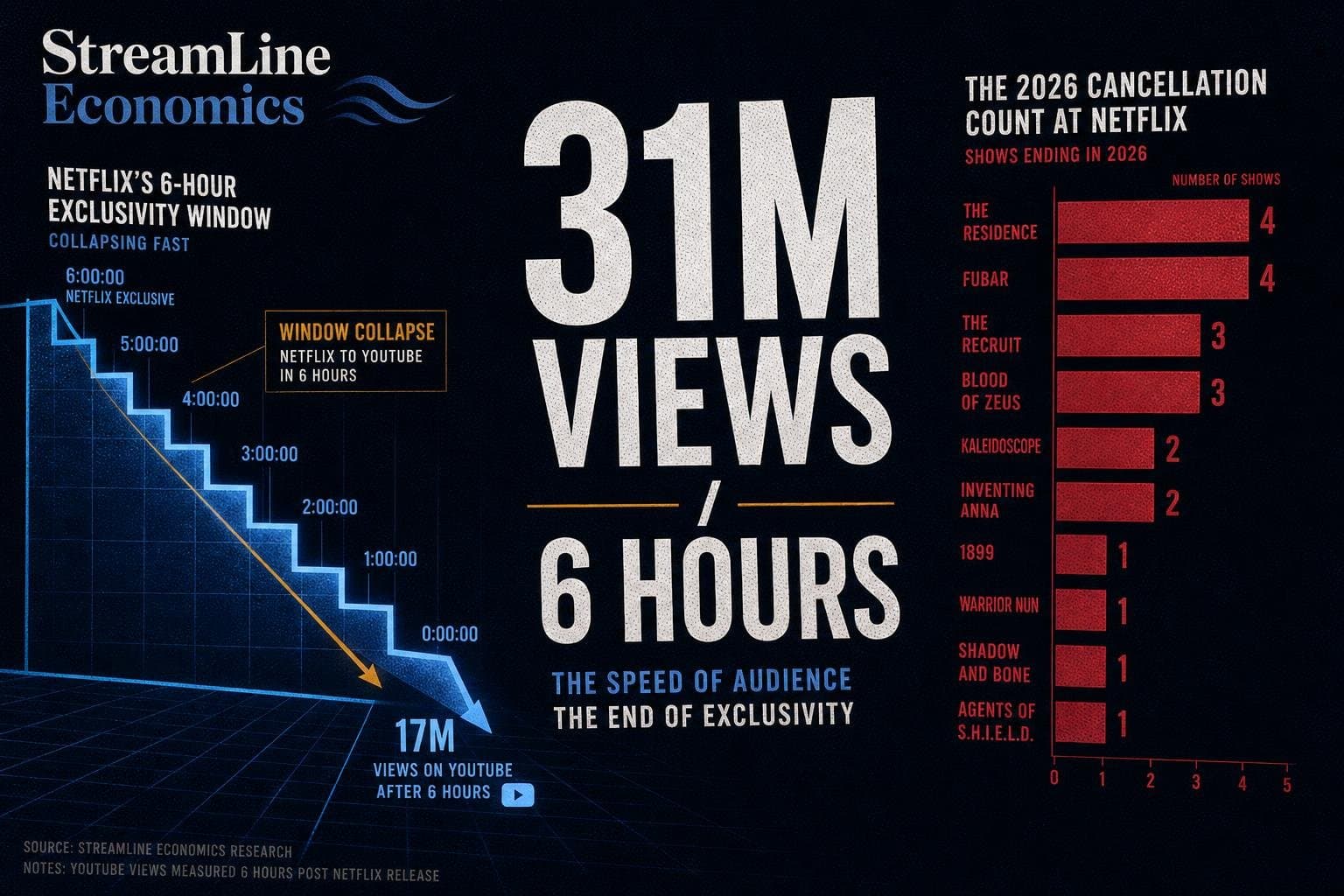

Thirty-one million views in four days. That's the number Netflix is leading with after its exclusive Grand Theft Auto VI extended look topped its global charts the week of August 27, ranking No. 1 in 87 of 93 countries Netflix tracks. The 27-minute preview beat every scripted title on the platform that week, including its own original films and series.
The entertainment press treated this as a content win. It's actually a subscriber acquisition argument dressed up as a cultural moment — and the distinction matters for understanding where Netflix is heading.
The Exclusivity Window Was Almost Meaningless. Netflix Ran It Anyway.
Here's the detail that reveals the actual strategy: Netflix held exclusive rights to the GTA VI extended look for just six hours before Rockstar Games posted the same footage to YouTube. By the time the weekend viewing window closed, YouTube's Rockstar account alone had logged over 17 million views of the same content.
Six hours of exclusivity is not a content moat. It's a press cycle. Netflix knew that anyone who cared deeply enough about GTA VI to seek it out would find it on YouTube by Thursday evening. The 31.1 million Netflix views didn't come from people who couldn't get the content elsewhere — they came from people who were already on Netflix when the notification hit, or who opened the app because of the cultural noise around the drop.
That's the real product being sold here: Netflix as the place you go when something big is happening. The platform has been methodically building this positioning — live sports, weekly episode releases, ad-supported viewing — and the GTA VI deal fits the same template. The content itself is almost secondary to the habit formation it's designed to reinforce.
What Netflix Is Actually Buying With This Deal
The financial logic here runs through subscriber engagement, not subscriber acquisition. Netflix's stock has been under pressure — down roughly 10% year to date as of recent trading — and the platform has been under pressure to demonstrate that its existing base is deeply enough embedded to justify premium pricing. Engagement metrics — hours viewed, return visits, platform-as-destination behavior — are the argument Netflix makes to both advertisers on its ad-supported tier and to subscribers weighing whether the price increase is worth it.
A title that goes No. 1 in 87 countries in four days, even if it's a video game preview rather than a Netflix original, is an engagement data point. It shows the platform can still generate a cultural moment. That matters more right now than the content budget required to secure it.
The partnership also signals something about Netflix's gaming ambitions. The deal could extend to mini-games on Netflix's gaming platform or even a movie arrangement — which would represent a meaningful escalation of Netflix's cross-media strategy. Gaming has been a slow burn for the company, but attaching the Netflix brand to the most anticipated game release of the year (GTA VI is scheduled for a November 19 launch on PS5 and Xbox Series X and S) is a credibility move that years of smaller mobile game acquisitions couldn't deliver.
The Cancellation List Tells the Other Half of the Story
While Netflix was generating headlines with GTA VI, Deadline's running 2026 cancellation tracker tells a quieter story about the content economics operating in parallel. Netflix titles on the cancelled list this year include The Abandons, Building the Band, Terminator: Zero, The Vince Staples Show, and Avatar: The Last Airbender (ending after an upcoming third season), among others. The pattern is familiar: one-season cancellations for shows that didn't generate the engagement metrics to justify renewal costs, and planned endings for shows whose audience size no longer matches their production expense.
This is the other side of the GTA VI bet. Netflix is concentrating cultural oxygen around high-visibility moments — a video game preview, a live event, a franchise film arriving on platform — while quietly pruning the mid-tier originals that cost real money and return modest engagement. Deadline's full cancellation gallery confirms the breadth of the cull across broadcast, streaming, and cable this year: the pruning isn't unique to Netflix, but the platform's volume of one-season endings stands out.
That trade-off is becoming Netflix's operating model: fewer expensive bets on original prestige content, more strategic partnerships that generate platform heat without the full production cost. The creative implications are worth watching. But the financial logic is clean.
What to Watch Next
The real test comes November 19, when GTA VI actually launches. If Netflix has negotiated ongoing content rights — in-game integrations, a documentary, a scripted adaptation — the six-hour exclusivity window will look like the opening move in a longer play. If this was a one-time promotional arrangement, it's still a useful proof of concept: gaming IP can drive streaming engagement in ways that rival original content, at a fraction of the cost.
Watch Netflix's Q3 earnings call for any mention of gaming platform engagement figures. If executives start citing GTA-related metrics alongside subscriber numbers, the strategy is working exactly as designed. For context on how investors are currently reading Netflix's trajectory — earnings forecast to grow roughly 11% annually, but with significant insider selling flagged over the past three months — the gap between platform momentum and market confidence is itself a story worth tracking.


