


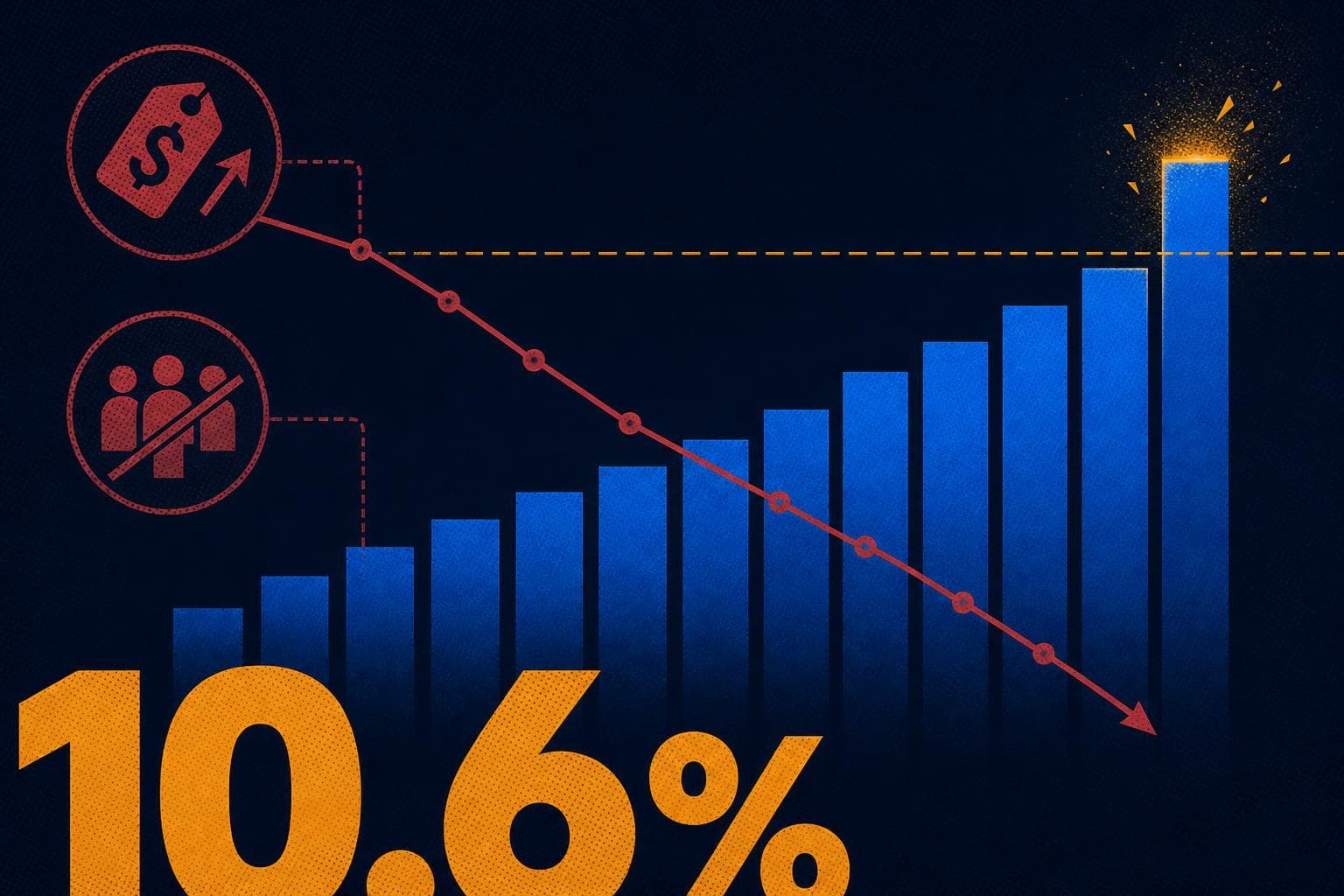

Disney's Q2 earnings dropped this week, and the streaming number got the most attention: operating income up 88% to $582 million, with Disney+ and Hulu crossing a 10% operating margin for the first time. New CEO Josh D'Amaro called it momentum. Analysts called it a beat. Both are technically correct — and both miss the more instructive part of the story.
Price Hikes Did the Work, Not Subscriber Growth
Disney stopped reporting subscriber counts last quarter, which tells you something on its own. When a platform goes quiet on users, it usually means the growth story is over and the monetization story has begun. The 88% income jump wasn't driven by millions of new subscribers signing up — it was driven by price increases implemented in fall 2025, which pushed Disney+ and Hulu revenue up 13% to $5.49 billion.
That's a meaningful distinction. Subscriber-driven growth compounds — more users means more data, more pricing power, more ad inventory. Price-driven growth is a one-time extraction. You raise prices, revenue jumps, and then the comparison period resets. Disney will need another lever to sustain 10%+ margins through fiscal 2027, and right now the company is guiding to "at least 10%" for the full fiscal year without specifying what gets them there beyond the theatrical slate.
The 1,000 Layoffs Are in the Margin Number
Buried in the shareholder letter from D'Amaro and CFO Hugh Johnston: Disney laid off 1,000 employees last month as part of a marketing restructuring. The framing was efficiency. The timing — one quarter before D'Amaro's first earnings call — was not accidental.
Cost cuts flow directly to operating income. When a company reports an 88% surge in streaming profitability in the same quarter it eliminates a thousand marketing jobs, those two facts belong in the same sentence. Disney's streaming margin didn't just improve because subscribers are paying more. It improved because the cost base shrank. That's a legitimate business move, but it's a different story than "streaming is finally working."
The distinction matters for what comes next. Price hikes and headcount reductions are finite levers. Disney's Q3 guidance — total segment operating income of approximately $5.3 billion, up 16% year over year — implies the company expects the momentum to hold. Whether it does will depend on whether content spending stays disciplined and whether the ad tier gains traction, neither of which showed up clearly in this quarter's numbers.
Warner Bros. Discovery Is Running a Different Play
For contrast, look at what Warner Bros. Discovery reported alongside Disney this week: streaming revenue growth driven by HBO Max's international expansion, now past 140 million total subscribers. WBD posted a $2.92 billion Q1 net loss — but $2.8 billion of that was the Netflix deal termination fee, a one-time charge that obscures the underlying operating picture.
The strategic contrast is sharp. Disney is extracting more from its existing base through pricing. WBD is still in expansion mode, betting that international HBO Max growth justifies the near-term losses. Both approaches can work. Neither is obviously superior right now, which is exactly why the next two quarters will be more revealing than this one.
What to Watch in Q3
Disney's June quarter guidance is the number that actually tests the thesis. If D'Amaro delivers the projected 16% year-over-year operating income growth without another round of cost cuts, that's evidence the streaming business has genuine operating leverage. If the margin holds only because content spending gets deferred or headcount keeps shrinking, the 10% milestone starts to look more like a managed accounting outcome than a structural improvement.
Watch specifically for whether Disney breaks out ad-tier revenue in any meaningful way. Netflix's ad segment is on track for $3 billion this year, doubling year-over-year — and that's the growth vector the whole industry is watching. Disney has the inventory. The question is whether it has the ad tech and sales infrastructure to monetize it at scale. That answer won't come from a shareholder letter. It'll come from the Q3 numbers in August.