



TSMC just posted a quarter that would make any accountability tracker blink. Revenue hit a record NT$1.49 trillion ($46.71 billion) for the third quarter, up 50% from a year earlier and ahead of the roughly NT$1.46 trillion analysts expected, according to Reuters. Bloomberg's independent calculation lands at a 51% jump on the same AI-demand story. Either way, the number is real, the beat is real, and it's the kind of print that makes a $265 billion Arizona commitment look almost conservative by comparison.
Which is exactly the problem with treating it as vindication of the roadmap. Revenue tells you demand is there. It does not tell you where the wafers are getting made, and on that question, the company is still doing what I flagged two weeks ago: talking about expansion before committing to it.
Texas Is Still a Hypothesis, Not a Groundbreaking
Two sources familiar with the matter told Reuters that TSMC is evaluating a potential investment in Texas, on top of the $265 billion already pledged for Arizona, but that "the plans have not been finalized" (Reuters). Taiwanese media reported the same development first, citing unnamed industry sources — which is to say, this is a story built entirely on anonymous sourcing on both sides of the Pacific, and TSMC itself declined to comment. That's not a knock on the reporting. It's a reminder of what stage this is actually at: pre-decision, pre-site, pre-dollar.
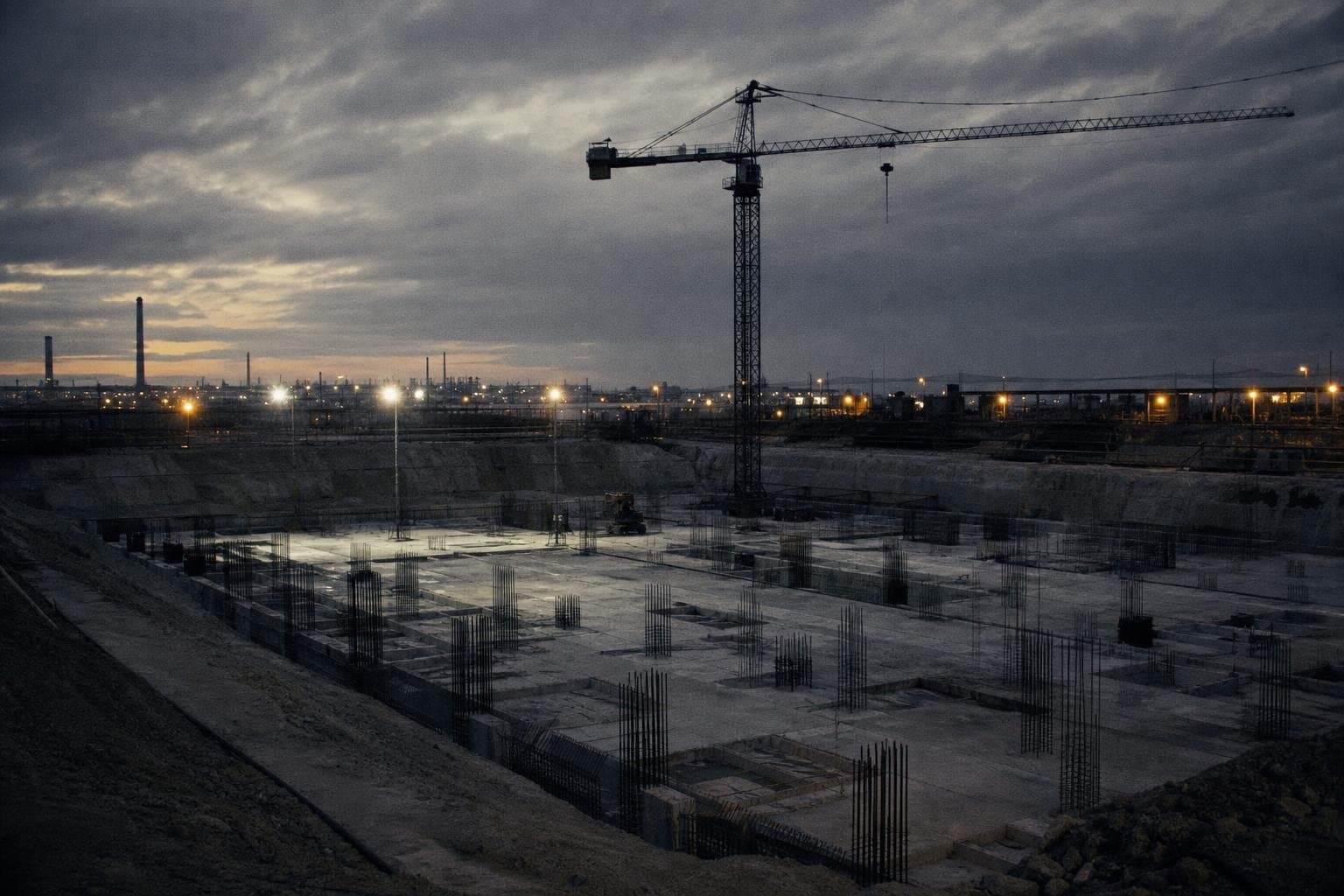
Context matters here. TSMC's current and planned Arizona footprint already runs to 12 fabrication and advanced packaging facilities plus an R&D center, after CEO C.C. Wei said in July that "probably additional four or more fabs will be built" (Reuters). The CHIPS Program Office's own award ledger lists TSMC Arizona's funded scope as three leading-edge fabs — 4nm/5nm, 3nm, then 2nm and A16 — backed by $6.6 billion in direct funding and up to $5 billion in loans (per Referently's CHIPS Act tracker). Twelve facilities on paper, three funded and under construction, and now a fourth state floated through leaks nobody will confirm on the record. A record quarter doesn't close that gap. It just raises the stakes for whoever has to.
Washington Is Hardening the Rules Right Before the Clock Runs Out
While TSMC's Texas math stays speculative, the export control side of the ledger is moving in the opposite direction — from informal to codified, and on a deadline. Commerce is reportedly converting a year's worth of company-specific warning letters into binding Export Administration Regulations, covering chipmaking tool restrictions tied to Hua Hong's push toward more advanced nodes and the licensing requirements previously handed individually to Nvidia and AMD for AI chip sales to China (reported by Startup Fortune). I'd flag that reporting as directionally useful but not independently verified by a tier-one outlet yet, so treat the specifics as provisional.
What's harder to dispute is the timing: this codification effort is landing roughly a month before the US-China truce struck at last October's APEC summit is set to expire on November 9, per the same reporting. If accurate, Washington is trying to lock in enforcement infrastructure before the diplomatic cover that's kept the chip war paused runs out. Meanwhile the smuggling cases keep coming regardless of truce status — federal prosecutors this month charged a California man with shipping servers containing roughly $300 million worth of Nvidia AI chips to China without the required licenses, allegedly over a 2023–2024 stretch (Bloomberg). Enforcement doesn't pause for diplomacy. The rulebook just might.
The Two Timelines Worth Watching
Put the pieces side by side and you get two clocks running on different tracks. TSMC's capacity decisions — Texas, the fourth tranche of Arizona fabs, whatever comes next — move at the pace of board approvals and site due diligence, measured in quarters if not years. Export control policy, if the reporting on codification holds, is about to move at the pace of a regulatory deadline, with a hard date of November 9 attached. Readers tracking supply chain risk should watch two things over the next month: whether Commerce actually publishes finalized EAR language before the truce lapses, and whether TSMC's January earnings call turns the Texas "evaluation" into an actual number. One of those is a policy fact. The other is still a rumor with good sourcing.