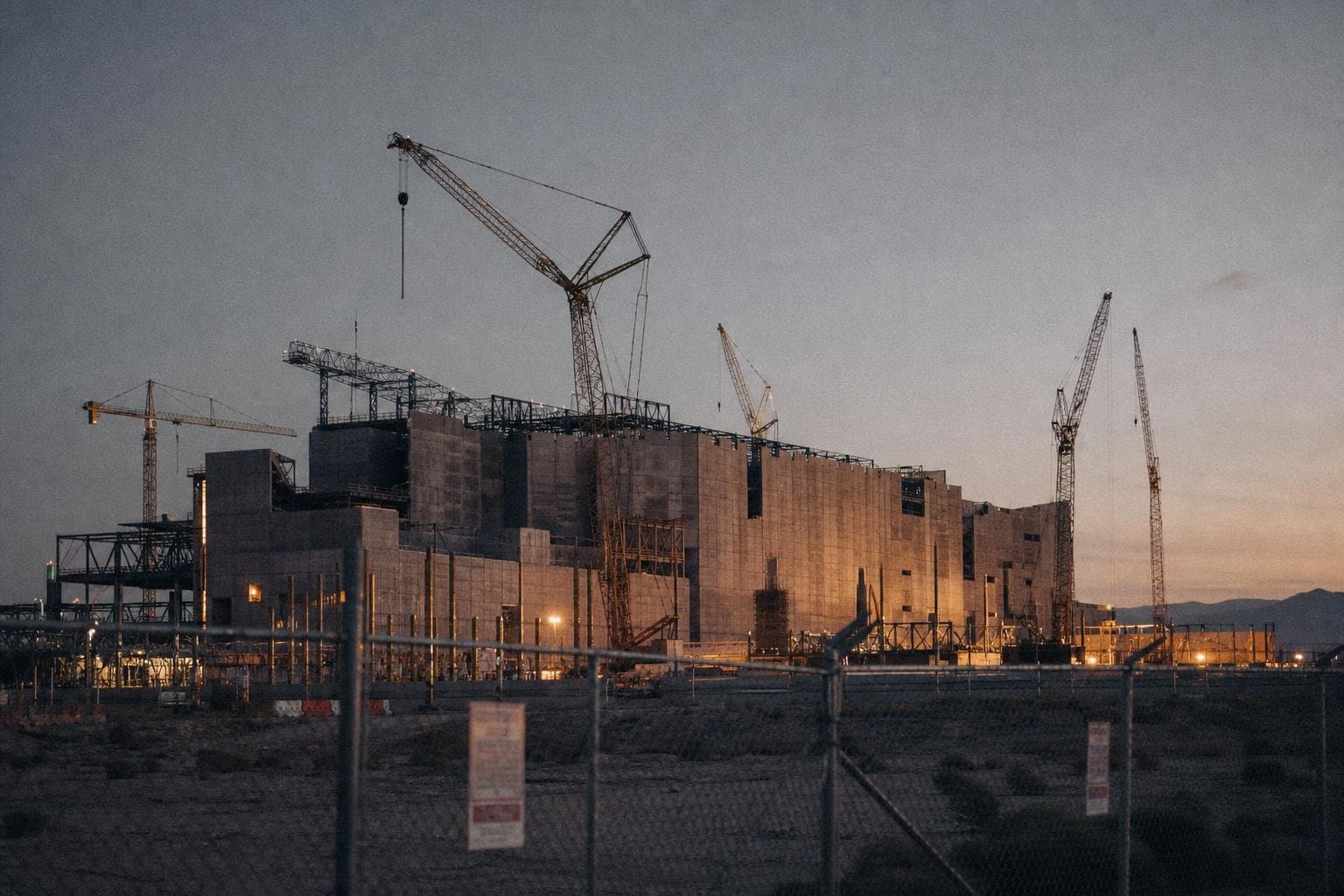

The CHIPS Act was built around a single anxiety: the United States makes almost none of its own leading-edge chips. Pour enough money into Arizona and Texas, the theory went, and the dependency on Taiwan shrinks. What the architects underestimated — and what's becoming harder to ignore — is that chip fabrication is only half the problem. The other half is chip packaging, and on that front, the U.S. is arguably more exposed today than when the legislation passed.
The Choke Point Nobody Budgeted For
Advanced chip packaging is the process of bundling multiple semiconductor components — logic chips, memory, interconnects — into dense, high-performance modules. As the gains from shrinking transistors have slowed, Nvidia and its peers have leaned on packaging to keep delivering the compute density that AI workloads demand. The problem, as the New York Times reported this week, is that TSMC doesn't just manufacture nearly all of Nvidia's leading-edge chips — it packages nearly all of them too. Its key suppliers and partners are concentrated in Taiwan, facing the same geopolitical exposure that motivated the CHIPS Act in the first place.
The U.S. had a shot at building a domestic alternative. Subramanian Iyer, an electrical engineer at UCLA and a decades-long packaging specialist, developed plans for a packaging R&D center that would have been funded with $1.1 billion from the Biden administration and built in Arizona. The Trump administration effectively killed the effort last year. "We've ended up in a place where we are even more dependent on TSMC," Iyer told the Times.
That's a damning sentence to read alongside the CHIPS Act's stated goals. Washington spent years and billions trying to reduce Taiwan dependency in fabrication while simultaneously defunding the one serious domestic effort to address packaging dependency. The result: TSMC Arizona will eventually make chips, and then ship them back to Taiwan to be packaged.
TSMC Knows Its Leverage, and It's Pricing Accordingly
Into this structural dependency, add a price signal that should concentrate minds. TSMC has reportedly told customers to expect price increases across its advanced chipmaking portfolio — not just on cutting-edge 3nm nodes, but extending to 7nm and legacy products that together account for roughly 74% of the company's wafer revenue. The increases appear to fall in the 5–10% range, varying by customer and node, with some already rolling out and others being built into future purchase orders.
For Apple, Nvidia, AMD, Qualcomm, and Broadcom — essentially the entire roster of U.S. chip designers — this is a cost structure adjustment they have no real alternative to absorbing. You can't diversify away from a supplier when that supplier controls both the fabrication and the packaging of your most critical products. The pricing move is rational from TSMC's position: demand is strong, capacity is constrained, and customers have nowhere else to go at the leading edge.
The AI revenue picture adds context here. Bloomberg reported this week that global AI sales (excluding China) reached $25 billion in Q1 2026, exceeding the industry's estimated $21 billion in depreciation costs tied to data center and chip investments for the second consecutive quarter. The margins are thin — depreciation still consumes more than two-thirds of revenue — but the direction of travel is positive. That means AI chip demand isn't softening, which means TSMC's pricing power isn't softening either.
China's Counter-Move Adds Another Layer
While the U.S. debates its packaging gap, China is running its own pressure campaign on the supply chain. Reuters reported on June 22 that Beijing added MP Materials and USA Rare Earth — both involved in the mine-to-magnet supply chain — to its export control list, along with eight other U.S. entities it characterized as linked to the U.S. military. The move is framed as retaliation for Washington's recent restrictions on Chinese companies.
MP Materials operates the only active rare earth mine in the United States. Restricting its access to Chinese processing and export channels doesn't immediately halt U.S. chip production, but rare earth materials feed into the motors, magnets, and precision equipment that semiconductor fabs depend on. It's a pressure point, not a kill switch — but it's a reminder that the supply chain vulnerabilities run in multiple directions simultaneously.
What to Watch
Three things worth tracking over the next 60 days: whether TSMC's Arizona fabs announce any packaging capability expansion (they haven't, and the silence is telling); whether the Commerce Department revisits the killed $1.1 billion packaging R&D center under any revised CHIPS implementation framework; and whether the rare earth export controls prompt any emergency sourcing announcements from U.S. defense contractors or fab operators. Samsung's Taylor, Texas fab is targeting production in the second half of 2026 — if it hits that milestone, it will be shipping wafers that still need to go somewhere for advanced packaging. The question of where is one Washington hasn't answered.


