


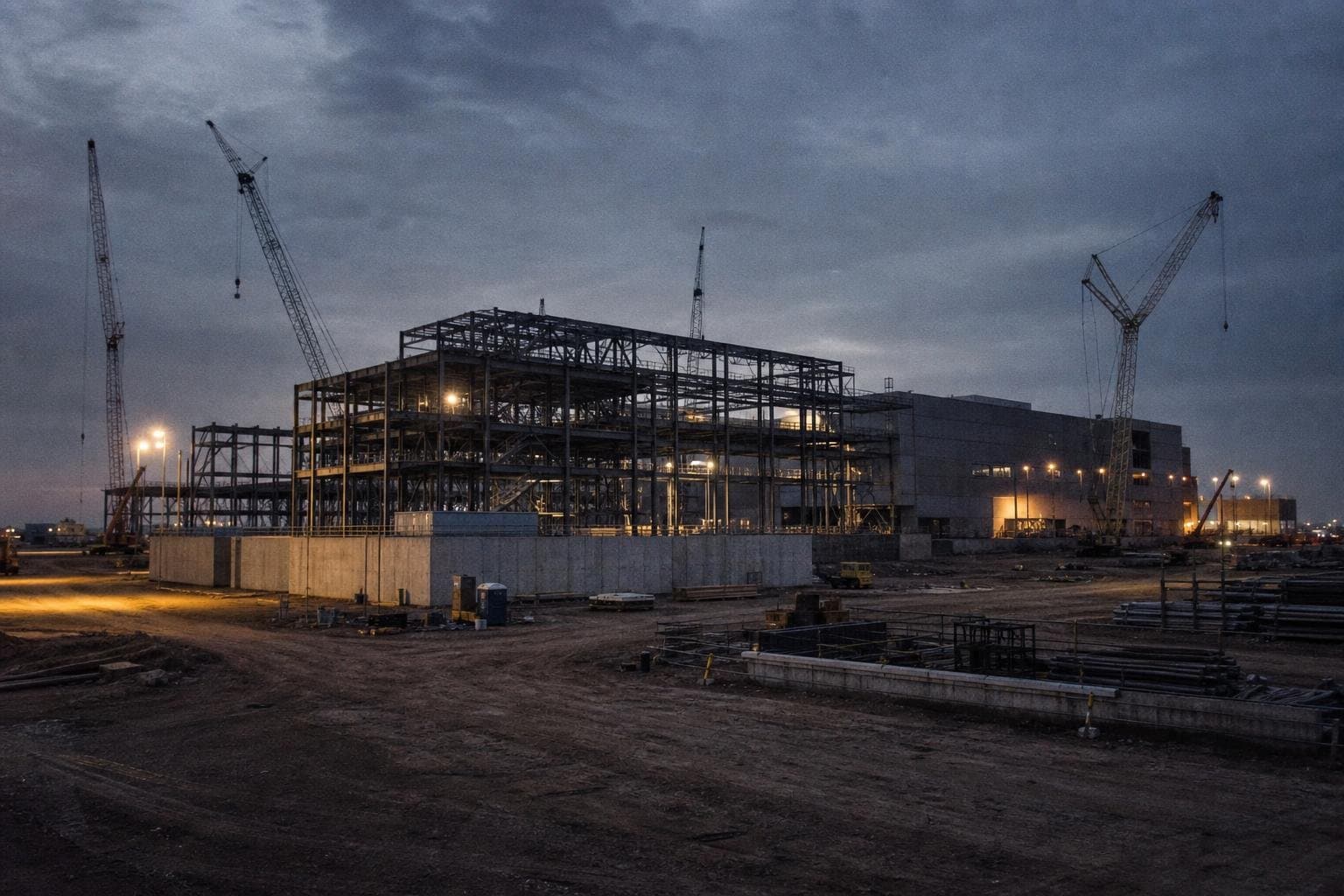

Every few months, the Arizona figure gets bigger. It started at $12 billion in 2020, grew to $40 billion, then $65 billion, then $165 billion, and by July 2026 TSMC and the Commerce Department were touting a combined $265 billion commitment across twelve planned Arizona facilities, per reporting on the expansion. That number gets repeated in press releases and political speeches like it's already spent. This week, Taiwan's own government put a very different figure on the record: its Economics Ministry has approved a cumulative $44 billion in TSMC outbound investment for U.S. projects since 2020, according to Focus Taiwan.
Those two numbers aren't measuring identical things — one is a headline pledge covering land, buildings, tools, and packaging capacity through the early 2030s, the other is regulatory sign-off on actual capital TSMC has been cleared to move out of Taiwan. But the gap between them is exactly the kind of thing this newsletter exists to flag. A pledge is a press conference. An approval from your home regulator is a paper trail of money that has actually moved. When the second number is a fraction of the first, the question isn't whether TSMC is lying — it's whether "$265 billion" describes money committed or money merely modeled.
Where TSMC's Own Roadmap Says the Real Money Is Going
If you want a cleaner signal of where TSMC's capital priorities actually sit, look at Taiwan, not Arizona. The company has reportedly won approval for a third phase of expansion at its Longtan Park site in Hsinchu, targeting process technology beyond its upcoming A14 node, with the first factory in that phase aiming for mass production in 2030, according to Digital Citizen. The reported development cost for that Hsinchu phase — roughly NT$95 billion, or about $3 billion — is a rounding error next to the Arizona headline. But it's a number attached to an actual land-use approval and a specific process node, not a projected capex range.
That's the pattern I keep running into with TSMC's American footprint: the Taiwan-side announcements come with acreage figures, node targets, and government sign-offs. The Arizona-side announcements come with cumulative dollar totals and a growing count of "planned" fabs. Both things can be true — TSMC really is building in Arizona, its first Arizona fab really is shipping to Apple and Nvidia — but the accounting discipline is not symmetric. When Taiwan's own ministry publishes an approval figure that lands at roughly a sixth of the U.S.-side pledge total, that's not proof of fraud. It's proof that somebody needs to ask which number Washington is actually planning its industrial policy around.
The Export Control Debate Has the Same Structure: Promise Now, Reconcile Later
The same accounting gap shows up in export policy, just with votes instead of dollars. This week, as Chinese President Xi Jinping made a high-profile visit to Washington, Senate Democrats used the moment to press for floor votes on AI chip export control legislation that already has bipartisan support but is stuck inside a stalled defense authorization bill, per Roll Call. Schumer accused the administration of loosening restrictions that let Nvidia and AMD sell certain chips into China even as advanced silicon keeps reaching China through third countries — activity the administration says it's trying to shut down.
That's the export-control version of the Arizona pledge problem: a policy commitment (bipartisan support for tighter controls) that hasn't converted into an enacted law, sitting next to an administration that has already loosened enforcement on the ground. A CSIS report published the same week makes the deeper structural point explicit — that Cold War-style export controls assume a target that can't route around them, and China's integration into global supply chains plus its own innovation capacity has already produced meaningful circumvention, according to CSIS. Sanctions only work if the physics actually constrains the alternative. Right now, on both the fab-construction side and the export-enforcement side, the paperwork is running well behind the press conference.
What to Watch
Two things worth tracking before either headline gets repeated as settled fact again. First, whether Taiwan's Economics Ministry publishes a larger approval tranche tied to TSMC's newly announced Arizona fabs — that would be the clearest sign the $265 billion figure is converting into actual outbound capital rather than staying a rolling pledge. Second, whether the export control provisions currently stuck in the defense authorization bill get a standalone vote before the end of the year, or whether they quietly ride along with a bill that may not move until after the midterms. Both are the difference between an announcement and a number you can actually bank on.