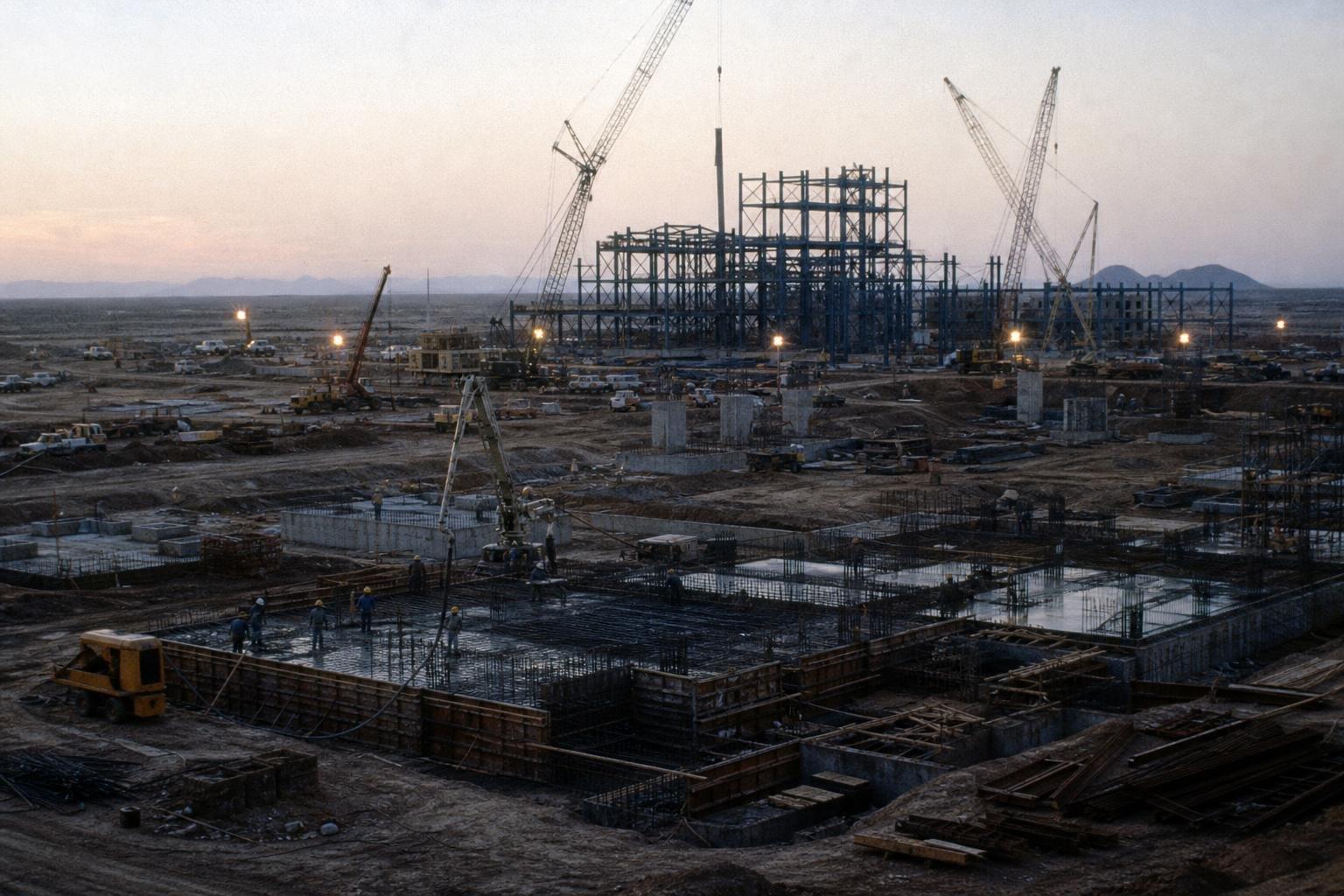

When Arizona Public Service first described the power load for TSMC's north Phoenix campus, the number was 200 megawatts — enough for roughly 30,000 homes, according to the Arizona Technology Council's early estimate cited in a utility filing covered by Hoodline. That was the first construction phase. A new filing with Arizona's state utility regulator puts the number at full buildout closer to 1.9 gigawatts — equivalent to roughly 300,000 homes, per the same Hoodline report. That's not a rounding error. That's a tenfold jump in the stated grid impact of a single campus, and it tracks a pattern this newsletter has flagged before: TSMC's Arizona numbers keep getting bigger, and the public finds out well after the decisions that locked the scale in.
The Money Number Grew. So Did the Power Number.
TSMC's Arizona investment pledge went from $165 billion to $265 billion earlier this year, a jump driven by an additional $100 billion commitment confirmed with the Commerce Department. The electricity story is following the same arc, just on a different clock. APS is now asking the Arizona Corporation Commission to approve an energy contract that would make TSMC the first customer under the utility's "subscription model" — a framework built specifically for its most power-hungry accounts, according to Hoodline. To serve that load, APS wants to build a new natural gas plant west of Gila Bend, which it calls the Desert Sun Power Plant. APS says the facility would add around 1,280 megawatts, though Utility Dive has separately described it as a 1,238-megawatt combined-cycle plant slated to come online in 2032 — a discrepancy the filings reviewed so far don't explain, per Hoodline. Forty-two megawatts of disagreement on a plant that's supposed to anchor a multi-decade rate contract is a small gap in absolute terms, but it's exactly the kind of sloppy number that should make regulators ask harder questions before they sign off.
The filings also don't spell out the rate structure, the contract length, or what happens if TSMC's actual demand lands above or below projections — meaning Arizona ratepayers are being asked to absorb the risk of a forecast that has already moved by an order of magnitude once.
TSMC Keeps Finding New Places to Put Capital — Just Not All of It Into Fabs
While Arizona utility regulators sort out who pays for TSMC's electricity, the company itself is flush. October monthly sales rose 60% year over year, reaching NT$586.9 billion, or about $17.9 billion, with analysts projecting roughly 63% growth for the final quarter of the year, according to Bloomberg. That cash is going places beyond fabs: TSMC's board approved up to $1 billion in combined investments in Anthropic and OpenAI, including up to $500 million to buy shares in Anthropic at its IPO price, Reuters reported. It's a sensible hedge for a company whose fortunes are tied to AI demand, but it's worth noticing that a firm asking a state utility to build a new gas plant on its behalf is simultaneously taking equity stakes in the customers who generate that demand. The capital discipline story and the infrastructure-burden story are happening on the same balance sheet.
Meanwhile the competition for Arizona grid capacity is getting crowded. SpaceX has announced plans for a $50 billion computing site in Arizona as part of a broader $74 billion push into AI infrastructure across Arizona and Texas, Bloomberg reported. That's the same Musk-affiliated orbit TSMC has been circling for a potential Texas expansion — TSMC confirmed in October it's evaluating a Texas site tied to a Musk-led manufacturing effort, and that it had sent teams to assess the possibility, per the Arizona Republic. Two of the most capital-intensive buildouts in the country are now converging on overlapping power markets in the same two states.
What to Watch
The Arizona Corporation Commission's decision on the APS-TSMC subscription contract is the concrete milestone here — it will determine whether Arizona ratepayers subsidize the Desert Sun plant's construction cost, which APS says is planned to begin in 2028. Watch for whether the final contract terms disclose the rate structure and demand-risk allocation that the current filings omit. And watch whether TSMC's "still in discussion" language on Texas, as CEO C.C. Wei put it on the October earnings call, turns into an actual site commitment — or stays a hedge while Arizona absorbs the next round of grid expansion alone.


